




RIYADH: Saudi Arabia highlighted the importance of strengthening international cooperation in the water sector to address global challenges, emphasizing the need for integrated water resources management to ensure sustainability, overcome water scarcity, and develop resources.
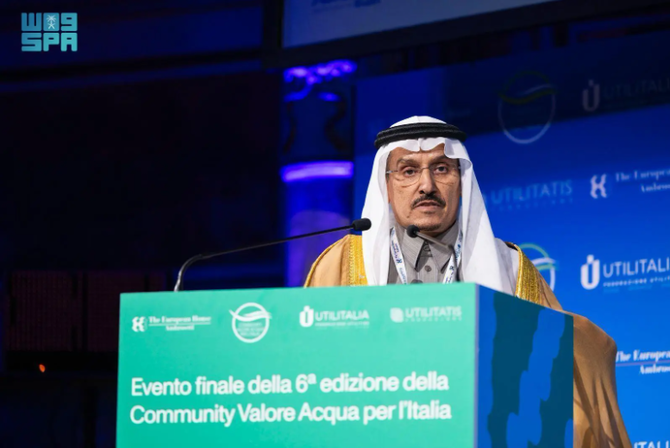
Abdulaziz Al-Shaibani, deputy minister for water at the Ministry of Environment, Water and Agriculture, said that Vision 2030 prioritizes water sustainability as a key pillar of national development, the Saudi Press Agency reported.
At the “Value of Water Community” forum in Rome, Al-Shaibani noted that, due to the Kingdom’s natural water scarcity, strategies have been implemented to improve efficiency, balance supply and demand, and ensure long-term sustainability.
The forum addressed Italy’s water challenges, including climate change, declining groundwater levels, and the need for advanced technologies to sustain water resources.
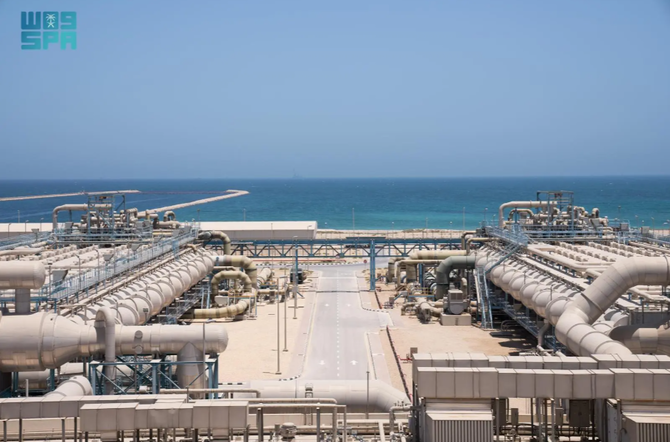
Al-Shaibani outlined the National Water Strategy 2030, focusing on developing alternative water sources, reducing dependence on non-renewable groundwater, enhancing desalination, improving distribution networks, and minimizing water loss.
He also highlighted Saudi Arabia’s global efforts in water, including participation in initiatives like the G20 and collaboration with UN organizations.
Al-Shaibani emphasized investment opportunities in the Saudi water sector, especially in private sector partnerships, advanced technologies, and contributions to research and infrastructure development.
On World Water Day, observed on March 22, Saudi Arabia is recognized as the world’s largest water producer and a leader in water innovation, using artificial intelligence in desalination to improve efficiency and reduce environmental impact, according to SPA.
Technologies based on palm trees are also being developed to fight erosion and extend water infrastructure. These innovations strengthen the Kingdom’s position as a global water technology hub, showcasing its commitment to sustainability, climate change adaptation, and environmental protection.
The Saudi Water Authority, in collaboration with all water sector stakeholders, is redefining sustainable water management to maintain the Kingdom’s leadership in efficient water resource management despite scarcity.
The authority oversees the daily production of approximately 15 million cubic meters of water, which is distributed across 14,000 km of pipelines to 135,000 km of networks throughout the Kingdom.
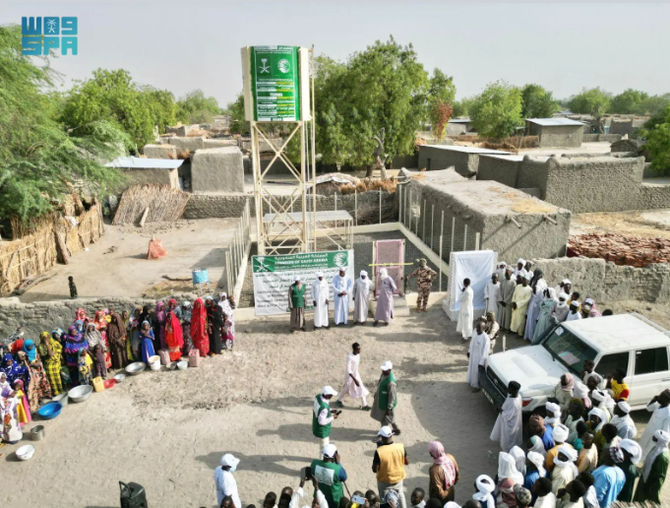
KSrelief has supported water and sanitation sectors in affected countries, implementing 105 water-related projects worth over $301 million across 16 nations to create safe environments and enhance water security.
Yemen is the largest beneficiary, with 46 projects totaling more than $238 million, including drinking water distribution, well drilling, and improving access to water and sanitation in healthcare centers.
In Syria, KSrelief has completed four projects to improve water security, including emergency services for earthquake victims, establishing water purification stations, and rehabilitating water stations and waste management systems in Idlib.
KSrelief has also implemented five major projects in Sudan, benefiting nearly six million people, including the drilling of 33 medium-depth wells.
In Mali, KSrelief has drilled 250 shallow and 15 medium-depth wells, and 52 wells in Ghana, providing clean water, reducing waterborne diseases, and supporting agriculture and livestock.
KSrelief recently signed a joint agreement with the UN Development Programme to assist Gaza’s water and sanitation sector, benefiting one million people.
The agency’s projects extend to Iraq, Somalia, Pakistan, Afghanistan, Myanmar, and Niger, aiming to improve water security and sustainability, reflecting Saudi Arabia’s commitment to addressing global water challenges for future generations.


