

Peace in Afghanistan necessary for regional stability, says Pakistani envoy amid surging tensions

Pakistan’s special envoy Muhammad Sadiq Khan (left) meets Afghanistan’s acting foreign minister Amir Khan Muttaqi in Kabul on March 22, 2025. (AmbassadorSadiq/X)
Short Url
Updated 23 March 2025
Follow

Peace in Afghanistan necessary for regional stability, says Pakistani envoy amid surging tensions

  • Muhammad Sadiq Khan is on a three-day visit to Afghanistan to discuss bilateral matters amid surging militancy 
  • Army says 16 militants attempting to enter Pakistan via Afghanistan gunned down in North Waziristan district

ISLAMABAD: Peace and progress in Afghanistan are necessary for regional stability, Pakistan’s special envoy Muhammad Sadiq Khan said on Sunday, amid rising tensions between the neighboring countries due to militancy. 

Khan, Pakistan’s special representative to Afghanistan, is on a three-day visit to the country to discuss bilateral matters with Afghan officials. His visit takes place amid tense relations between the two countries due to a mix of security, political and border issues, with Islamabad accusing the Taliban-led interim government in Kabul of providing safe haven to anti-Pakistan militant groups facilitating cross-border attacks. Kabul has denied the allegations.

The friction escalated after a recent targeting of a passenger train in Pakistan’s southwestern Balochistan province, claimed by the separatist Baloch Liberation Army (BLA). Pakistani officials said the BLA fighters remained in contact with “handlers” based in Afghanistan during the attack that lasted for two days and involved hundreds of hostages.

“Peace and progress in Afghanistan is essential for regional stability,” Khan was quoted as saying by Pakistan’s embassy in Kabul on the occasion of Pakistan’s Republic Day. 

“Pakistan and Afghanistan must synergize their efforts to foster regional economic development.”
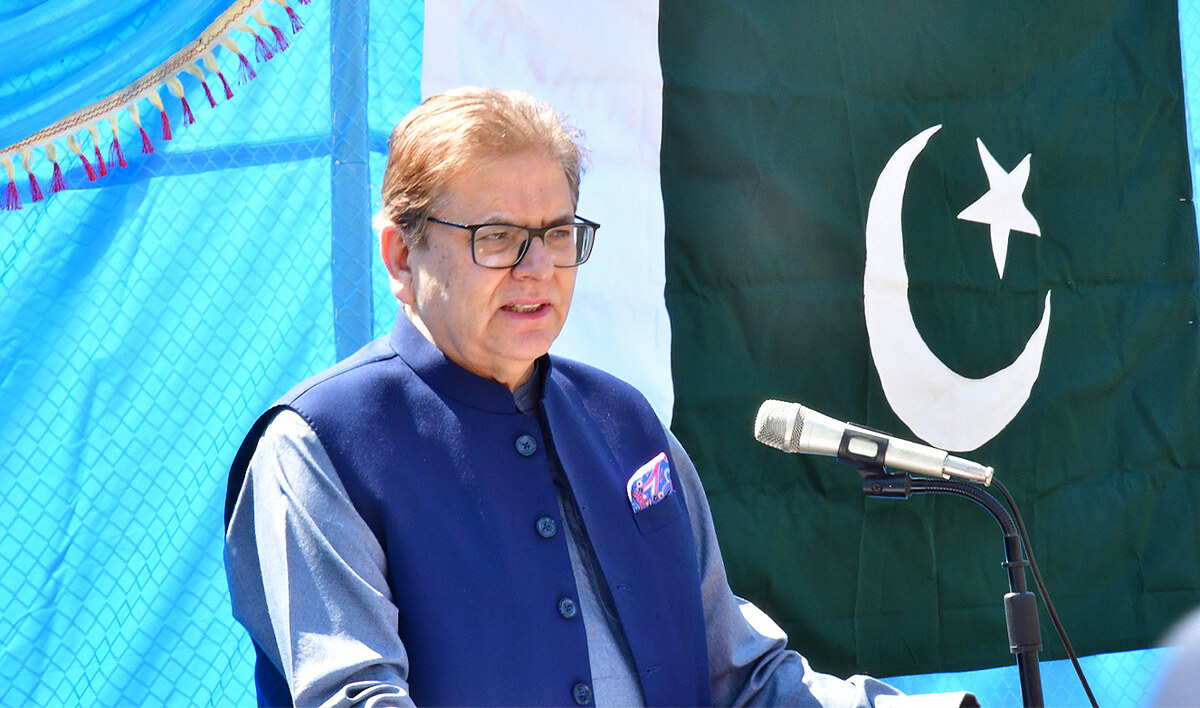


Pakistan’s special envoy, Muhammad Sadiq Khan, attends the flag hoisting ceremony at Pakistan's embassy in Kabul on March 23, 2025, on Republic Day. (Muhammad Sadiq Khan/X)

The Pakistani envoy described Afghanistan as “one of the most important regional partners” of his country, stressing the need for both to work together to enhance bilateral trade and regional connectivity. 

“Pakistan remains committed to a strong and mutually beneficial bilateral relationship with Afghanistan,” Khan said.

Meanwhile, Pakistan’s military said in a statement on Sunday that it gunned down 16 militants who attempted to cross into Pakistan from Afghanistan on the night between Mar. 22-23 in the North Waziristan district. 

“Pakistan has consistently been asking Interim Afghan Government to ensure effective border management on their side of the border,” the Inter-Services Public Relations (ISPR), the military’s media wing, said.

“Interim Afghan Government is expected to fulfil its obligations and deny the use of Afghan soil by Khwarij for perpetuating acts of terrorism against Pakistan.”

The ISPR said Pakistan’s security forces are committed to securing its borders and eliminating “terrorism” from the country.

Pakistan’s ties with Afghanistan were also strained after the former launched a nationwide deportation campaign targeting undocumented foreigners, mostly Afghans, in November 2023, shortly after a series of deadly suicide bombings that officials blamed on Afghan nationals.

The move, which added to diplomatic tensions between the two countries, has so far led to the repatriation of more than 800,000 Afghans. Many of them had lived in Pakistan since fleeing the Soviet invasion of their country in 1979.

The Pakistani government earlier this month also directed Afghanistan Citizen Card holders to leave the country by March 31, warning they would face deportation if they failed to comply.


Pakistan highlights economic reforms at Davos, eyes cooperation in AI, IT and minerals

Updated 30 min 5 sec ago
Follow

Pakistan highlights economic reforms at Davos, eyes cooperation in AI, IT and minerals

  • Prime Minister Shehbaz Sharif speaks at breakfast event in Davos at sidelines of World Economic Forum summit
  • Pakistan, rich in gold, copper reserves, has sought cooperation with China, US, Gulf countries in its mineral sector

ISLAMABAD: Prime Minister Shehbaz Sharif highlighted Pakistan’s recent economic reforms during the sidelines of the ongoing World Economic Forum (WEF) summit in Davos on Wednesday, saying that his country was eyeing greater cooperation in mines and minerals, information technology, cryptocurrency and artificial intelligence with other states. 

The Pakistani prime minister was speaking at the Pakistan Pavilion in Davos on the sidelines of the WEF summit at a breakfast event. Sharif arrived in Switzerland on Tuesday to attend the 56th annual meeting of the WEF, which brings together global business leaders, policymakers and politicians to speak on social, economic and political challenges. 

Pakistan has recently undertaken several economic reforms, which include removing subsidies on energy and food, privatization of loss-making state-owned enterprises and expanding its tax base. Islamabad took the measures as part of reforms it agreed with the International Monetary Fund (IMF) in exchange for a financial bailout package. 

“We are now into mines and minerals business in a big way,” Sharif said at the event. “We have signed agreements with American companies and Chinese companies.”

Islamabad has sought to attract foreign investment in its critical minerals sector in recent months. In April 2025, Pakistan hosted an international minerals summit where top companies and government officials from the US, Saudi Arabia, China, Türkiye, the UK, Azerbaijan, and other nations attended.

Pakistan is rich in gold, copper and lithium reserves as well as other minerals, yet its mineral sector contributes only 3.2 percent to the countrys GDP and 0.1 percent to global exports, according to official figures.

Sharif said Pakistan has been blessed with infinite natural resources which are buried in its mountains in the northern Gilgit-Baltistan, Khyber Pakhtunkhwa, Azad Kashmir and southwestern Balochistan regions. 

“But we have now decided to go forward at lightning speed,” he said. “And we are also moving speedily in the field of crypto, AI, IT.”

He said the government’s fiscal and economic measures have reduced inflation from nearly 30 percent a few years ago to single-digit figures, adding that its tax-to-GDP ratio had also increased from 9 to 10.5 percent. 

The prime minister admitted Pakistan’s exports face different kinds of challenges collectively, saying the country’s social indicators needed to improve. 

“But the way forward is very clear: that Pakistan has to have an export-led growth,” he said. 

SHARIF MEETS IMF MANAGING DIRECTOR

Separately, Sharif met IMF Managing Director Kristalina Georgieva on improvements in Pakistan’s macroeconomic indicators, efforts toward stability and progress on institutional reforms, a statement from Sharif’s office said.

He emphasized Pakistan’s commitment to fiscal discipline, revenue mobilization and sustainable development, it added. 

The IMF managing director acknowledged and appreciated Pakistan’s reform efforts, the Prime Minister’s Office (PMO) said.

“Both sides exchanged views on the global economic outlook, challenges facing emerging economies, and the importance of multilateral cooperation in safeguarding economic stability,” the PMO said.