

Saudi Arabia to debut at Triennale Milano’s International Exhibition with Al-Ahsa pavilion

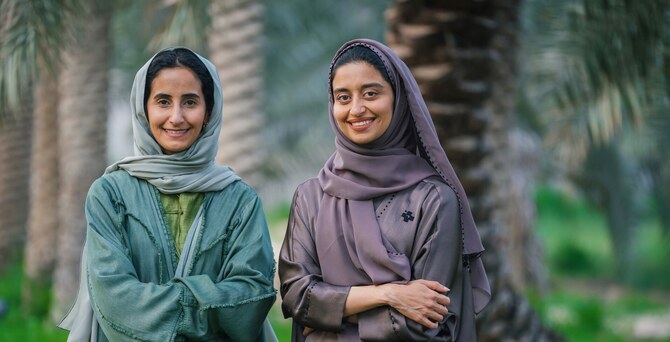
Sara Al-Omran and Lulu Almana. (Supplied)
Short Url
Updated 21 March 2025
Follow

Saudi Arabia to debut at Triennale Milano’s International Exhibition with Al-Ahsa pavilion

DAMMAM: Saudi Arabia’s Ministry of Culture has announced the Kingdom’s inaugural participation at the 24th International Exhibition at the Triennale Milano design museum in Italy later this year, with a pavilion dedicated to the agricultural oasis of Al-Ahsa.

Curated by Lulu Almana and Sara Al-Omran, with Alejandro Stein as creative director, the exhibition is hosted by the Architecture and Design Commission and will be titled “Maghras: A Farm for Experimentation.” It will run from May 13 - Nov. 9.

It will explore the intersection of farming traditions, ecological shifts and cultural memory within a rapidly transforming landscape. The exhibition draws from research, artistic interventions and community-driven programs cultivated at Maghras, a farm and interdisciplinary space in Al-Ahsa.

Al-Ahsa, located in the Eastern Province, has been historically defined by its abundant water sources. It has undergone significant environmental and social transformations, mirroring broader changes in agrarian communities worldwide. The area has been farmed since the third millennium BCE. 

The pavilion takes the form of a transplanted maghras — a traditional unit of land defined by four palm trees. Through videos, sound installations and participatory programs, the exhibition invites audiences to engage with Al-Ahsa’s evolving agricultural ecosystems.

In the lead-up to the exhibition, artists, architects, and researchers collaborated with Al-Ahsa’s farming communities, gathering firsthand insights into the region’s shifting landscape. This knowledge exchange was further explored through performances, film screenings and local workshops examining the deep connections between culture and agriculture.


Elie Saab, Zuhair Murad show new couture collections in Paris

Updated 29 January 2026
Follow

Elie Saab, Zuhair Murad show new couture collections in Paris

  • Saab’s collection uses light as central theme
  • Exploration of structure, movement by Murad

DUBAI: Lebanese designers Elie Saab and Zuhair Murad presented their Spring/Summer 2026 haute couture collections in Paris earlier this week.

Look 1 by Elie Saab. (Supplied)

Saab’s collection referenced light as a central theme, expressed through elongated silhouettes and layered embellishment, according to a statement from the brand.

Look 2 by Elie Saab. (Supplied)

The runway featured gowns built on sheer bases, with metallic embroidery, sequins and crystal beadwork creating layered textures across champagne, gold, bronze and soft ivory tones.

Look 3 by Elie Saab. (Supplied)

Column dresses, deep necklines and floor-length gowns dominated the collection, while draped panels, embroidered capes and sheer overlays added movement.

Look 4 by Elie Saab. (Supplied)

Several looks incorporated fringed detailing and geometric patterns, with crystal embellishments catching the light as models walked.


A post shared by ELIE SAAB (@eliesaabworld)

Accessories were kept minimal, allowing the focus to remain on craftsmanship and surface technique.

Meanwhile, Murad’s collection also placed craftsmanship at the center of the show.

Look 1 by Zuhair Murad. (Supplied)

According to the house, the collection explored structure and movement, using corsetry to define the body and draping to create fluidity.

Look 2 by Zuhair Murad. (Supplied)

The runway featured fitted gowns and sculpted eveningwear built around structured bodices, many finished with dense embroidery, crystals and metallic thread.

Look 3 by Zuhair Murad. (Supplied)

A palette of champagne, pale blue, sage green, ivory and gold ran throughout the show, with strapless silhouettes, off-the-shoulder gowns and column dresses appearing alongside sheer panels, thigh-high slits and flowing trains.

Look 4 by Zuhair Murad. (Supplied)

Shorter dresses with crystal-encrusted bodices were shown alongside floor-length gowns, with sheer layers and extended trains.