


RIYADH: Ramadan, a time of gathering and reflection, has long featured games that build community and create a vibrant atmosphere.
From strategic board games to fast-paced team sports, these traditional activities were once a staple of Ramadan nights, promoting a sense of camaraderie and competition.
“In the past, Ramadan was different in terms of social gatherings,” said Hitham Abdu Sheany, an Arabic teacher at an elementary school in Jazan who grew up playing these traditional games.
“There were more family get-togethers, even for those who lived far away. We always spent Ramadan with our families, and because there were so many children around, we played a lot of games,” he said.
These games were central to Ramadan’s social life, connecting generations and preserving cultural traditions.
After Taraweeh prayers, children and adults alike would take part in a variety of games. One of the most popular was farfirah, known commonly as foosball, which saw players compete in fast-paced matches, using rods to control miniature figures and score goals.
“We played farfirah until a team won,” Sheany recalled. “Then, we would all have dinner before heading to the recreation center, where Ramadan tournaments were held. In the past, everyone attended these tournaments, from children to the elderly.”
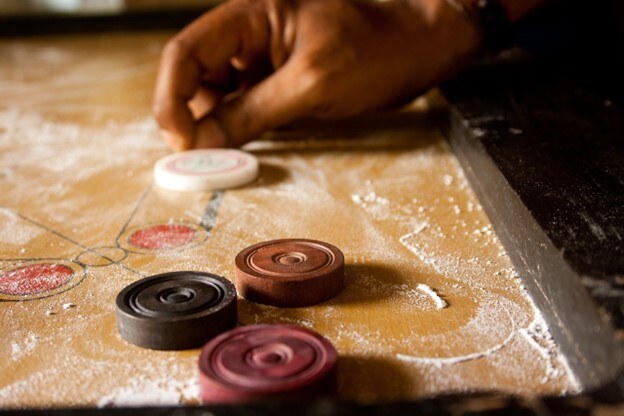
Another favorite was carrom, a game of precision and strategy played on a wooden board. Using finger flicks to send colored discs into the corner pockets, players needed skill and patience to outmaneuver their opponents.
Games such as dominos and baloot, a trick-taking card game, were also popular pastimes that encouraged strategic thinking and friendly competition.
Outdoor sports played a significant role in Ramadan traditions as well. Volleyball was particularly beloved, with neighborhood tournaments taking place after Fajr prayers.
“Every neighborhood had a volleyball game going on,” Sheany said.
“Even in some homes, people would set up nets and play together,” he added.
These games not only provided entertainment but also reinforced bonds between neighbors and friends.
According to Sheany, traditional games held a special societal value. “These games strengthened connections within neighborhoods,” he said. “We played honestly and with true competition, making friends in the process.”
He said that while modern entertainment, including electronic games and social media, has changed how people interact, there were still those who appreciated the charm of these traditional activities.
Recognizing the cultural significance of these games, the Ministry of Culture has taken steps to revive them through its Ramadan Season events.
Over the past two years, initiatives have been launched to bring back the communal spirit of Ramadan, featuring traditional games such as carrom, dominos and farfirah, alongside sporting competitions such as the Ramadan marathon and the padel championship.
These efforts aim to preserve the essence of Ramadan gatherings and introduce younger generations to the joy of traditional play.
Although times have changed, the spirit of traditional games lives on in family homes, neighborhood gatherings and organized events, continuing to be a reminder of the values of teamwork, friendly rivalry and shared joy.


