ISLAMABAD: Pakistani Prime Minister Shehbaz Sharif met Saudi Crown Prince Mohammed bin Salman today, Thursday, and discussed cooperation in the economic, trade, investment, energy and defense sectors, the premier’s office said in a statement.
Sharif’s four-day visit to the Kingdom comes as Islamabad seeks to strengthen trade and investment ties with friendly nations. Riyadh in particular has promised a $5 billion investment package that cash-strapped Pakistan desperately needs to shore up its dwindling foreign reserves and fight a chronic balance of payment crisis.
Islamabad and Riyadh signed 34 memorandums of understanding and agreements worth $2.8 billion last year to enhance private sector collaboration and commercial partnerships. The two nations are also in “advanced” talks relating to investment in the Reko Diq copper and gold mine, one of the world’s largest underdeveloped copper-gold areas, as per Pakistani officials.
In October last year, Saudi Investment Minister Khalid Al-Falih announced the Kingdom planned to allocate a significant portion of its $200 billion annual construction and material procurement contracts to Pakistan. Last month, Pakistan also signed an agreement with the Saudi Fund for Development to defer by one year a $1.2 billion payment on the country’s oil imports.
“The meeting reaffirmed the strong and historic ties between Pakistan and Saudi Arabia, with discussions focused on enhancing cooperation in economic, trade, investment, energy and defense sectors,” Sharif’s office said in a statement after he met the Saudi crown prince.
“The Prime Minister appreciated the Kingdom’s commitment to increasing investments in key sectors, which will contribute to Pakistan’s economic growth and stability.”
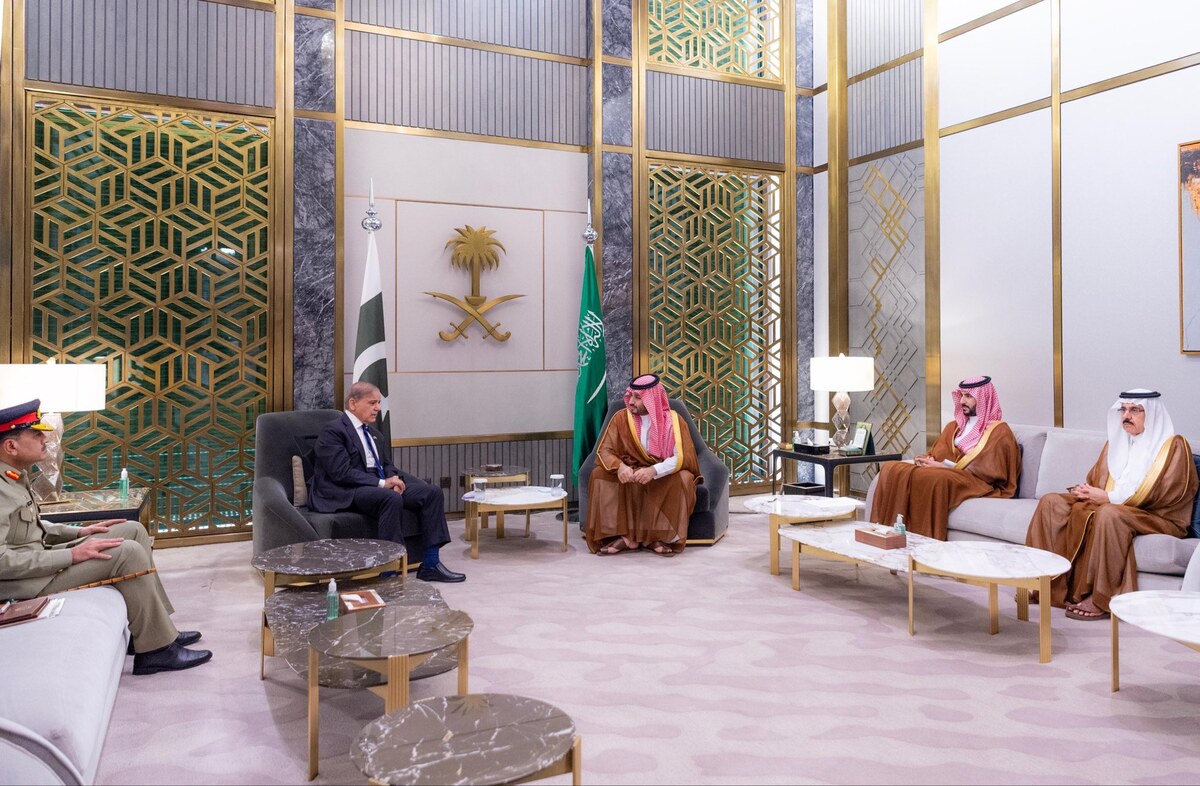
Pakistan Prime Minister Shehbaz Sharif (center left) meets Saudi Crown Prince Mohammed bin Salman (center right) in Jeddah, Saudi Arabia, on March 20, 2025. (Government of Pakistan)
The statement said both sides reaffirmed their commitment to strengthening defense and security cooperation as well, “recognizing the importance of collaborative efforts in addressing regional security challenges.”
They also discussed the “evolving regional situation as well as geopolitical landscape” and agreed to work closely at all levels to promote a “shared vision for peace, stability and prosperity in the region.”
“Both the leaders emphasized the need to further strengthen people-to-people ties, cultural exchanges, and educational collaboration,” the statement concluded.
Separately, Sharif also met Saudi Investment Minister Khalid Al-Falih and Mohammad Al-Tuwaijri, the head of the Joint Task Force for Economic Engagement. The discussions focused on strengthening economic cooperation, attracting Saudi investments and expediting joint initiatives in key sectors.
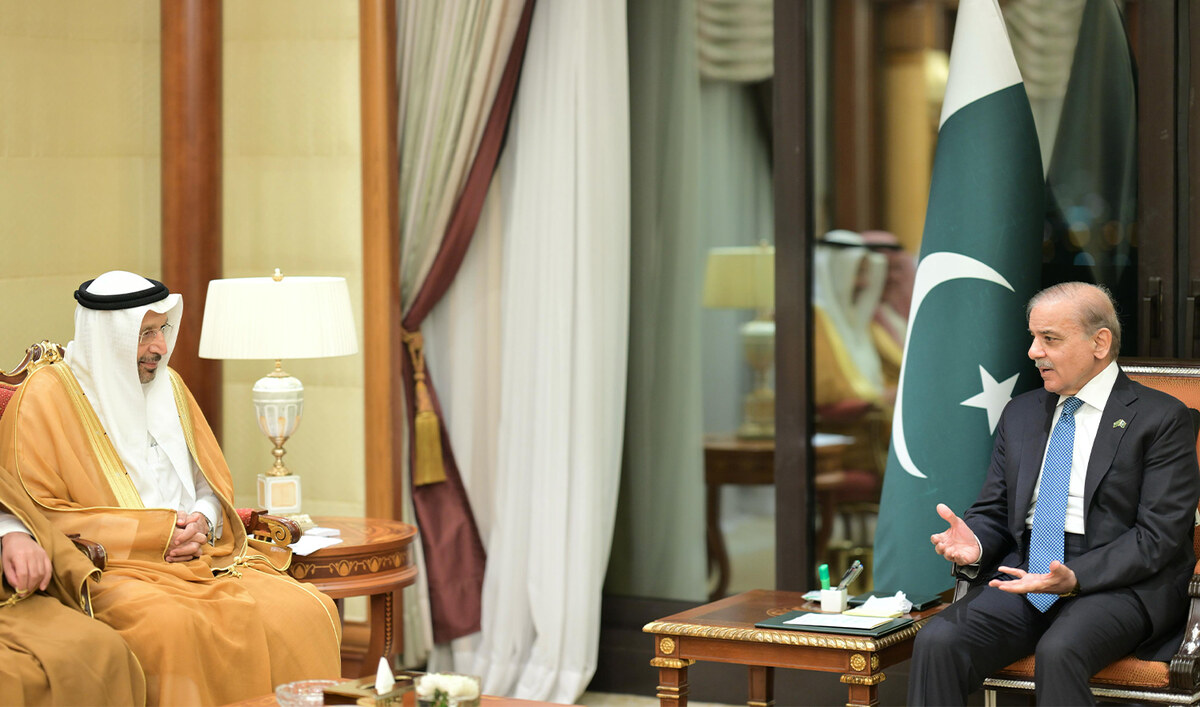
Saudi Investment Minister Khalid Al-Falih (left) calls on Pakistan Prime Minister Shehbaz Sharif in Jeddah, Saudi Arabia, on March 20, 2025. (Government of Pakistan)
“The PM reaffirmed Pakistan’s commitment to facilitating Saudi investors, highlighting the country’s strategic position and investment-friendly policies,” the PM’s office said. “He emphasized Pakistan’s vast potential in energy, infrastructure, agriculture and technology, inviting Saudi businesses to explore opportunities under the Special Investment Facilitation Council.”
The two sides also discussed enhancing institutional collaboration to accelerate investment projects and ensure smooth implementation and strengthening the Pakistan-Saudi economic partnership through “structured engagements and swift execution of joint projects.”
Pakistan and Saudi Arabia enjoy strong trade, defense and cultural ties. Petroleum products mostly from Saudi Arabia make the major chuck of Pakistan’s import bill. The Kingdom is also home to more than two million Pakistani expatriates and serves as the top source of remittances.