



LONDON: Few took notice of a five-minute video posted on YouTube on Friday by Media Magik Entertainment, an American “veteran-owned company” that regularly uploads public-relations footage shot by the US military.
The short film, which by the weekend had attracted only a few hundred views, showed a flight of four US Navy F/A-18 fighter jets, assigned to the Harry S. Truman Carrier Strike Group, refueling in the air above a semi-mountainous desert landscape.
The location was given as “somewhere over the US Central Command area of responsibility.” CENTCOM’s area includes the Red Sea, Arabian Gulf and the entire Middle East.
The footage ended with an on-screen message from CENTCOM. The carrier strike group, it read, “is ready … to execute the full spectrum of carrier operations essential to US national security, including the defense of the US and partner forces … and freedom of navigation to ensure maritime security and stability.”
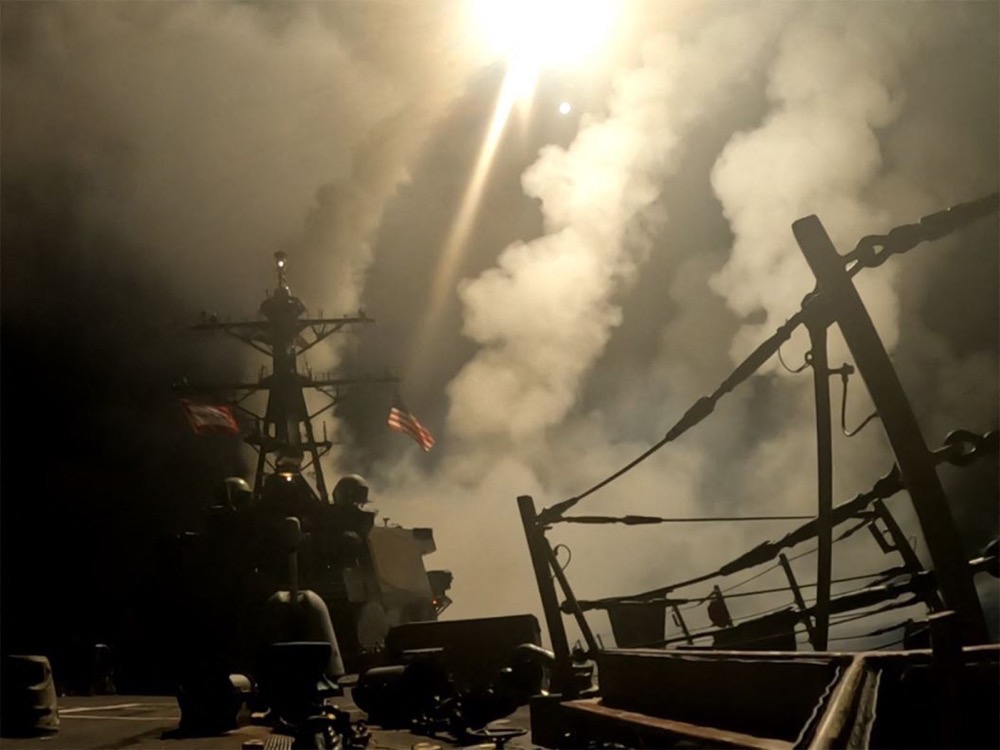
CENTCOM said that the strikes, which so far had hit radar sites, missile defenses and missile and drone systems, could last for days. (AFP)
At that moment the nuclear-powered Nimitz-class Harry S. Truman aircraft carrier was at the northern end of the Red Sea, having passed through the Suez Canal in December.
The following day millions around the world watched footage of some of those same aircraft taking off from the carrier, bound for targets in Yemen as part of a package of strikes aimed at the Houthis, formally designated by the US as a foreign terrorist organization on March 4.
The video released by the US military — of fighters taking off from the aircraft carrier, missiles launching from ships and the black-and-white drone-shot footage of missiles striking targets marked by crosshairs — was eerily reminiscent of the nightly news footage that was seen throughout the “shock and awe” phase of the US-led invasion of Iraq over 20 years ago.
On Truth Social, his social media platform, President Trump announced he had ordered the US military “to launch decisive and powerful military action against the Houthi terrorists in Yemen,” who had “waged an unrelenting campaign of piracy, violence, and terrorism against American, and other, ships, aircraft, and drones.”
CENTCOM said that the strikes, which so far had hit radar sites, missile defenses and missile and drone systems, could last for days and, depending on the Houthi response, could “intensify in scope and scale.”
Targets on the first day of strikes included a building in Yemen’s capital, Sanaa, described as a Houthi stronghold; a power station in the town of Dahyan, close to the northern city of Saada; and military sites in the southern city of Taiz.
Strikes continued throughout the weekend and into Monday, concentrating on targets in Al-Jawf governorate, adjacent to Saudi Arabia’s southern border with Yemen, and in the Red Sea port city of Hodeidah.
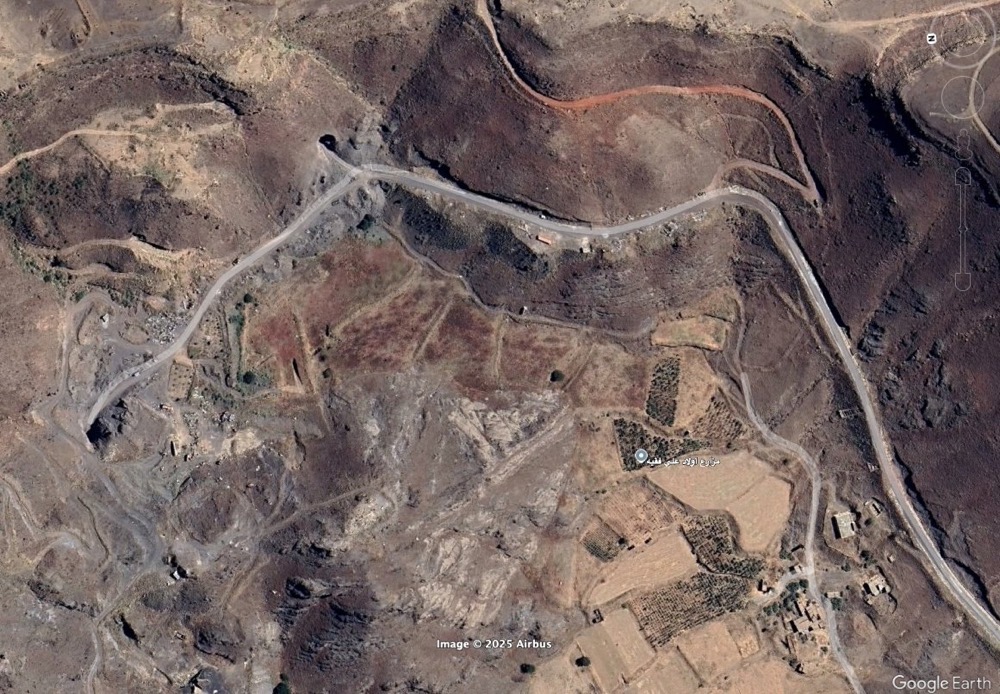
Strikes continued throughout the weekend and into Monday. (Google Earth)
“CENTCOM has shifted from the mission as a ‘defensive operation’ for protecting international shipping to a large-scale operation,” Hisham Mgdashi, a Yemeni military and security analyst, said in an assessment of the US military attacks on X.
“The latest strikes targeted entirely new locations that had not been previously hit. Hitting Al-Jarraf is strategically comparable to striking Dahiyeh in Beirut. The continued waves of operations suggest that a pre-planned target list is being systematically executed.”
In a post on X on Monday morning, Houthi health ministry spokesman Anis Al-Asbahi said that the US strikes had so far killed 53 people, including “five children and two women,” and wounded 98 others. As yet there is no confirmation of US claims that “key Houthi figures” were targeted and have been killed.
The Houthis had actually paused their attacks on shipping in January but appeared poised to resume them. On March 7 Abdul Malik Al-Houthi, the group’s leader, released a statement on X, saying he was giving the mediators of the Gaza peace process “a four-day deadline. If the Israeli enemy continues to withhold humanitarian aid from the Gaza Strip, we will resume our naval operations against them. We will respond to the siege with a siege in the Red Sea.”
Al-Houthi’s whereabouts are currently unknown. Five days ago, a source within the Houthi militia told Newsweek magazine that it was “proceeding with extreme caution” to protect its leadership, “but at the same time, we are highly prepared to make sacrifices and cannot back down.”
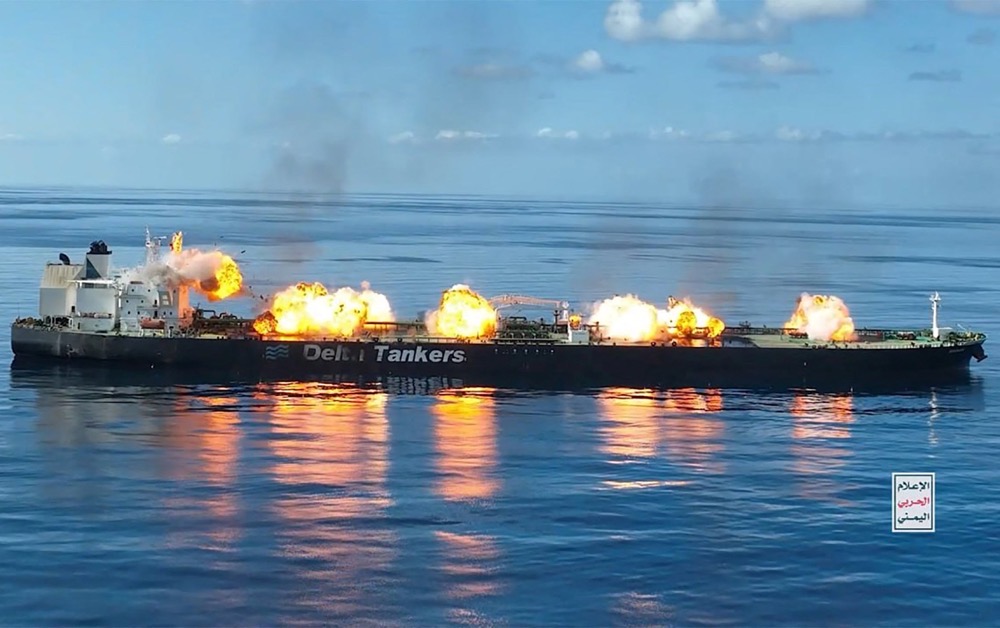
It is quite possible that the Houthis have a sufficiently large and well distributed arsenal to resume and keep up their attacks on shipping for some time. (Ansarullah Media Centre/AFP)
It is not known if Al-Houthi is on the American hit list, but Israel has already made clear its eagerness to see him killed. In December Energy Minister Eli Cohen told an Israeli radio station: “I’m sending a message to the Houthi leader that if he continues with his actions, he will end up exactly like (Hamas leader) Sinwar and (Hezbollah Secretary-General) Nasrallah.” Both Sinwar and Nasrallah were killed in separate attacks last year by Israeli forces.
It is also unclear whether Israel will join the US assault on the Houthis, but in the recent past it has attacked Yemen unilaterally, its aircraft hitting port facilities in September in response to missile attacks on Israel from Yemen.
The Houthi attacks on Red Sea shipping began after the Hamas assault on Israel in October 2023. Since then, Trump said, the last American warship to pass through the Red Sea “was attacked by the Houthis over a dozen times.”
In November 2024, the Biden administration had authorized a series of airstrikes “against multiple Houthi weapons storage facilities (which) housed a variety of advanced conventional weapons used by the Iran-backed Houthis to target US and international military and civilian vessels navigating international waters in the Red Sea and Gulf of Aden.”
FASTFACTS
• Iran-backed Houthis descended from Saada to seize most of north Yemen, including Sanaa, in 2014.
• Yemen’s UN-recognized government, backed by a coalition, has been fighting the militia since then.
• The conflict has left 150,000+ dead and thousands more wounded, both combatants and civilians.
• Yemen’s govt. ‘monitored and documented’ 1,985 violations committed by the Houthis during 2024.
But this response, Trump wrote on Truth Social at the weekend, had been “pathetically weak.” Now, by contrast, “we will use overwhelming lethal force until we have achieved our objective.”
Resorting to his trademark capitals for emphasis, Trump added: “To all Houthi terrorists, YOUR TIME IS UP, AND YOUR ATTACKS MUST STOP, STARTING TODAY. IF THEY DON’T, HELL WILL RAIN DOWN UPON YOU LIKE NOTHING YOU HAVE EVER SEEN BEFORE!”
That seems highly possible, given the predictable response from the Houthis: “The American aggression on Yemen,” they said in a statement, “is a criminal escalation that will not break the resolve of the Yemeni people and will only increase their determination to support Gaza and the resistance.”

President Donald Trump looks on as military strikes are launched against the Houthis. (White House)
On Monday, the Houthis claimed to have launched two attacks against the US carrier group in the Red Sea over the weekend. An anonymous US official cited by some media reports confirmed the carrier and other ships had been targeted by 11 drones, all of which had been shot down, and a missile that fell into the sea. No US ships were hit.
“The idea that you’re going to do this massive wave of airstrikes and the Houthis are just going to lie on their backs and take it is absurd,” Mohammad Albasha, founder of Basha Report, a US-based Middle East security advisory, told the Wall Street Journal on Sunday. “They’re going to retaliate and retaliate severely. It’s going to be a vicious cycle.”
Regardless of the scale of any Houthi response, analysts say the US military strikes look like the beginning of a sustained campaign that could last for weeks regardless of how high the final bill for the Pentagon. “The minute the Houthis say, ‘We’ll stop shooting at your ships, we’ll stop shooting at your drones,’ this campaign will end. But until then, it will be unrelenting,” Pete Hegseth, the US defense secretary, told Fox News, describing freedom of navigation as “a core national interest.”
The Houthi attacks on shipping have been cripplingly effective. According to a statement released by the White House on Saturday, since November 2023, when the Houthis seized the M/V Galaxy Leader and began to attack commercial shipping with anti-ship missiles and uncrewed aerial vehicles, they have attacked US warships more than 174 times and commercial vessels 145 times.
As a result, the number of merchant ships passing through the Red Sea has more than halved from 25,000 a year to about 10,000, having “a sustained negative effect on global trade and the economic security of the United States.”

The Houthis had actually paused their attacks on shipping in January but appeared poised to resume them. (AFP)
An estimated 75 percent of US- and UK-affiliated vessels now reroute around Africa instead of risking a transit of the Red Sea. Traveling via the Cape of Good Hope instead of the Red Sea and Suez Canal adds an average of 10 days to voyages to Europe from the Middle East or Far East, with an estimated additional fuel cost of $1 million for each trip.
That factor alone, claims the White House, was responsible for increasing global consumer goods inflation between 0.6 and 0.7 percent in 2024.
The Trump administration is signaling that the attacks on the Houthis, while designed to end their attacks on Red Sea shipping, are also a warning shot aimed at Tehran.
“Support for the Houthi terrorists must end IMMEDIATELY,” Trump warned Iran. If not, “BEWARE, because America will hold you fully accountable and, we won’t be nice about it!”
Shortly after, in an interview with ABC, Mike Waltz, White House national security adviser, delivered a heavy hint that direct action against Iran was now being considered by the administration.
“All options are always on the table with the president, but Iran needs to hear him loud and clear,” he said.
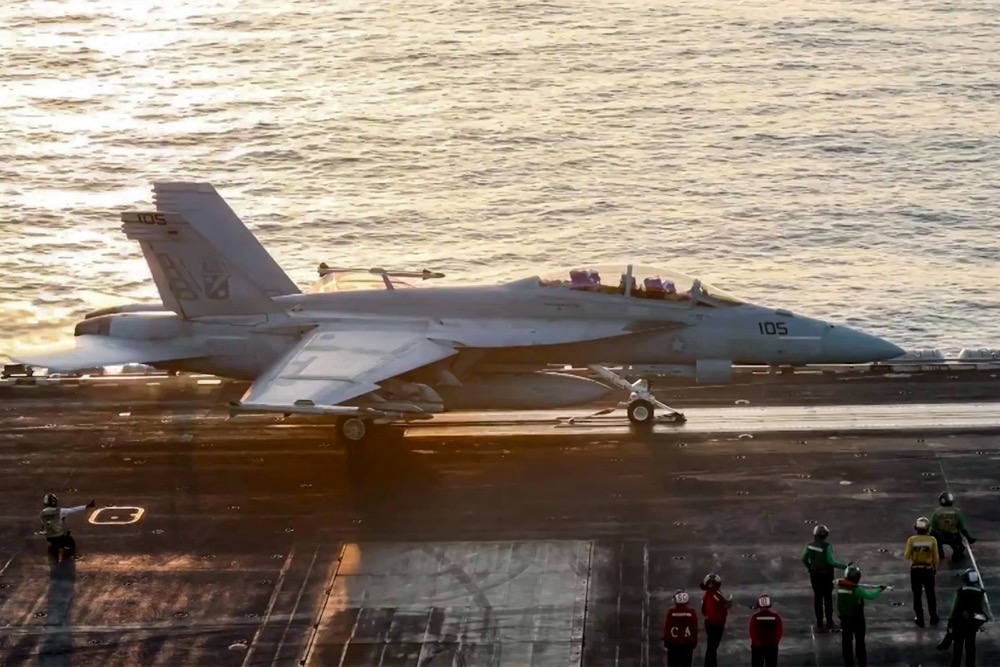
A US F/A-18 fighter aircraft preparing for take off. (CENTCOM)
“It is completely unacceptable, and it will be stopped, the level of support that they have been providing the Houthis, just like they have Hezbollah, the militias in Iraq, Hamas and others.
“The previous administration had a series of feckless responses. President Trump is coming in with overwhelming force (and) we will hold not only the Houthis accountable but we’re going to hold Iran, their backers, accountable as well.”
That accountability also extends to concerns about Iran’s nuclear program. On March 7 Trump said at the White House that Iran would not be allowed to have nuclear weapons.
“We are at final moments with Iran,” he said. “Something’s going to happen very soon. There’ll be some interesting days ahead, that’s all I can tell you. You know, we’re down to final strokes with Iran.”
He had, he said, sent a letter to Iran’s Supreme Leader, Ali Khamenei, “saying, I hope you're going to negotiate because if we have to go in militarily, it's going to be a terrible thing for them.”
Tehran’s UN mission later said that no such letter had been received.
Speaking on ABC News on Saturday, Stephen Ganyard, a military analyst and retired US Marine Corps colonel, said the “intended audience” of the weekend attacks “was Iran. The Trump administration has made it clear that they want the Iranians to negotiate an end to their nuclear program, and if they don’t there could be military action like we saw tonight, directly against Iran.”

It is not known if Houthi leader Abdul Malik Al- Houthi is on the US hit list. (X)
Meanwhile, although US forces are obviously capable of identifying and hitting targets with pinpoint accuracy, it is quite possible that the Houthis have a sufficiently large and well distributed arsenal to resume and keep up their attacks on shipping for some time.
“The Houthis have been able to maintain their pressure campaign despite efforts from the US, EU and the international community to restrain attacks,” Caroline Rose, director of the Strategic Blind Spots Portfolio at the New Lines Institute, told Arab News by email. “While Iran’s proxy network in the Levant has largely become dislodged — between Hezbollah’s decline in Lebanon, the departure of the Assad regime in Syria, and a decline of militia influence in Iraq — it’s likely that Iran has channeled its attention and resources toward the Houthis, given their effectiveness in launching strikes against commercial maritime vessels and military assets as an extension of the conflict in Gaza.”
According to the International Institute for Strategic Studies, over the past few years “the Houthis have amassed a remarkably diverse array of anti-ship weaponry”. In a research paper published in December the IISS concluded that the Houthis possessed at least six different types of ballistic anti-ship missile, with ranges from between less than 200 and up to 1,300 km, “all of which either originate from Iran or are based on Iranian technology.”
In addition, when the Houthis seized control in northern Yemen in 2014-15, “they inherited a number of older Soviet and Chinese anti-ship cruise missiles (ASCMs) from Yemen’s pre-war navy,” and since then had been receiving regular shipments of Iranian ASCMs.
Other weapons the Houthis have deployed against shipping include Sammad drones, also of Iranian origin, which are used both to identify and, carrying an 18kg warhead, to strike targets, and fast, remotely controlled unmanned boats packed with explosives. This type of surface weapon was first used in 2017 in an attack on the Saudi frigate Al-Madinah, which killed two of the crew, and has been deployed against Red Sea shipping over the past year.
The size of the Houthis’ anti-ship arsenal is not known. What is clear, however, according to IISS, is that “the international arms embargo that has been in place against the Houthis since 2015 has demonstrably failed to prevent them from obtaining increasingly advanced weapons from Iran and other sources.”

President Trump announced he had ordered the US military “to launch decisive and powerful military action against the Houthi terrorists in Yemen.” (White House)
Nevertheless, the Trump administration seems determined to “punch back,” in the words of Morgan Ortagus, the deputy presidential special envoy to the Middle East.
“Terrorists are not going to be allowed to shoot at US Navy ships, to shoot at our soldiers, to shoot at our commercial vessels, to impede free and fair commerce and trade,” she said, speaking on Fox News on Sunday.
“We’re going to put an end to that … these are not the strikes from the Biden administration that were for show.”
US Secretary of State Marco Rubio reinforced that message in a recent appearance on CBS News. The US, he said, was “doing the entire world a favor by getting rid of these guys and their ability to strike global shipping. That's the mission here, and it will continue until that’s carried out.”


