Layali Diriyah 2025 and Minzal: A celebration of heritage, innovation, and art

1 / 5
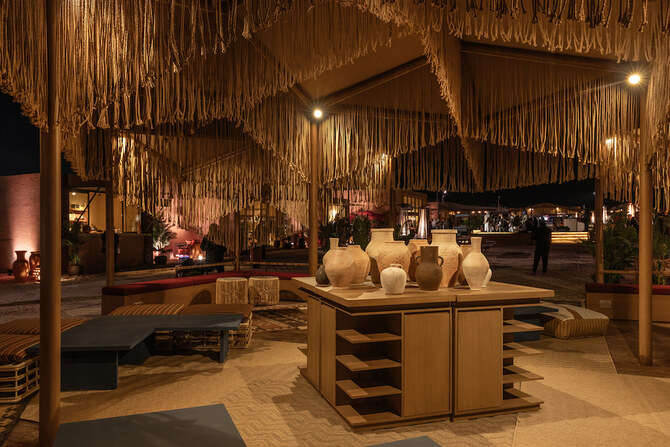
Layali Diriyah returns for a third year – set against a historic landscape – as the open-air event celebrates Saudi Arabia’s past, present and future. (Walid Nassrallah/Roberto Conte, Courtesy of Designlab Experience)
2 / 5
Layali Diriyah returns for a third year – set against a historic landscape – as the open-air event celebrates Saudi Arabia’s past, present and future. (Walid Nassrallah/Roberto Conte, Courtesy of Designlab Experience)
3 / 5
Layali Diriyah returns for a third year – set against a historic landscape – as the open-air event celebrates Saudi Arabia’s past, present and future. (Walid Nassrallah/Roberto Conte, Courtesy of Designlab Experience)
4 / 5
Layali Diriyah returns for a third year – set against a historic landscape – as the open-air event celebrates Saudi Arabia’s past, present and future. (Walid Nassrallah/Roberto Conte, Courtesy of Designlab Experience)
5 / 5
Layali Diriyah returns for a third year – set against a historic landscape – as the open-air event celebrates Saudi Arabia’s past, present and future. (Walid Nassrallah/Roberto Conte, Courtesy of Designlab Experience)
Short Url
Updated 19 March 2025
Follow

Layali Diriyah 2025 and Minzal: A celebration of heritage, innovation, and art

RIYADH: Layali Diriyah returns for a fourth year — set against a historic landscape — as the open-air event celebrates Saudi Arabia’s past, present and future.

The event, from February to April, focuses on three themes: heritage and craftsmanship; education and knowledge; and nature.

More than just a cultural event, Layali Diriyah is an immersive journey that blends heritage with artistic legacy. Since its debut in January 2023, it has attracted more than 110,000 visitors. 

Led by the Diriyah Gate Development Authority, this initiative highlights the transformation of Saudi Arabia’s founding place. 

The retreat combines gastronomy, retail, art and entertainment on a picturesque palm tree farm near At-Turaif, the UNESCO World Heritage site. 

Visitors can take a culinary journey featuring nine restaurants, a retail village, and five stages presenting predominantly local talent.

A standout feature this year is the Chef’s Table, where high-profile chefs present live cooking demonstrations for groups of up to 23 guests. Each restaurant offers distinct themes, ranging from circular pods nestled among trees for privacy to mudbrick-inspired grilling stations, enhancing the dining experience with cultural resonance.

Installations by local and international artists play a central role in Layali Diriyah. Khulod Albugami’s “Lahauj,” inspired by Najdi architectural windows, symbolizes a bridge between past and present. Dr. Saad Al-Huwaidi’s “Three Golden Stages” narrates the evolution of Saudi identity through the use of “Qitan,” a material from traditional garments representing pivotal moments in the country’s history. 

Hibah Albakree, managing partner and co-founder of Designlab Experience, expressed her excitement about the event. “One of the things that is really nice about Layali Diriyah is the familiarity of the guest journey. Each year, it repeats, giving guests a sense of comfort. If you have to turn left instead of right, people might wonder why it’s different. This familiarity is the anchor of the project.”

As guests navigate the event, they encounter an enchanting display of lights. “Layali is always about lights,” Albakree said.

This year, the lighting has evolved significantly. “In the first year, we used vibrant flowers to create a blooming effect. The second year (we) elevated the lights to highlight the palm trees. This year, we are using oversized lighting elements inspired by local flora, such as palm trees,” she said.

The art installations are not merely decorative, they tell stories deeply woven into Saudi culture. For instance, Zahara Alghamdi’s “Birth of a Place” is an elegy to Diriyah’s ancestral foundations through sculptural clay forms that symbolize cycles of destruction and rebirth.

Minzal, another project developed by Designlab Experience in Diriyah, which lasted until Feb. 22, complements Layali Diriyah. Set in the historic birthplace of Saudi Arabia, Minzal offers an innovative cultural retreat that harmonizes with the rugged landscape. It features diverse experiences such as stargazing, horseriding, live performances, and luxury glamping, all while integrating Saudi heritage.

Yvonne Hoffzimmer, chief operating officer of Designlab Experience, said: “We have three distinct areas: glamping, interactive workshops, and hospitality. It’s a casual, relaxed outdoor experience, allowing guests to spend several hours enjoying the atmosphere. While Layali is typically a shorter experience, Minzal invites guests to immerse themselves fully.”

Minzal has areas for glamping and stargazing, while Birwaz is a vibrant community space for cultural and commercial activities, featuring workshops, food kiosks, and performance zones. 

“The architectural language employs mud-textured finishes and colorful geometries, creating a tactile narrative of the region's legacy,” Hoffzimmer said.

Almashab invites social interaction around a central bonfire, with shisha lounges and tensile structures, providing a space for guests to gather and unwind. The stargazing station features intimate pods designed for celestial exploration, allowing visitors to enjoy astronomy sessions while savoring Saudi coffee.

Layali Diriyah 2025 and Minzal are more than mere festivals, they are celebrations of Saudi identity, innovation and art, presenting the Kingdom’s rich cultural tapestry while paving the way for future artistic endeavors.

Decoder

What is Minzal?

Minzal is an event set in Diriyah, the historic birthplace of Saudi Arabia. Minzal features diverse experiences such as stargazing, horseriding, live performances, and luxury glamping, all while integrating Saudi heritage. It was designed to complement Layali Diriyah, an immersive journey that blends heritage with artistic legacy.


Saudi chef wins culinary competition

Updated 18 December 2025
Follow

Saudi chef wins culinary competition

  • Event aimed to empower chefs’ ability to showcase talent on global scale 
  • Bayan Abdullah Al-Sudani: It (has) encouraged me to participate in more challenging spaces

RIYADH: A Saudi has won the Saudi Elite Chefs competition at Horeca Riyadh.

The event, which was organized by the Culinary Arts Commission of the Ministry of Culture, in alignment with the ministry’s long-term goals, aimed to empower Saudi chefs’ ability to showcase their talent and creativity on a global scale.

Speaking to Arab News, the winner, Bayan Abdullah Al-Sudani, shed light on how the competition equipped her with confidence for the future, saying: “It was a big challenge, and I faced off against strong chefs. It (has) encouraged me to participate in more challenging spaces.”

On her future plans, Al-Sudani wants to give back to the industry, and added: “I look forward to opening the Bayan Academy soon so that I can support chefs and help them with the pastry sector specifically.”

Celebration and achievement were echoed throughout, and it was evident at the event that the culinary industry in the Kingdom is hungry for growth, recognition, and global competition.

Seba Zarea, general manager of strategy and program delivery at the Culinary Arts Commission, told Arab News of the many facets of the industry that the ministry was prioritizing.

Zarea said: “This competition is just one of the initiatives that the Culinary Arts Commission is working on. There are also local scholarships (and) vocational training. We are also working on attracting the best culinary schools to Saudi. For example, Le Cordon Bleu is opening next year in Misk City.”

Zarea stressed the rewards of events like the Saudi Elite Chefs competition, adding that the winner had a fast track to Bocuse d’Or and the World Pastry Cup — representing global opportunities to place both competitors and Saudi cuisine on the map.

Zarea added: “Food is a soft power and, in terms of tourism, food is a universal language so we codified the Saudi cuisine, an initiative started four years ago, and we came up with more than 1,300 codified recipes, items, and local produce from the Kingdom.”

Zarea went into depth on some of the behind-the-scenes efforts that have helped create the food that the Kingdom is able to showcase.

She shared the example of the Wild Plant Initiative, a program designed to explore plants of various regions in the Kingdom to discover new ingredients that can be integrated into Saudi cuisine.

These efforts go into helping to build an industry that is rooted in culture, creativity, and passion. 

In the same way that the Saudi Elite Chefs competition provides its winners and participants with the tools to bring their success to global attention, the Culinary Arts Commission works to elevate the Kingdom’s cuisine through tourism and hospitality.

Zarea said: “This sector is the easiest way to showcase the culture.”