LONDON: The UK’s Royal Navy has used drones to foil drug smuggling for the first time as part of an operation in the northern Arabian Sea.
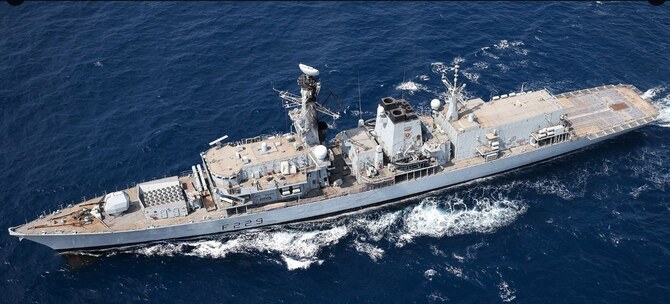
The crew of HMS Lancaster spotted suspicious boats using new Peregrine miniature helicopters that are controlled remotely, the Daily Telegraph reported on Friday.
Operators of the drones detected the two boats side by side at night, and a Wildcat helicopter was dispatched to inspect the vessels at a closer distance.
The crew on the helicopter saw a small fast boat and a dhow, with packages being transferred onto the latter.
After HMS Lancaster arrived to intercept the vessels, $6.9 million worth of drugs were discovered despite the crew of the small boats attempting to dump the packages.
The Peregrine is 3 meters long and has a flight time of up to five hours. It is the first remote-controlled helicopter operated by the Royal Navy and can transfer data, radar information and imagery back to warship control rooms.
It has radically improved the navy’s ability to carry out drug busts, a source told the Telegraph.
HMS Lancaster, which has operated out of Bahrain for more than two years, was in the region as part of the international Combined Task Force 150. The coalition aims to clamp down on illegal activity in the Middle East.


![]()

UK Royal Navy busts drug smuggling using drones for first time
Short Url
https://arab.news/8jn87
UK Royal Navy busts drug smuggling using drones for first time
- Arabian Sea operation intercepts $6.9m worth of drugs
- HMS Lancaster operates out of Bahrain


Latest updates


© 2026 SAUDI RESEARCH & PUBLISHING COMPANY, All Rights Reserved And subject to Terms of Use Agreement.