


WASHINGTON: President Donald Trump openly challenged US allies on Wednesday by increasing tariffs on all steel and aluminum imports to 25 percent as he vowed to take back wealth “stolen” by other countries, drawing quick retaliation from Europe and Canada.
The Republican president’s use of tariffs to extract concessions from other nations points toward a possibly destructive trade war and a stark change in America’s approach to global leadership. It also has destabilized the stock market and stoked anxiety about an economic downturn.
“The United States of America is going to take back a lot of what was stolen from it by other countries and, frankly, by incompetent US leadership,” Trump told reporters on Wednesday. “We’re going to take back our wealth, and we’re going to take back a lot of the companies that left.”
Trump removed all exemptions from his 2018 tariffs on the metals, in addition to increasing the tariffs on aluminum from 10 percent. His moves, based off a February directive, are part of a broader effort to disrupt and transform global commerce.
He has separate tariffs on Canada, Mexico and China, with plans to also tax imports from the European Union, Brazil and South Korea by charging “reciprocal” rates starting on April 2.
The EU announced its own countermeasures on Wednesday. European Commission President Ursula von der Leyen said that as the United States was “applying tariffs worth 28 billion dollars, we are responding with countermeasures worth 26 billion euros,” or about $28 billion. Those measures, which cover not just steel and aluminum products but also textiles, home appliances and agricultural goods, are due to take effect on April 1.
US Trade Representative Jamieson Greer responded by saying that the EU was punishing America instead of fixing what he viewed as excess capacity in steel and aluminum production.
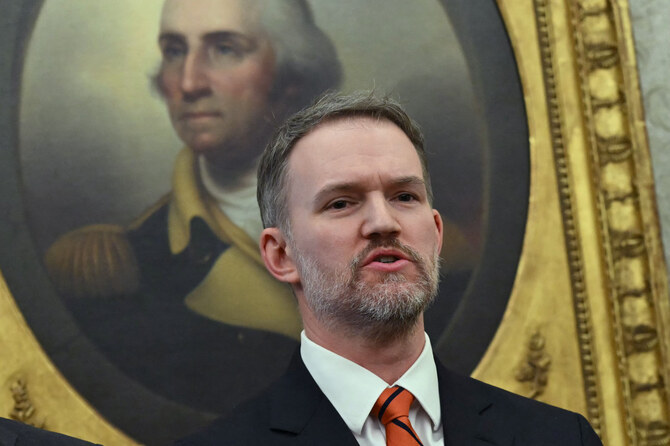
“The EU’s punitive action completely disregards the national security imperatives of the United States – and indeed international security – and is yet another indicator that the EU’s trade and economic policies are out of step with reality,” he said in a statement.
Meeting on Wednesday with Ireland’s Taoiseach Micheál Martin, Trump said “of course” he wants to respond to EU’s retaliations and “of course” Ireland is taking advantage of the United States.
“The EU was set up in order to take advantage of the United States,” Trump said.
Last year, the United States ran a $87 billion trade imbalance with Ireland. That’s partially because of the tax structure created by Trump’s 2017 overhaul, which incentivized US pharmaceutical companies to record their sales abroad, Brad Setser, a senior fellow at the Council of Foreign Relations, said on X.
Canada sees itself as locked in a trade war because of White House claims about fentanyl smuggling and that its natural resources and factories subtract from the US economy instead of supporting it.
“This is going to be a day to day fight. This is now the second round of unjustified tariffs leveled against Canada,” said Mélanie Joly, Canada’s foreign affairs minister. “The latest excuse is national security despite the fact that Canada’s steel and aluminum adds to America’s security. All the while there is a threat of further and broader tariffs on April 2 still looming. The excuse for those tariffs shifts every day.”
Canada is the largest foreign supplier of steel and aluminum to the United States and plans to impose retaliatory tariffs of Canadian $29.8 billion ($20.7 billion) starting Thursday in response to the US taxes on the metals.
Canada’s new tariffs would be on steel and aluminum products, as well as US goods including computers, sports equipment and water heaters worth $14.2 billion Canadian ($9.9 billion). That’s in addition to the 25 percent counter tariffs on $30 billion Canadian ($20.8 billion) of imports from the US that were put in place on March 4 in response to other Trump import taxes that he’s partially delayed by a month.
Trump told CEOs in the Business Roundtable a day earlier that the tariffs were causing companies to invest in US factories. The 7.5 percent drop in the S&P 500 stock index over the past month on fears of deteriorating growth appears unlikely to dissuade him, as Trump argued that higher tariff rates would be more effective at bringing back factories.
“The higher it goes, the more likely it is they’re going to build,” Trump told the group. “The biggest win is if they move into our country and produce jobs. That’s a bigger win than the tariffs themselves, but the tariffs are going to be throwing off a lot of money to this country.”
Trump on Tuesday had threatened to put tariffs of 50 percent on steel and aluminum from Canada, but he chose to stay with the 25 percent rate after the province of Ontario suspended plans to put a surcharge on electricity sold to Michigan, Minnesota and New York.
Democratic lawmakers dismissed Trump’s claims that his tariffs are about national security and drug smuggling, saying they’re actually about generating revenues to help cover the cost of his planned income tax cuts for the wealthy.
“Donald Trump knows his policies could wreck the economy, but he’s doing it anyway,” said Senate Democratic Leader Chuck Schumer of New York. “Why are they doing all these crazy things that Americans don’t like? One reason, and one reason alone: tax breaks for billionaires, the north star of the Republican party’s goals.
In many ways, the president is addressing what he perceives as unfinished business from his first term. Trump meaningfully increased tariffs, but the revenues collected by the federal government were too small to significantly increase overall inflationary pressures.
Outside forecasts by the Budget Lab at Yale University, Tax Policy Center and others suggest that US families would have the costs of the taxes passed onto them in the form of higher prices.
With Wednesday’s tariffs on steel and aluminum, Trump is seeking to remedy his original 2018 import taxes that were eroded by exemptions.
After Canada and Mexico agreed to his demand for a revamped North American trade deal in 2020, they avoided the import taxes on the metals. Other US trading partners had import quotas supplant the tariffs. And the first Trump administration also allowed US companies to request exemptions from the tariffs if, for instance, they couldn’t find the steel they needed from domestic producers.
While Trump’s tariffs could help steel and aluminum plants in the United States, they could raise prices for the manufacturers that use the metals as raw materials.
Moreover, economists have found, the gains to the steel and aluminum industries were more than offset by the cost they imposed on “downstream’’ manufacturers that use their products.
At these downstream companies, production fell by nearly $3.5 billion because of the tariffs in 2021, a loss that exceeded the $2.3 billion uptick in production that year by aluminum producers and steelmakers, the US International Trade Commission found in 2023.
Trump sees the tariffs as leading to more domestic factories, and the White House has noted that Volvo, Volkswagen and Honda are all exploring an increase to their US footprint. But the prospect of higher prices, fewer sales and lower profits might cause some companies to refrain from investing in new facilities.
“If you’re an executive in the boardroom, are you really going to tell your board it’s the time to expand that assembly line?” said John Murphy, senior vice president at the US Chamber of Commerce.
The top steel exporters to the US are Canada, Mexico, Brazil, South Korea and Japan, with exports from Taiwan and Vietnam growing at a fast pace, according to the International Trade Administration. Imports from China, the world’s largest steel producer, account for only a small fraction of what the US buys.
The lion’s share of US aluminum imports comes from Canada.


