Fitch affirms Kuwait’s rating at AA-, outlook stable

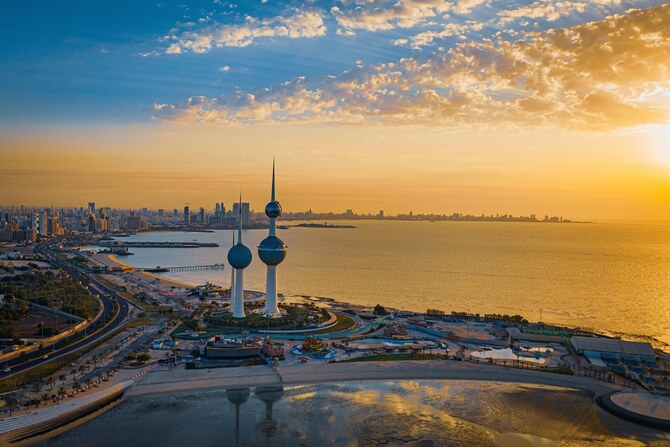
Kuwait’s overall revenue is expected to decline in the financial year 2025 due to oil revenue loss from lower crude prices. Shutterstock
Short Url
Updated 09 March 2025
Follow

Fitch affirms Kuwait’s rating at AA-, outlook stable

  • Assets projected to rise to 601% of GDP this year from an estimated 582% in 2024
  • Government planning to introduce long-delayed excise tax in fiscal year ending March 2026

RIYADH: Fitch Ratings has reaffirmed Kuwait’s Long-Term Foreign-Currency Issuer Default Rating at AA-, with a stable outlook due to the country’s strong fiscal position and external financial consistency. 

The US-based agency said Kuwait’s external balance sheet remains the strongest of all Fitch-rated sovereigns, with the nation’s net foreign assets projected to rise to 601 percent of the gross domestic product this year from an estimated 582 percent in 2024. 

According to Fitch, an AA- ranking indicates expectations of very low credit risk and a strong capacity for payment of financial commitments. 

Kuwait’s strong rating aligns with the broader trend in the Middle East region, where countries steadily diversify their economies by reducing their dependence on crude revenues. 

In February, Fitch Ratings affirmed Saudi Arabia’s IDR at A+ with a stable outlook, while the UAE was rated AA-. 

The Kingdom’s A+ ranking indicates Saudi Arabia’s strong capacity to pay financial commitments while signifying low default risk. 

“The recently-appointed government has initiated reforms aimed at reducing reliance on oil revenue, improving government efficiency, and rationalizing spending, capping it at 24.5 billion dinars ($79.53 billion), accounting for about 51 percent of GDP,” said Fitch Ratings. 

The report further said that the Kuwaiti government’s introduction of a 15 percent domestic minimum top-up tax on multinational companies came into effect on Jan. 1. It is expected to generate about 0.5 percent of GDP, amounting to 250 million dinars annually, with collections expected to commence by 2027. 

The government is also planning to introduce the long-delayed excise tax in the fiscal year ending March 2026. 

“Fitch views the pick-up in reform efforts as positive. However, a significant overhaul of generous public wages and welfare spending (79 percent of total expenditure; 40 percent of GDP) is unlikely in the short term, given the state’s deep-rooted generosity toward Kuwaiti citizens and still favorable oil prices,” the analysis added. 

The Kuwaiti government is also planning to pass a liquidity/debt law, which will enable the country to raise new debt. 

The agency said even without a liquidity law, the government would still be able to meet its financing obligations in the coming years, given the substantial assets at its disposal.

Kuwait’s overall revenue is expected to decline in the financial year 2025 due to oil revenue loss from lower crude prices as OPEC+ continues production cuts to maintain market stability, according to Fitch.

The country’s non-oil revenues are expected to grow modestly in the financial year but fall short of the government’s target of 2.9 billion dinars. 

The study further said that the Kuwait government’s debt to GDP rose to 6 percent in FY25 and 9.2 percent in FY26, despite a $4.5 billion Eurobond maturing in March 2027. 

The report also outlined some constraints that affected Kuwait’s rating, including the country’s weaker governance than peers, heavy dependence on oil, and its generous welfare system and large public sector, which could result in long-term fiscal pressure. 

“Prospects remain unclear for meaningful fiscal adjustment to address long-term challenges and legislation to allow debt issuance and improve fiscal financing flexibility, although there are emerging signs of progress,” said Fitch. 


Saudi investment hits 32% of GDP, non-oil fixed capital reaches 40%, minister says

Updated 05 January 2026
Follow

Saudi investment hits 32% of GDP, non-oil fixed capital reaches 40%, minister says

RIYADH: Saudi Arabia’s investment now accounts for 32 percent of gross domestic product, with non-oil fixed capital at 40 percent, according to the minister responsible for portfolio.

Speaking during his visit to the Shoura Council, Khalid Al-Falih said that foreign direct investment is expected to grow fivefold, signaling strong Vision 2030 progress.

“Regarding cumulative performance, the Kingdom has exceeded all expectations, achieving high levels of investment,” Al-Falih said, according to a video posted on Al-Ekhbariya’s X account focused on economic matters.

The minister added: “Today, investment accounts for 32 percent of the total GDP. In terms of non-oil GDP, fixed capital represents 40 percent, compared with 41 percent in China, the highest globally.”

If we take the non-oil GDP, he said, fixed capital will make 40 percent. “China is the largest globally with 41 percent. So, we will rank second if we compare it to the non-oil economy and fourth when measured against total GDP,” Al-Falih said.

He emphasized that the Kingdom offers an investment-attractive environment, noting that when focusing on foreign direct investment rather than overall investment, Saudi Arabia ranks among the world’s highest.

The minister of investment added that FDI is expected to grow fivefold by the end of 2025, though these data require confirmation, stressing that this is “a big indicator for the success of Saudi Vision 2030.”

During his address to the session, Al-Falih emphasized that Saudi Vision 2030 prioritizes economic diversification and reducing dependence on oil, through boosting the private sector’s contribution to inclusive economic development, supporting national sectoral priorities, and driving growth in the Kingdom’s GDP.

He highlighted key initiatives enabling the private sector, including the establishment of the Ministry of Investment and the Saudi Investment Promotion Authority, the launch of the “Shareek” program, the development of the National Investment Strategy, and linking all stakeholders in the investment ecosystem.

“The Cabinet’s adoption of the National Investment Strategy, launched by Crown Prince in 2021 and implemented in 2022 as a comprehensive national framework, has played a major role in positioning investment as a driver of economic growth,” he said.

Al-Falih revealed that the ministry has identified more than 2,000 investment opportunities worth over SR1 trillion ($267 billion), noting that 346 of these opportunities have been converted into closed deals valued at over SR231 billion through the “Invest Saudi” platform.

He also highlighted the success of the regional headquarters attraction program, with licenses issued to more than 700 global companies by the end of 2025, surpassing the 2030 target of 500 companies, across diverse sectors that reinforce Saudi Arabia’s role as a regional business hub.

The minister revealed that active investment licenses have grown tenfold, rising from 6,000 in 2019 to 62,000 by the end of 2025, highlighting the role of companies in creating over one million jobs, including numerous positions for Saudi nationals.

Al-Falih noted the Kingdom’s success in attracting 20 of the world’s top 30 banks, as part of efforts to strengthen the presence of leading asset managers and international banks in support of the Saudi banking sector.

He also discussed reforms to enhance the business environment, such as the Civil Transactions Law, Companies Law, and the updated Investment Law issued in mid-2024, which contributed to Saudi Arabia moving up 15 places in the global competitiveness ranking.

The minister also announced the update of the National Investment Strategy in 2025, focusing on quality, productivity, and directing investments toward sectors with the highest economic impact, while developing financing solutions for SMEs.