

Al-Wadi and Al-Jabal: embracing Ramadan’s cherished traditions

1 / 2
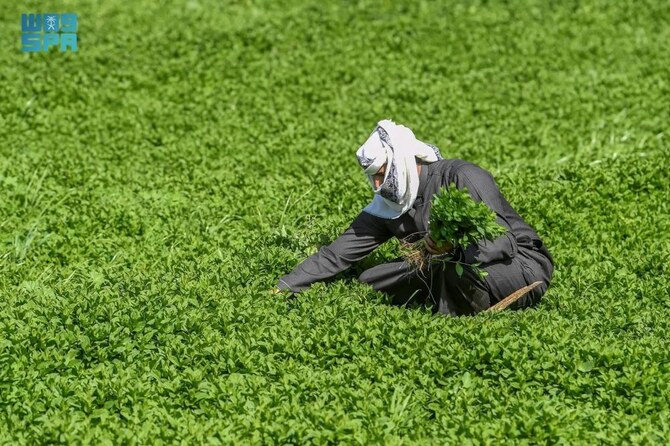
Al-Wadi and Al-Jabal village, Taif Governorate, exemplifies the enduring power of cherished traditions during Ramadan. (SPA)
2 / 2
Al-Wadi and Al-Jabal village, Taif Governorate, exemplifies the enduring power of cherished traditions during Ramadan. (SPA)
Short Url
Updated 20 March 2025
Follow

Al-Wadi and Al-Jabal: embracing Ramadan’s cherished traditions

  • Villagers, with unwavering devotion, pass down their customs, fostering a strong sense of community and shared experience
  • Kitchens come alive with the aromas of local dishes — recipes passed down through generations — prepared with fresh ingredients from their own farms

RIYADH: Al-Wadi and Al-Jabal village in the Taif governorate in the western part of Saudi Arabia exemplifies the enduring power of cherished traditions during the holy month of Ramadan.

The villagers, with unwavering devotion, pass down their customs, fostering a strong sense of community and shared experience.

Throughout the holy month, the village displays a rich tapestry of noble practices, interwoven with the villagers’ daily agricultural work.

At dawn they tend to their fields, harvesting fruit and flowers, maintaining water channels for their ancient trees and livestock, and completing essential tasks such as wall construction and material transport.

Families in Al-Wadi and Al-Jabal village observe Ramadan traditions by thoroughly cleaning their homes, encouraging children to fast, and celebrating the first day with gifts.

Their kitchens come alive with the aromas of local dishes — recipes passed down through generations — prepared with fresh ingredients from their own farms.

Speaking to the Saudi Press Agency, farmer Khalaf Al-Nemri explained how fasting provides a sense of focus for daily tasks.

“My father and I continue the cultural practices passed down from our ancestors, including the tradition of sharing iftar in our rural community,” Al-Nemri said.

“Our village traditions emphasize love and unity with family and friends after Isha and Taraweeh prayers, often held in traditional Ramadan tents,” Al-Nemri added.

“These enduring bonds strengthen solidarity, family unity and neighborly ties, positively influencing children’s behavior during Ramadan.”


Sale of Saudi artist Safeya Binzagr’s work sets record at Sotheby’s auction in Riyadh

Updated 8 min 23 sec ago
Follow

Sale of Saudi artist Safeya Binzagr’s work sets record at Sotheby’s auction in Riyadh

RIYADH: A painting by Saudi artist Safeya Binzagr sold for $2.1 million at Sotheby’s “Origins II” auction in Riyadh on Saturday, emerging as the top lot of the evening and setting a new auction record for a Saudi artist.

The work, “Coffee Shop in Madina Road” (1968), sold for $1.65 million before the buyer’s premium, the additional fee paid by the purchaser to the auction house on top of the hammer price.

The result nearly doubled the previous auction record for a Saudi artist and became the most valuable artwork ever sold at auction in the Kingdom. It also ranks as the third-highest price achieved for an Arab artist at auction.

It was presented as part of “Origins II,” Sotheby’s second auction staged in Saudi Arabia, comprising 62 modern and contemporary lots and bringing together Saudi artists alongside regional and international names.

Collectors from more than 40 countries participated in the auction, with around one-third of the lots sold to buyers within Saudi Arabia.

The sale totaled $19.6 million, exceeding its pre-sale estimate and bringing the combined value of works offered across “Origins” and “Origins II” to over $32 million.

Saudi artists were central to the evening’s results. All nine Saudi works offered found buyers, achieving a combined total of $4.3 million, well above pre‑sale expectations.

Ashkan Baghestani, Sotheby’s head of contemporary art for the Middle East, told Arab News at the auction that “Safeya made more than any other artist tonight, which is incredible.”

He said the results demonstrated Sotheby’s broader objective in the Kingdom.

“The results tonight show exactly what we’re trying to do here. Bring international collectors to Saudi Arabia and give them exposure to Saudi artists, especially the pioneers.”

All nine works by Saudi artists offered in the sale found buyers, generating a combined $4.3 million. Additional auction records were set for Egyptian artist Ahmed Morsi and Sudanese artist Abdel Badie Abdel Hay.

An untitled work from 1989 by Mohammed Al-Saleem sold for a triple estimate of $756,000, while a second work by the artist, “Flow” from 1987, achieved $630,000.

The sale opened with the auction debut of Mohamed Siam, whose “Untitled (Camel Race)” sold for $94,500. Also making his first auction appearance, Dia Aziz Dia’s prize-winning “La Palma (The Palma)” achieved $226,800.

The sale coincided with the opening week of the Contemporary Art Biennale in Riyadh, reinforcing the city’s growing role as a focal point for both cultural institutions and the art market.

Baghestani added that Saudi modern artists are now receiving long‑overdue recognition in the market.

“There’s so much interest and so much demand, and the price is where it should be,” he said.

International highlights included works by Pablo Picasso, Roy Lichtenstein, Andy Warhol and Anish Kapoor, underscoring Saudi Arabia’s growing role as a destination for major global art events and collectors.

Picasso’s “Paysage,” painted during the final decade of the artist’s life, sold for $1,600,000, becoming the second most valuable artwork sold at auction in Saudi Arabia.

Seven works by Lichtenstein from the personal collection of the artist and his wife, including collages, prints, works on paper and sculptures, all found buyers. Warhol was represented in the sale with two works: “Disquieting Muses (After de Chirico),” which sold for $1,033,200, and a complete set of four screenprints of “Muhammad Ali,” which achieved $352,000.

Baghestani said the strength of the results was closely tied to the material’s freshness. “These were not works from the trade. Some of them had not been seen since the 1970s,” he said.