UAE sees 3.8% GDP growth in first 9 months of 2024

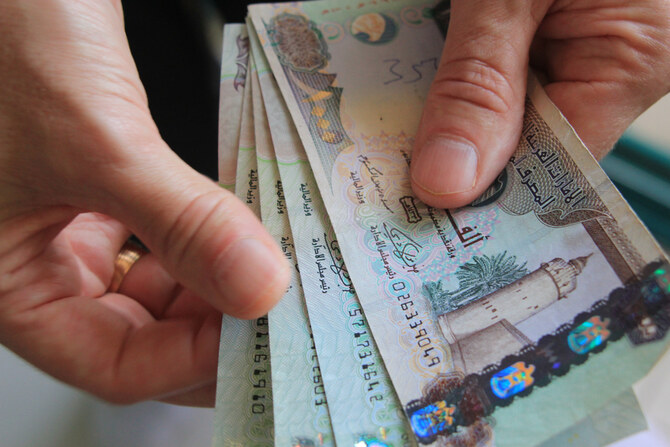
The growth of the non-oil sector in the UAE aligns with the broader trend in the Middle East region. Shutterstock
Short Url
Updated 06 March 2025
Follow

UAE sees 3.8% GDP growth in first 9 months of 2024

RIYADH: The UAE witnessed a 3.8 percent annual expansion in its gross domestic product in the first nine months of 2024, driven by the growth of the Emirates’ non-oil sector. 

Also during this period, the UAE’s non-oil economy grew by 4.5 percent year on year to 987 billion dirhams ($268.74 billion), the state news agency WAM reported. 

The report added that the contribution of non-oil activities to UAE’s real GDP reached 74.6 percent by the end of the first nine months of 2024, while oil-related activities contributed 25.4 percent. 

The growth of the non-oil sector in the UAE aligns with the broader trend in the Middle East region, where countries such as Saudi Arabia are pursuing economic diversification programs. 

Abdullah bin Touq Al Marri, UAE’s minister of economy, said that the continuous growth of the country’s economy reaffirms the success of the Emirates’ economic policies and strategies to enhance diversification. 

He added that the country also facilitates a friendly environment for business activities and promotes the expansion of new economic sectors as a key driver for sustainable economic and social development.

An analysis by the Central Bank of UAE in December said that the country’s GDP is expected to post a growth of 4 percent in 2024, driven by strong performance across key non-oil sectors, including tourism, transportation, and financial services, as well as insurance, construction, real estate, and communications. 

CBUAE added that the Emirates’ economic growth is projected to accelerate further to 4.5 percent in 2025 and 5.5 percent in 2026. 

The apex financial institution further said that the UAE’s non-oil GDP is projected to expand by 4.9 percent in 2024 and 5 percent in 2025.

The study attributed this projected boost to strategic government policies aimed at attracting foreign investment and promoting economic diversification.

In terms of the economic growth in the region, data released by Bahrain’s Information & eGovernment Authority in January revealed that the country’s GDP witnessed an increased rate of 2.1 percent in the third quarter of 2024 compared to the same period in 2023. 

In December, Qatar’s National Planning Center revealed that the country’s GDP rose by 2 percent in the third quarter of 2024 compared to the same period in the previous year. 

Earlier this month, the Saudi Arabia’s General Authority for Statistics revealed that the nation’s non-oil exports increased by 17.3 percent in the fourth quarter 2024 to reach SR82.05 billion ($21.88 billion). 


Council of Economic and Development Affairs reviews budget performance report during virtual meeting

Updated 8 sec ago
Follow

Council of Economic and Development Affairs reviews budget performance report during virtual meeting

JEDDAH: The Council of Economic and Development Affairs held a virtual meeting, the Saudi Press Agency has reported.

At the outset of the meeting, the council reviewed the quarterly report submitted by the Ministry of Economy and Planning, which included updates on the global economy and the impact of geopolitical challenges and volatility in global markets on growth prospects.

The report also addressed the latest developments related to the national economy and future projections through 2027, highlighting its high resilience in confronting global challenges and noting that various economic statistics and indicators point to remarkable growth that further cements the Kingdom’s position among the fastest-growing and most stable economies in the world.

The council reviewed the fourth-quarter performance report of the state’s general budget for fiscal year 2025, submitted by the Ministry of Finance, which provided a comprehensive overview of financial performance during the period, including developments in revenues and expenditures, public debt levels, and an analysis of local and global economic variables and their implications for financial indicators.

The report results showed the continued adoption of a balanced and flexible fiscal policy that supports economic growth and enhances financial sustainability over the medium and long terms, through the use of disciplined and efficient fiscal tools and the continuation of countercyclical spending, directed toward development programs and projects with economic and social impact, contributing to improving the quality of public services, stimulating investment, and strengthening the resilience of public finances.

The council discussed a number of procedural matters, including a draft Government Tenders and Procurement Law, a draft Space Law, and a briefing on steps taken regarding the assignment of the Council of University Affairs to update the regulations necessary for the governance of public and private universities and health colleges, supervise and follow up on them periodically, and update compliance processes in public and private universities and health colleges based on quality standards approved by the Council of University Affairs.

The council was also briefed on the results of the quarterly Real Estate Price Index report, along with two summaries of the monthly Consumer Price Index and Wholesale Price Index reports, and the underlying reports on which the summaries were based.

The council adopted the necessary decisions and recommendations regarding these matters.