ISLAMABAD: President Donald Trump announced on Tuesday the arrest of a senior Daesh commander implicated in the 2021 Kabul airport bombing that killed 13 US service members during the withdrawal of international forces from Afghanistan, thanking Pakistan for making it possible.
The August 26, 2021, suicide bombing at Hamid Karzai International Airport in Kabul occurred amid the US evacuation from the country, which also led to the death of about 170 Afghan civilians.
The incident drew widespread criticism of former President Joe Biden administration’s handling of the military pullout, with many, including members of Trump’s Republican Party, labeling it as poorly planned and executed.
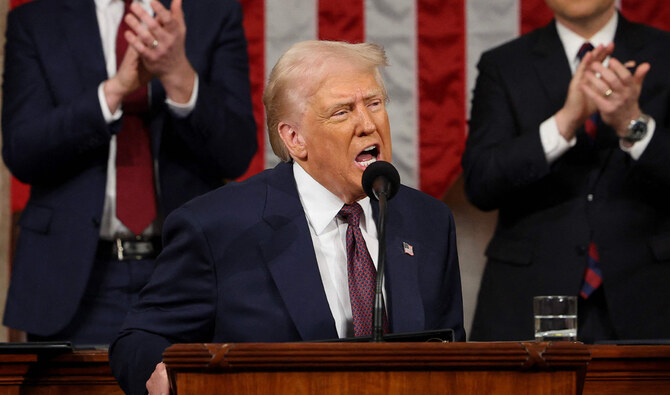
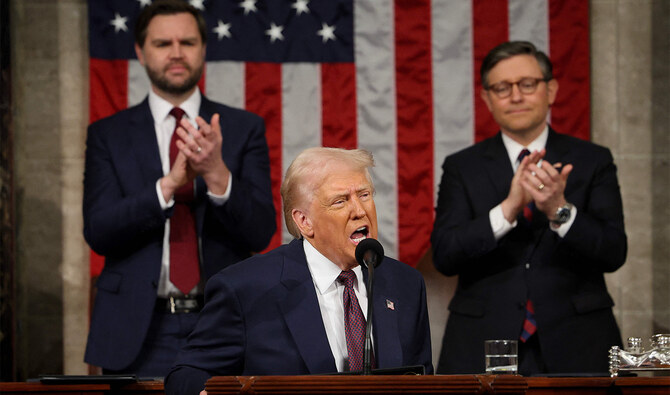
“ISIS [Daesh] terrorists killed 13 American service members and countless others in the Abbey Gate bombing during the disastrous and incompetent withdrawal from Afghanistan,” Trump said, referring to one of the Kabul airport entrances, while addressing the US Congress. “Not that they were withdrawing, it was the way they withdrew. Perhaps the most embarrassing moment in the history of our country. Tonight, I am pleased to announce that we have just apprehended the top terrorist responsible for that atrocity, and he is right now on his way here to face the swift sword of American justice.”
“And I want to thank especially the government of Pakistan for helping arrest this monster,” he continued. “This was a very momentous day for those 13 families who I actually got to know very well, most of them whose children were murdered, and the many people that were so badly, over 42 people so badly injured on that fateful day.”
According to reports in the US media, Trump was referring to Mohammad Sharifullah, a Daesh commander allegedly involved in masterminding the bombing. CNN said he was being “charged with providing and conspiring to provide material support for terrorism, according to a source familiar with the matter.”
It added: “Pakistan acted on CIA intelligence that led to the arrest of Sharifullah, according to another source familiar with the matter.”
Pakistan and the US have a history of cooperation in counterterrorism efforts, particularly during the “war on terror” following the September 11 attacks.
Despite periods of strained relations, Pakistan has captured and handed over several Taliban and Al-Qaeda members to US authorities.
However, both nations have faced criticism from human rights organizations, alleging that not all detainees were affiliated with militant groups and highlighting concerns over the treatment of these individuals, including reports of extreme interrogation techniques such as waterboarding and sleep deprivation.
While no comprehensive statement has emerged from Pakistan about the details of the operation leading to the Daesh leader’s arrest, Prime Minister Shehbaz Sharif thanked the US president for acknowledging and appreciating his country’s role and support in counterterrorism.
He also noted that Sharifullah was an Afghan national and confirmed the involvement of Pakistan’s security forces in his arrest.
“The wanted terrorist was apprehended in a successful operation conducted in [the] Pakistan-Afghanistan border region,” he said in a social media post on X.
“As is well-known, Pakistan has always played a critical role in counterterrorism efforts aimed at denying safe havens to terrorists and militant groups the space to operate against any other country,” he continued. “We remain steadfast in our resolve and unwavering commitment to combating terrorism in all its forms and manifestations.”
Sharif highlighted Pakistan’s sacrifices while fighting against militant groups, saying the country had lost over 80,000 of its soldiers and citizens.
“The resolve of our leadership and our people remains unflinching, to eradicate the menace of terrorism from our country,” he added. “We will continue to partner closely with the United States in securing regional peace and stability.”


![]()
Trump says Pakistan helped capture Daesh militant behind Kabul bombing that killed 13 Americans
Short Url
https://arab.news/p6rmm
Trump says Pakistan helped capture Daesh militant behind Kabul bombing that killed 13 Americans
- The bombing at Hamid Karzai International Airport took place when US forces were pulling out from Afghanistan
- Pakistan PM says his country will continue to partner closely with the US in securing regional peace and stability
Latest updates


© 2026 SAUDI RESEARCH & PUBLISHING COMPANY, All Rights Reserved And subject to Terms of Use Agreement.