KARACHI: Pakistan is continuing with macroeconomic reforms, its finance chief said on Tuesday, as a visiting International Monetary Fund (IMF) delegation formally kicked off the country’s economic review under a $7 billion loan program.
This is the first review carried out by the IMF since Pakistan secured the loan under the Extended Fund Facility (EFF). A nine-member mission of the global lending agency, led by Nathan Porter, landed in the country a day earlier to assess Pakistan’s economic performance before the disbursement of a $1.1 billion tranche.
Pakistan’s macroeconomic indicators have gradually improved since it secured the IMF bailout last year. The country’s consumer price index maintained a downward trend last month, hitting a more than 9-year low at 1.51 percent year-on-year in February.
Pakistan’s current account recorded a surplus of $682 million from July 2024 till January 2025, compared to a deficit of $1.8 billion during the same period of the previous year, according to the central bank data. The Pakistan Stock Exchange (PSX) also reported record gains last year, with frequent bullish trends dominating the market.
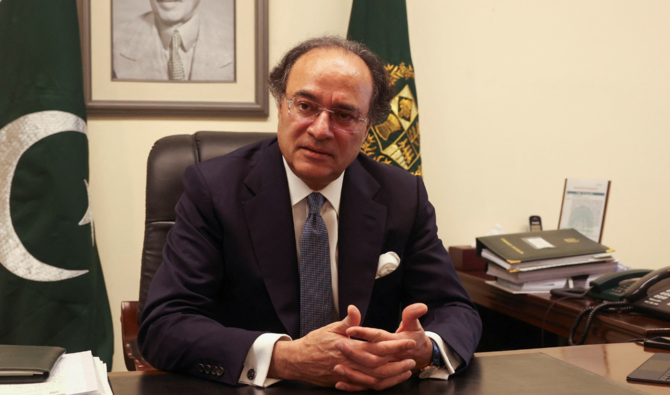
“[The] macroeconomic stability has been achieved in the country, and structural reforms are ongoing,” Federal Minister for Finance and Revenue Muhammad Aurangzeb said at an event in Islamabad.
Earlier in the day, Pakistan’s finance ministry released photos showing Aurangzeb, his economic team and the IMF delegation, led by Nathan Porter, holding a meeting.
A successful review and subsequent approvals can take a few weeks before the Washington-based lender releases the funds. However, Pakistan’s finance chief told Reuters his country was “well positioned” to discuss its performance with the visiting IMF team, with which it is expected to hold both technical and policy level talks in the coming days.
According to Pakistan’s Dawn newspaper, the IMF team has expressed concerns about Pakistan’s slow tax collection rate against the required target of Rs1.3 trillion ($4.65 billion) until June. The tax collection is likely to fall short by about Rs600 ($2.15 billion).
However, the newspaper noted, the international lender might look the other way, given the rest of the positive macroeconomic indicators, including a higher-than-expected budget surplus the debt-ridden nation is expected to show in its fiscal plan in June.
“Except for revenue collections, Pakistan has achieved most of its quarterly quantitative targets,” Mohammed Sohail, chief executive officer at Topline Securities, said while speaking to Arab News.
“The IMF may insist on increasing and broadening taxes in the coming budget,” he added.
One of the IMF’s requirements for Pakistan is to privatize loss-making state-owned enterprises, including the national airline and power distribution companies.
The process to sell off such enterprises has already begun, with the government having hired a financial adviser, according to Business Recorder newspaper.
Citing unnamed officials at the power division, the English-language daily said all power sector benchmarks agreed upon with the IMF were progressing as planned.


![]()

Pakistan’s finance chief says economic reforms ongoing as IMF begins $7 billion loan review
Short Url
https://arab.news/nv5xm
Pakistan’s finance chief says economic reforms ongoing as IMF begins $7 billion loan review
- Successful review and subsequent approvals can take a few weeks before IMF disburses $1.1 billion
- Muhammad Aurangzeb says Pakistan is ‘well positioned’ to discuss economic performance with IMF
Latest updates


© 2026 SAUDI RESEARCH & PUBLISHING COMPANY, All Rights Reserved And subject to Terms of Use Agreement.