


RIYADH: Oman’s foreign direct investment inflows rose by over 17.6 percent over the past five years, reaching 26.6 billion Omani rials ($69.3 billion) by the third quarter of 2024.
As reported by the Oman News Agency, this significant growth highlights the country’s success in solidifying its position as a key global investment hub. The rise has been fueled by strategic initiatives, a conducive capital environment, and advanced infrastructure.
This increase in Oman’s FDI aligns with a global rise of 11 percent in FDI flows in 2024, which reached $1.4 trillion. However, developing Asia saw a 7 percent decline in its FDI inflows, according to the UN Conference on Trade and Development.
According to the National Center for Statistics and Information, the UK led the way with investments totaling 13.6 billion rials, followed by the US with 5.2 billion rials. The UAE contributed 836.5 million rials, while Kuwait invested 833.5 million rials. China invested 817.8 million rials, and Switzerland added 551.9 million rials.
Qatar’s investments in Oman reached 488.3 million rials by the end of the third quarter, with Bahrain contributing 375.7 million rials. Investments from the Netherlands and India amounted to 359.1 million rials and 286.1 million rials, respectively.
Oman’s Minister of Commerce, Industry, and Investment Promotion Qais bin Mohammed Al-Yousef highlighted that high-level directives aimed at improving the capital climate have played a key role in building a promising economic future.
He emphasized that positive indicators in the investment sector reflect the success of Oman’s policies and initiatives in creating a robust environment for attracting projects, as reported by the state-run news agency.
Al-Yousef further noted that efforts to establish the Investment and Commercial Court highlight the government’s commitment to fostering a stable legal framework that encourages foreign investment. The ministry is also focused on offering competitive incentives and streamlining business operations within a dynamic market.
He concluded by emphasizing that improving the investment and business environment remains a top priority for promoting sustainable development. The ministry is actively working on initiatives aimed at diversifying the national economy and generating job opportunities across various sectors.
Ibtisam Ahmed Said Al-Farooji, undersecretary at the Ministry of Commerce, Industry, and Investment Promotion, stated that Oman’s investment sector is actively reviewing and evaluating its investment policies, laws, and incentives.
She further explained that investment opportunities undergo comprehensive feasibility studies before being presented to investors. This thorough evaluation helps drive capital into targeted sectors, enhances economic diversification, and boosts non-oil revenues, thereby strengthening investor confidence and improving Oman’s competitiveness.
The government is focusing on key sectors aligned with the Oman Vision 2040 strategy. These sectors include transportation and logistics, renewable energy, information technology, food security, tourism, mining, and manufacturing. Supportive industries such as the circular economy, healthcare, and education are also part of the focus.
Al-Farooji highlighted that the manufacturing sector attracted 2.13 billion rials in FDI, followed by financial intermediation with 1.36 billion rials, and real estate activities with 969.1 million rials.
The ministry has organized investment opportunities through the “Invest in Oman” platform, showcasing 20 opportunities in sectors such as tourism, real estate development, aviation, logistics, and manufacturing.
Industrial lands have been allocated in collaboration with the Public Establishment for Industrial Estates, which has sparked investor interest in the industrial cities of Rusayl, Sohar, and Samail.
In 2024, the ministry promoted Oman on the international stage at 21 events, welcomed delegations from 23 countries, hosted eight local promotional forums, and targeted six G20 countries and four markets in collaboration with the Oman Chamber of Commerce and Industry.
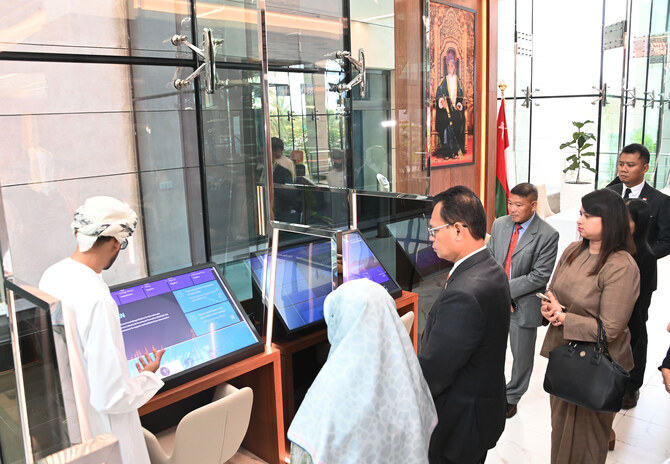
Nasser bin Khalifa Al-Kindi, CEO of Invest in Oman, explained that the “Invest in Oman” lounge brings together government institutions under one roof, streamlining the investor journey.
The lounge is designed to attract high-capital investors to strategic sectors and serves as a digital gateway to promote Oman’s investment environment and present new opportunities.
He also noted that 59 investment projects worth 3.2 billion rials are currently under review, with 29 initiatives valued at 1.2 billion rials already localized.
India, China, and Egypt are the top investing countries in Oman, with the industrial sector leading the way in attracting investments, followed by renewable energy and healthcare.


