



RIYADH: The UN Population Fund is working with Saudi Arabia’s KSrelief to provide reproductive, maternal and protective services to women and girls in countries facing humanitarian crises in the region, such as Palestine, Yemen and Somalia.
“Whenever we are in a humanitarian situation, women and girls are always actually the first to suffer and they suffer the most in so many ways,” Andrew Paul Saberton, deputy executive director of the fund, told Arab News on the sidelines of the 4th Riyadh International Humanitarian Forum on Tuesday.
The UNFPA’s projects with the King Salman Humanitarian Aid and Relief Center are providing maternal and reproductive services as well as protection for women and young girls subjected to gender-based and sexual violence.
The UNFPA’s mandate is to provide these services in both humanitarian crises and more than 150 developing countries around the world.
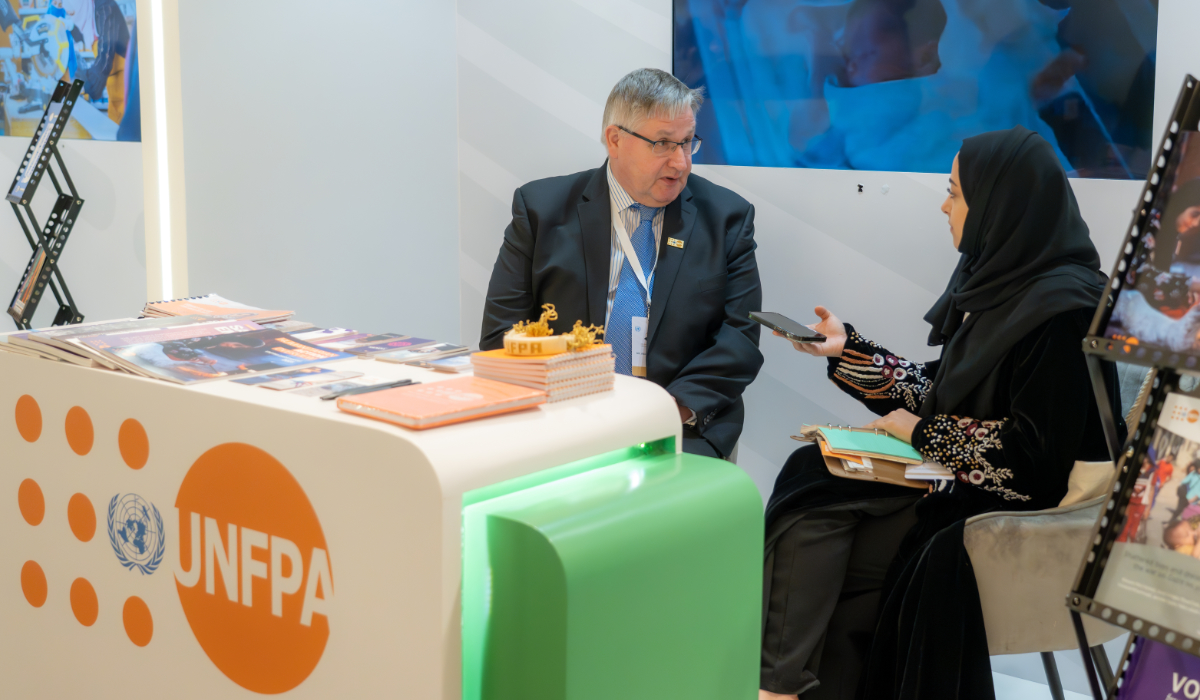
Saberton noted that displacement, people on the move, economic conditions, and cramped living conditions contributed to violence against women and girls. (AN photo by Jafar Al-Saleh)
Regionally, the UNFPA has numerous programs in place, including “delivering safe births in Gaza where there are mobile teams, and providing reproductive health services for 50,000 pregnant women in Gaza.”
When asked if the 50,000 figure from Gaza is on an annual or monthly basis, Saberton said that “at any moment in time there are 50,000 pregnant women in Gaza and the number is between 4,000-5,000 childbirths a month.
“In Yemen we are providing protection services, making sure there are protection services as well as maternal health services.
“In Sudan, we are working with displaced populations and providing maternal health services,” he said.
Saberton added that services are provided both in the form of health clinics and mobile teams, “to make sure that we make childbirth as safe as possible.”
The mobile clinics are providing health services to women and girls in humanitarian situations that are displaced and may not have access to physical health facilities if any are even available.
“Nobody should die in childbirth anywhere in the world,” Saberton said.
“Within any crisis, I am afraid the situation always gets worse for women and girls. For example, with maternal health and reproductive health. If you look at the world figures there are about 800 maternal deaths every day … 60 percent of maternal deaths occur in countries subject to fragile contexts or humanitarian contexts so the risk goes up,” he said.
“This is the reality of the situation.”
“It’s important to realize the humanitarian situation seems to be getting worse every day around the world.”
“Nearly half the countries that we work in — and we work in 150 countries and territories — nearly half, or 60 plus, are in a some form of humanitarian context and often those humanitarian crises are multifaceted; it could be conflict, climate change-related or economic instability.”
The causes of displacement, people on the move, the economic situation and cramped living conditions are some of the issues Saberton highlighted that increase violence against women and girls in humanitarian crises.
Saberton said that this is one of the reasons why the UNFPA has protection services on the ground.
“We are providing both safety and also providing well-being, and social support, but also medical facilities for any harm to women and girls.”
UNFPA is providing 1,600 human safe spaces where women have psychological support provided to them, and can access any health resources and facilities they might need.
Saberton was one of the forum’s speakers, and he said the event was “an excellent opportunity to talk, meet, and share ideas and knowledge with other humanitarian actors.
“This is the first KSrelief (Forum) I have been to over the four and it’s been an excellent experience to see how the work of KSrelief has grown the engagement and how it’s actually bringing partners together,” he told Arab News.
“Our partnership with KSrelief has grown over the years and has been a very important partner to us in the regional countries and we hope that will continue going forward.”


