





JEDDAH: The Saudi government is determined to curb activities that threaten the environment to protect its vegetation cover, reduce desertification, combat climate change and improve quality of life and protect the planet for future generations.
However, many locals, especially those living in relatively cold areas, are fond of spending a few hours at night in front of the fire, particularly on their vacations and weekends, and preparing food using special types of firewood.
During winter, they also light fires to warm themselves while sitting in their backyards, which has increased the demand for firewood and, subsequently, threatened the country’s vegetation cover.
For the protection of the environment, the government established the National Center for Vegetation Cover Development and Combating Desertification to maintain vegetation cover and combat desertification.
According to firewood violation regulations, anyone wishing to engage in any firewood commerce activities, whether citizens, residents or companies, must obtain a license or permit issued by the center.
Excess logging in the Kingdom has become a serious concern over recent decades as it leads to a decrease in land productivity, reduces oxygen production, adds to soil erosion, and causes a decrease in groundwater reserves. It also negatively affects tourism and social development plans.
Saudi Arabia has taken steps to ensure a more sustainable future. In October 2021, Crown Prince Mohammed bin Salman launched the Saudi Green Initiative, which reflects the Kingdom’s commitment to reduce emissions, increase the Kingdom’s use of clean energy and advance the global fight against climate change.
In line with this promising initiative, the center is doing its best to protect vegetation sites and rehabilitate degraded areas around the country, combat logging, supervise and invest in pasture lands, forests and national parks, and promote a well-developed sustainable environment.
The regulations, aiming to protect trees, state that anyone who sells or transports local firewood will face a fine of up to SR16,000 ($4,266) per cubic meter for each case.
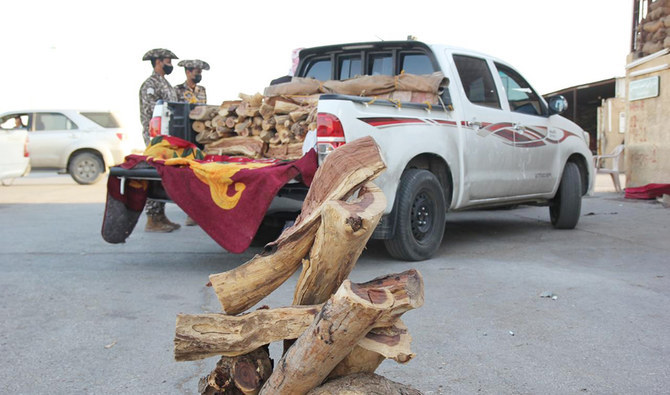
This month, the Special Force for Environmental Security announced that their officers seized more than 950 cubic meters of local firewood. These quantities were ready for distribution in the Riyadh, Makkah, Madinah and Asir regions.
The regulations also emphasize that using firewood or charcoal in all commercial activities, such as restaurants and bakeries, can expose each violator to a fine of SR32,000 (more than $8,500).
Shepherds who take their animals to graze in protected reserves can face a penalty ranging from SR200 ($27) to SR500 ($133) for each animal.
The same regulations have made it clear that those wishing to engage in any firewood commerce activities, whether they are citizens, residents or companies, must obtain a license or permit issued by the center.
The center’s inspectors, as well as SFES agents, conduct inspection tours to arrest all violators of the Saudi environment law and the regulations of logging to preserve the country’s vegetation cover, enhance natural resources to improve the quality of life, and achieve sustainable development in light of the goals of the Saudi Green Initiative.
The General Authority for Statistics recently announced that Saudi firewood dealers had imported 135,000 tons of firewood and charcoal before the end of 2022, according to a statement issued on Tuesday by center.
NCVCD&CD said that more than 800 import licenses were granted to these dealers, adding that the permission to import firewood comes within the efforts made by the center, the Agricultural Development Fund, the Zakat, Tax, and Customs Authority, and the Ministry of Commerce to facilitate importing firewood and charcoal and supporting its use as an effective and distinct alternative to their domestic products.
The support to import charcoal and firewood, NCVCD&CD added, includes providing investors with financing solutions to help them supply the local market with imported firewood, in a way that can contribute to protecting and preserving the country’s vegetation cover.
The statement noted that NCVCD&CD's efforts in issuing more than 800 licenses to some local importing companies in different regions has contributed to bringing large quantities of imported firewood and charcoal to meet the local market’s needs and meet the increasing demand during recent periods, especially restaurants that use firewood in preparing their food.
These licenses, according to a NCVCD&CD statement posted on its official Twitter account, have also provided Saudi youth with job opportunities, by buying and selling imported firewood and charcoal.
The statement added that firewood and charcoal are available in the Saudi market in large quantities, and citizens and residents can buy them at competitive prices, which has significantly contributed to avoiding cutting down the country’s trees for firewood.


