

Journalists have a duty to verify information, British journalist says

1 / 2
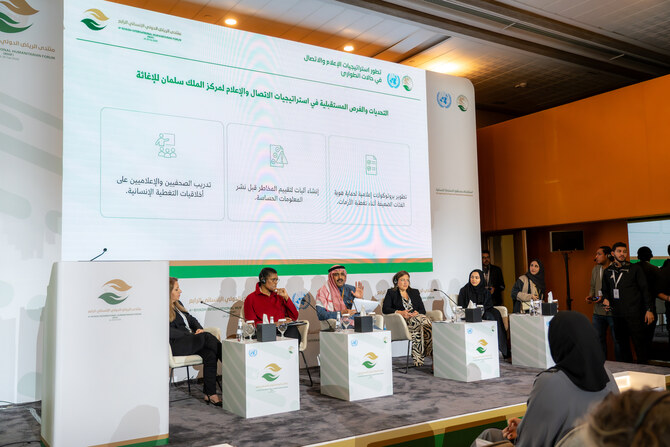
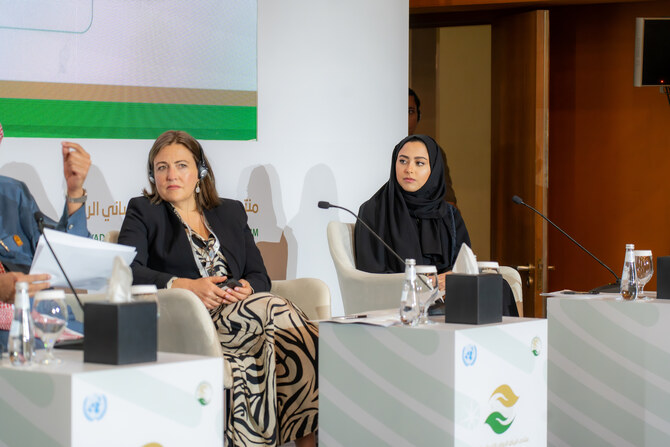
The panel also discussed the balance between information dissemination and the protection of vulnerable populations. (Supplied)
2 / 2
The panel also discussed the balance between information dissemination and the protection of vulnerable populations. (Supplied)
Short Url
Updated 25 February 2025
Follow

Journalists have a duty to verify information, British journalist says

RIYADH: Accuracy in disaster reporting is paramount, British journalist Juliette Foster said during a panel discussion on day one of KSrelief’s fourth humanitarian forum in Riyadh.

“Technology has made it possible for journalists to operate efficiently in crisis zones while affected communities have a channel, but accuracy in reporting should always be paramount,” Foster said.

In a panel discussion titled “The Evolution of Media and Communication Strategies in Emergency Situations,” Foster, along with other panel members, highlighted
the challenges and opportunities for journalists covering emergency situations, such as the optimization of technology use in reporting.

The panel also discussed the balance between information dissemination and the protection of vulnerable populations.

Foster highlighted concerns over perpetrators using sensitive information to target any vector of a person’s identity, to disgrace and degrade either them or their communities.

“I will even go so far as to say that when you have unsafe information circulating posing as a truth, you potentially put at risk the lives, not just in communities, but also of the people who are trying to help them. Misinformation and rumors complicate emergency response efforts and can create panic,” she said.

Journalists have a duty to verify information, be it from social media platforms or other sources, before making it public, Foster added.

“So, please remember to any reporters who are out there, if you are covering disasters, yes, we want you to find the story and to tell it, but please respect the people who are there at the center of action … there are guidelines on navigating these ethical minefields, and in fairness, most journalists follow them. But in the final analysis, preserving the dignity of disaster victims should be at the heart of your coverage,” she said.

There are significant opportunities for enhancing emergency communications, including collaborative journalism, where media organizations, NGOs and local communities work together or embed, which can amplify both the reach and the impact of crisis reporting, Foster added.

“Reporting partnerships can also facilitate access to on-the-ground information, provide logistical support and ensure comprehensive coverage of complex emergencies,” she said.

The panel discussion also included guest speakers Shalhoub Al-Shalhoub, director of public relations and media, and acting director of international communication and the media center at KSrelief; senior humanitarian adviser Maryann Horne; and Nadine Sanders, editor-in-chief of International Voice News. The panel was moderated by Arab News journalist Lama Alhamawi.


‘Cake not hate’ campaign becomes ‘Dates not hate’ in Madinah

“The Joshie-Man” and his father Dan Harris in the courtyard of the Prophet’s Mosque in Madinah. (Supplied)
Updated 02 February 2026
Follow

‘Cake not hate’ campaign becomes ‘Dates not hate’ in Madinah

  • Dan said he was very impressed by Saudi hospitality and that his family was warmly welcomed
  • He said being in Madinah exposed him to the true diversity of Islam

LONDON: A British autistic and non-verbal boy who has been visiting UK mosques and distributing cakes to promote solidarity amid an increase in far-right support in the country has taken his message of love to Madinah.

Joshua Harris, or “The Joshie-Man” as the 12-year-old is known to his social media fans, has handed out hundreds of his baked goods to worshipers at mosques in major British cities over the last few months.

The “Cake not hate” campaign came about after an Islamophobic attack on a mosque in his home city of Peterborough in October 2025.

Harris and his father visited Masjid Darassalaam, the mosque that was targeted, with cakes that the boy had baked and distributed them to the congregation soon after the attack. Since then, Harris has visited dozens of mosques in the UK.

On a recent trip to the Middle East, he and his father visited Madinah. In a local twist that pays tribute to the holy city’s famous date varieties including ajwa and ambar, Harris handed out dates to people in the courtyard of the Prophet’s Mosque. The “Cake not hate” campaign became “Dates not hate” for Saudi Arabia.

“He was greeted really, really warmly. There were some really touching moments where people were kissing his hands and his head. It was really lovely,” his father, Dan Harris, said.

Dan, the founder of global charity Neurodiversity in Business, said being in Madinah exposed him to the true diversity of Islam.

“We met people from all around the world. It was amazing. It’s like the United Nations there, you get people from different countries and it just goes to show you that the Muslim community, or the Ummah more generally, is not a homogeneous group,” he said.

“We saw people from Tajikistan and Uzbekistan and it was really interesting for us.”

Dan said his visit to Madinah, considered the second holiest city in Islam after Makkah for Muslims, was “profound and life-changing.”

He added: “I would say it’s my favourite city in the world due to the peace and tranquillity I felt there.”

Dan added that he was very impressed by Saudi hospitality: “Everywhere we went, people were taking down my number and insisting that we come for dinner, insisting they pick us up from the location. They were extremely attentive to Joshie as well, making sure his needs were met. We felt a great sense of welcome, something Saudi Arabia is known for.”