

Pakistani minister meets SRMG CEO, discusses media collaboration, digital innovation opportunities

Saudi Research and Media Group CEO Jomana R. Alrashid (2R) speaks during a meeting with Pakistan Information Minister Attaullah Tarar (3L) at the SRMG Headquarters in Riyadh on February 21, 2025. (Handout/SRMG)
Short Url
Updated 25 February 2025
Follow

Pakistani minister meets SRMG CEO, discusses media collaboration, digital innovation opportunities

  • Meeting took place as Tarar was in Riyadh last week to attend Saudi Media Forum 2025 from Feb. 19-21
  • Saudi Research and Media Group is the largest integrated media house in the Middle East and North Africa

ISLAMABAD: The Saudi Research and Media Group, the largest integrated media house in the Middle East and North Africa, hosted Pakistan’s Information Minister Attaullah Tarar at its headquarters in Riyadh “to explore opportunities for media collaboration, content development and digital innovation,” the group said in a statement on Tuesday. 
The meeting took place as Tarar was in Riyadh last week to attend the Saudi Media Forum 2025 from Feb. 19-21, which brought together over 200 global media professionals, innovators and thought leaders.
“The meeting focused on strengthening partnerships and expanding content offerings to better serve audiences across both markets,” SRMG said in a statement after Tarar met the group’s CEO, Jomana R. Alrashid.
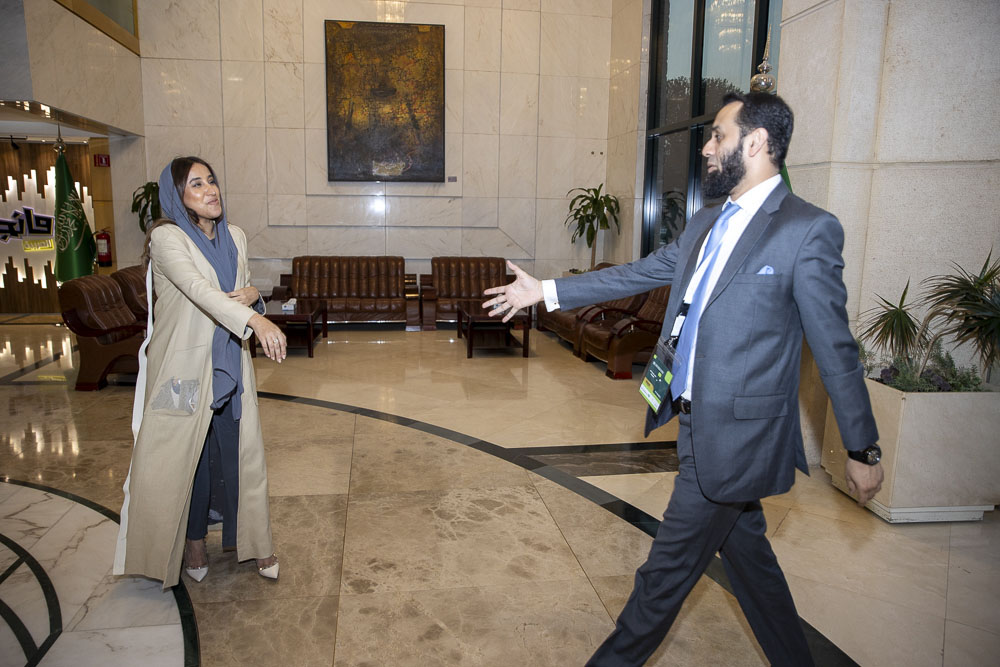


Saudi Research and Media Group CEO Jomana R. Alrashid (left) welcomes Pakistan Information Minister Attaullah Tarar as he visits the SRMG Headquarters in Riyadh on February 21, 2025. (Handout/SRMG)

The two leaders discussed the “positive impact of SRMG’s Pakistan based platforms, including Independent Urdu and Urdu News, as well as the English-language publication Arab News Pakistan, in delivering high quality content that informs and connects.”
“By providing accurate, credible reporting and raising awareness of key social issues, these publications foster meaningful connections between people, promote cross-cultural understanding, and strengthen ties with audiences in Pakistan and beyond,” the statement added. 
While speaking at the Saudi Media Forum, Tarar had acknowledged SRMG’s “positive impact” in Pakistan.
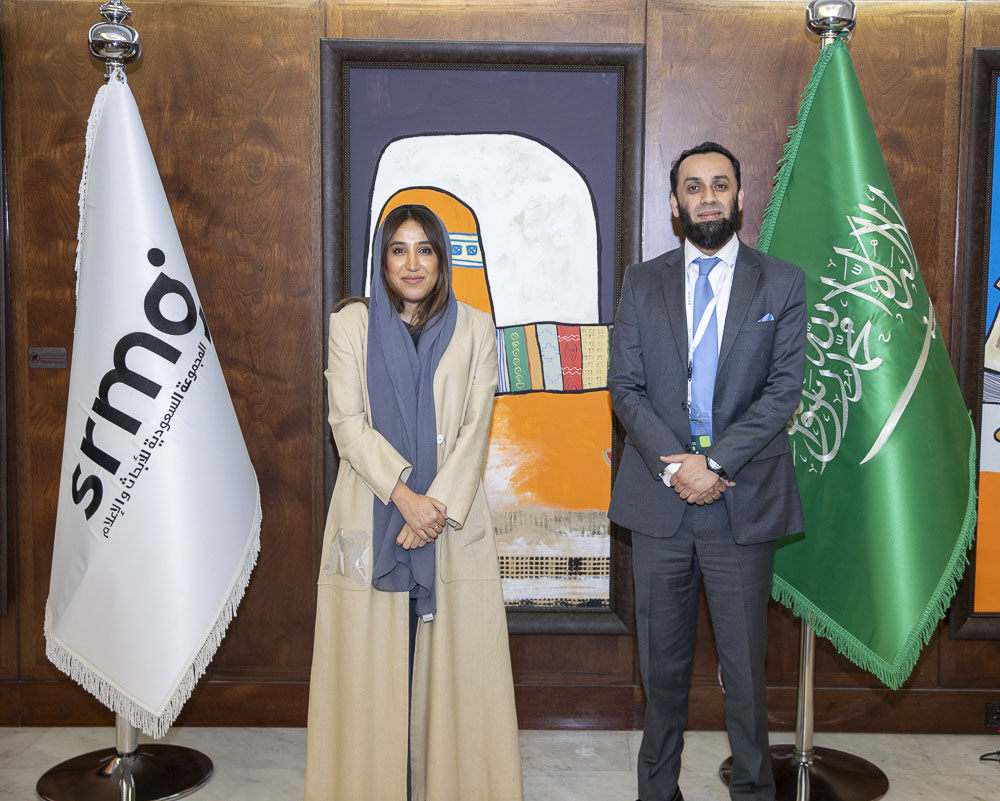


Saudi Research and Media Group CEO Jomana R. Alrashid (left) gestures for a photo with Pakistan Information Minister Attaullah Tarar at the SRMG Headquarters in Riyadh on February 21, 2025. (Handout/SRMG)

“With regard to SRMG, we have Urdu News, we have Arab News and we have Independent Urdu, which are doing a great job,” he said during a panel discussion last Thursday. 
“And [this is] not only [as] digital platforms, but overall, they have a very positive impact on our society with regard to raising awareness on social issues, with regard to bringing news to the people.”
During the Riyadh visit, Tarar and his Saudi counterpart Salman Al-Dossary also announced a joint committee to co-produce songs, films and documentaries.
In recent years, Pakistani dramas and films, including TV classics like “Dhoop Kinare” and the highly acclaimed “Humsafar,” have been dubbed in Arabic and broadcast in Saudi Arabia. 
Pakistan and Saudi Arabia are close regional partners and economic and security allies. In October last year, the two countries signed 34 agreements worth $2.8 billion for investment projects in various sectors.


UAE outlines approach to AI governance amid regulation debate at World Economic Forum

Updated 22 January 2026
Follow

UAE outlines approach to AI governance amid regulation debate at World Economic Forum

  • Minister of State Maryam Al-Hammadi highlights importance of a robust regulatory framework to complement implementation of AI technology
  • Other experts in panel discussion say regulators should address problems as they arise, rather than trying to solve problems that do not yet exist

DUBAI: The UAE has made changes to 90 percent of its laws in the past four years, Maryam Al-Hammadi, minister of state and the secretary-general of the Emirati Cabinet, told the World Economic Forum in Davos on Wednesday.

Speaking during a panel discussion titled “Regulating at the Speed of Code,” she highlighted the importance of having a robust regulatory framework in place to complement the implementation of artificial intelligence technology in the public and private sectors.

The process of this updating and repealing of laws has driven the UAE’s efforts to develop an AI model that can assist in the drafting of legislation, along with collecting feedback from stakeholders on proposed laws and suggesting improvements, she said.

Although AI might be more agile at shaping regulation, “there are some principles that we put in the model that we are developing that we cannot compromise,” Al-Hammadi added. These include rules for human accountability, transparency, privacy and data protection, along with constitutional safeguards and a thorough understanding of the law.

At this stage, “we believe AI can advise but still (the) human is in command,” she said.

Authorities in the UAE are aiming to develop, within a two-year timeline, a shareable model to help other nations learn and benefit from its experiences, Al-Hammadi added.

Argentina’s minister of deregulation and state transformation, Federico Sturzenegger, warned against overregulation at the cost of innovation.

Politicians often react to a “salient event” by overreacting, he said, describing most regulators as “very imaginative of all the terrible things that will happen to people if they’re free.”

He said that “we have to take more risk,” and regulators should wait to address problems as they arise rather than trying to create solutions for problems that do not yet exist.

This sentiment was echoed by Joel Kaplan, Meta’s chief global affairs officer, who said “imaginative policymakers” often focus more on risks and potential harms than on the economic and growth benefits of innovation.

He pointed to Europe as an example of this, arguing that an excessive focus on “all the possible harms” of new technologies has, over time, reduced competitiveness and risks leaving the region behind in what he described as a “new technological revolution.”