

EU must condemn Israeli atrocities at top-level meeting: Human Rights Watch

More than 100 civil society organizations, including HRW, urged the EU in a letter to center discussions with Saar on the potential suspension of the agreement. (FILE/AFP)
Short Url
Updated 24 February 2025
Follow

EU must condemn Israeli atrocities at top-level meeting: Human Rights Watch

  • ‘There can be no business as usual with a government responsible for crimes against humanity and acts of genocide’
  • ‘Unless the EU drastically changes course, it will provide a blank check for further abuses’

LONDON: EU officials must condemn Israeli atrocities and violations of international law at the EU-Israel Association Council meeting on Monday, Human Rights Watch has urged.

The meeting will be led by EU High Representative Kaja Kallas and Israeli Foreign Minister Gideon Saar.

Kallas will be joined by EU foreign ministers. Together, they should “signal an end to the bloc’s reluctance to acknowledge and address Israel’s war crimes, crimes against humanity — including apartheid — and acts of genocide,” HRW said.

Last February, Spain and Ireland requested a suspension to the EU-Israel Association Agreement due to Israel’s grave abuses of its human rights obligations. The request has yet to be answered by the EU.

The Association Council is the EU’s top-level bilateral meeting with Israel, held as part of the agreement.

The last meeting took place in October 2022 following a 10-year pause initiated by Israel over discontent with the EU’s condemnation of settlement-building in the Occupied Territories.

Claudio Francavilla, associate EU director at HRW, said: “There can be no business as usual with a government responsible for crimes against humanity, including apartheid, and acts of genocide, and whose sitting prime minister is wanted for atrocity crimes by the International Criminal Court.

“The only purpose of this Association Council meeting should be to call out those crimes and to announce long overdue measures in response.”

More than 100 civil society organizations, including HRW, urged the EU in a letter to center discussions with Saar on the potential suspension of the agreement.

Article 2 names human rights and democratic principles as “essential elements” which, if violated, can lead to the suspension of the treaty.

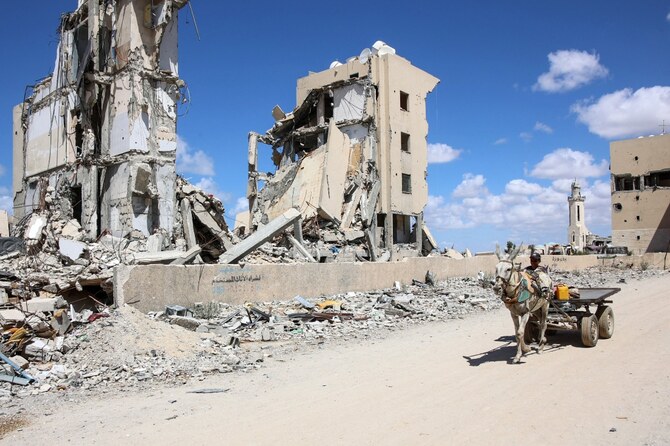
HRW has documented extensive abuses by Israel during the conflict in Gaza, including war crimes, ethnic cleansing, crimes against humanity and acts of genocide.  

The EU has yet to adopt any “concrete measure to press Israeli authorities” to halt these abuses, HRW warned. Any move by the bloc requires unanimous approval by its 27 members.

Several EU foreign ministers have criticized the International Criminal Court’s issuing of arrest warrants for Israeli Prime Minister Benjamin Netanyahu and former Defense Minister Yoav Gallant.

The EU approved two rounds of sanctions against Israeli settlers who had committed abuses in the West Bank, but fell short of punishing the authorities who have enabled them, HRW said.

EU states also continue to export weapons to Israel despite the risk of complicity in war crimes.

A smear campaign led by Israel also saw the EU and its member states pause, and in some cases fully end, support for the UN Relief and Works Agency, which provides vital services to Palestinian refugees.

Francavilla said: “Europe’s reluctance to condemn and address Israel’s atrocity crimes has fueled them and given rise to well-grounded accusations of EU double standards.

“Unless the EU drastically changes course, it will provide a blank check for further abuses and continue to undermine the EU’s stated commitment to human rights and the rules-based international order.”


Amnesty says Algeria unlawfully returned Tunisia asylum seeker

Updated 4 sec ago
Follow

Amnesty says Algeria unlawfully returned Tunisia asylum seeker

  • Amnesty International said Makhlouf was handed over to Tunisian police on January 18 without prior notice to him or his lawyers, in a move the group called “unlawful refoulement”

TUNIS: Global rights group Amnesty accused Algerian authorities on Monday of breaching international law by forcibly returning a political dissident to Tunisia, even though he was a registered asylum seeker.
Seifeddine Makhlouf, a former parliamentarian and critic of Tunisian President Kais Saied, was reportedly sentenced to prison for “plotting against state security” before his return to the North African country.
Makhlouf, who is the leader of the Al Karama party, sought asylum in Algeria in July 2024 after facing detention in Tunisia, and registered as an asylum seeker with the UN refugee agency UNHCR.
Amnesty International said Makhlouf was handed over to Tunisian police on January 18 without prior notice to him or his lawyers, in a move the group called “unlawful refoulement.”
“Makhlouf’s forced return is a violation of the principle of non-refoulement,” Amnesty’s MENA deputy chief Sara Hashash said in a statement published by the group.
“By handing him over to Tunisian authorities without allowing him any opportunity to contest the decision or assessing the risks he faces in Tunisia... Algeria has breached its obligations under international human rights law, including the Refugee Convention,” she added.
Saied froze parliament in July 2021 and seized far-reaching executive powers in what critics have called a “coup.”
Since then, local and international NGOs have denounced a regression of rights and freedoms in Tunisia.
Amnesty said Makhlouf was later imprisoned in Algeria for irregular entry and placed in administrative detention, during which he was denied access to the UN refugee agency.
The rights group said Makhlouf was arrested upon his arrival in Tunisia to serve sentences handed down in his absence.
Reports said a Tunisian court sentenced Makhlouf on January 13 to five years in prison for “plotting against state security.”
The Amnesty statement called for “verdicts rendered in absentia to be quashed and for a new and fair trial to be held before an independent and impartial court.”
Hashash warned that Makhlouf’s case reflects wider regional repression, calling his extradition “particularly alarming given the escalating crackdown on dissent in Tunisia, where the judiciary has been increasingly weaponized to silence political opposition.”
She said that Algeria’s actions “set a dangerous precedent,” adding that “bilateral cooperation now takes precedence over the most fundamental principles of international human rights and refugee law.”