



RIYADH: Startups across the Middle East and North Africa continue to attract significant investment, with funding rounds and acquisitions shaping the region’s growing tech ecosystem.
From artificial intelligence infrastructure and fintech to automotive SaaS and second-hand fashion, companies are securing capital to expand operations, enhance technology, and enter new markets.
Among the latest developments, UK-based AI cloud infrastructure provider Ori has secured a strategic investment from Wa’ed Ventures, the venture capital arm of Saudi Aramco, as it prepares for expansion in the Middle East.
The financial terms of the investment were not disclosed. The deal follows Ori’s recent deployment of Nvidia’s H200 chips, positioning the company as a key AI infrastructure provider in the UK, the Middle East, and beyond.
Ori, which enables large-scale AI model training and deployment, currently operates in over 20 locations across North America and Europe.
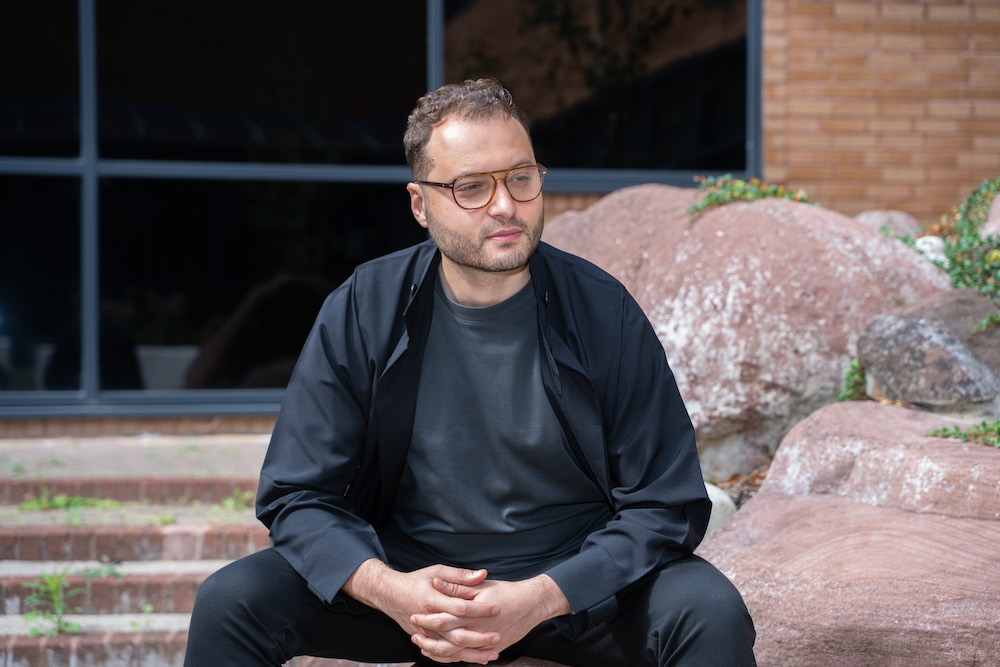
Mahdi Yahya, CEO of Ori. Supplied
With the backing of Wa’ed Ventures, Ori plans to localize its operations in Saudi Arabia, launching a regional subsidiary in Riyadh to support the country’s Vision 2030 initiative.
Wa’ed Ventures, a $500 million fund investing in advanced technology startups, has expanded its focus internationally since 2022 to support companies that can localize their technologies in Saudi Arabia.
The fund has previously invested in AI chipmaker Rebellions and real estate fintech firm Stake.
Ori recently raised £140 million ($176.8 million) and is preparing for a larger funding round in 2025.
It partners with global technology firms, including Nvidia, Supermicro, and Dell, and is backed by investors such as Telefonica, NextEra Energy, and Episode 1 Ventures.
Dubizzle acquires Egypt’s Hatla2ee
UAE-based online classifieds platform Dubizzle Group has acquired Hatla2ee, an Egyptian online car marketplace, for an undisclosed amount.
The acquisition strengthens Dubizzle Group’s regional presence by integrating its technology and resources into Hatla2ee’s platform.
Founded in 2016 by Samy Swellam, Hatla2ee provides a marketplace for buying and selling new and used cars in Egypt.
Dubizzle Group, established in 2005, operates multiple classified platforms, including Dubizzle, Bayut, and Drive Arabia.
The acquisition follows Dubizzle Group’s purchase of UAE-based automotive media platform Drive Arabia in May 2024.
MANSA raises $10m for cross-border payments
MANSA, a fintech firm specializing in cross-border payments, has secured $10 million in funding to enhance its liquidity solutions.
The funding includes a $3 million pre-seed round led by Tether and co-led by Polymorphic Capital, with participation from Octerra Capital, Faculty Group, and Trive Digital.
MANSA also raised $7 million in liquidity funding from corporate investors, quantitative funds, and alternative investment firms.

Mansa Co-Founders. Supplied
The company, co-founded by Mouloukou Sanoh and Nkiru Uwaje, leverages stablecoins to streamline liquidity management for payment providers in emerging and developed markets.
Since launching in August, MANSA has facilitated $27 million in transactions, with on-chain volume surging 574 percent from August to January 2025.
The new funding will support the company’s expansion into Latin America and Southeast Asia.
Egypt’s Qme raises $3m for AI business solutions
Qme, an Egypt-based B2B SaaS startup, has raised $3 million in a seed funding round led by AHOY and a group of angel investors from the Gulf Cooperation Council.
Founded in 2022 by Maged Negm, Qme provides AI-driven digital infrastructure for businesses, integrating booking, queuing, analytics, and payment solutions.
The investment will be used to enhance the company’s technology, expand its market presence, and strengthen partnerships.
UAE fintech Blum secures $5m in seed funding
Blum, a UAE-based decentralized exchange, has raised $5 million in a pre-seed and seed funding round led by gumi Cryptos Capital, Spartan, No Limit Holdings, YZi Labs, and OKX Ventures.
Founded in 2024 by Gleb Kostarev and Vladimir Smerkis, Blum offers token trading through gamification within a Telegram mini-app.
The funding will support the platform’s infrastructure development, trading enhancements, and expansion across multiple blockchain networks.
Tunisia’s Dabchy raises pre-Series A funding
Dabchy, a Tunisia-based peer-to-peer fashion marketplace, has raised an undisclosed amount in a pre-Series A funding round led by Janngo Capital and angel investors.
Founded in 2016 by Ameni Mansouri, Ghazi Ketata, and Oussama Mahjoub, Dabchy provides an e-commerce marketplace for second-hand fashion.
The funding will support the startup’s expansion into Egypt, broaden its product offerings, and improve its platform.
The Box secures $12.5m for storage expansion
The Box, a UAE-based self-storage services provider, has secured $12.5 million in debt financing led by Shorooq Partners.
Founded in 2007 by Wadih Haddad, The Box offers personal storage, record management, and moving services.
The new capital will enable the company to expand its storage facilities and develop flagship locations.
Palm Ventures closes $30m early-stage fund
Palm Ventures, a MENA-focused investment firm, has closed a $30 million fund to support early-stage startups in the region, with a portion allocated to US-based AI ventures.
Founded in 2014, Palm Ventures has backed 40 startups and collaborated with government entities to drive innovation.
Between 2020 and 2024, the firm invested in 20 MENA and US-based AI startups.
The new fund will target AI, fintech, and business solutions, supporting digital transformation in the region.
Pinewood acquires 90.9 percent of Seez for $42m
Pinewood Technologies PLC has acquired a 90.9 percent stake in UAE-based automotive SaaS platform Seez for approximately $42 million.
The transaction, expected to close by March 19, 2025, will be funded through a mix of cash payments and newly issued shares.
Seez specializes in AI and machine learning solutions for the automotive sector, including e-commerce and omnichannel products.
Pinewood, which provides automotive intelligence solutions, aims to leverage Seez’s technology to enhance its agency management systems while reducing reliance on third-party AI licenses.
The companies anticipate the acquisition will be earnings-accretive by fiscal year 2026.
Oman Investment Authority partners with Golden Gate
Oman Investment Authority has partnered with Singapore-based venture capital firm Golden Gate Ventures to strengthen Oman’s startup landscape.
Through its technology arm, Innovation Development Oman, OIA has become a limited partner in Golden Gate Ventures’ new $100 million fund, which marks the firm’s first major venture capital initiative in the MENA region.
The partnership aims to attract foreign investment into Oman’s technology sector while providing startups with funding, expertise, and market access.
Golden Gate Ventures, which has backed around 100 companies since 2011 — including nine unicorns — views Oman as a promising innovation hub.
Algerie Telecom launches $11m AI startup fund
Algeria’s state-owned telecom company, Algerie Telecom, has announced an $11 million investment fund to support startups in artificial intelligence, cybersecurity, and robotics.
The initiative was unveiled at the third edition of Algeria’s CTO Forum as part of the country’s national AI and digital transformation strategy.
The investment will support the establishment of 20,000 startups, alongside efforts to develop AI-focused universities, incubators, and a nationwide expansion of digital infrastructure aimed at strengthening Algeria’s technological ecosystem.


