

King Salman orders the naming of 15 Riyadh squares after Saudi imams and kings

1 / 2
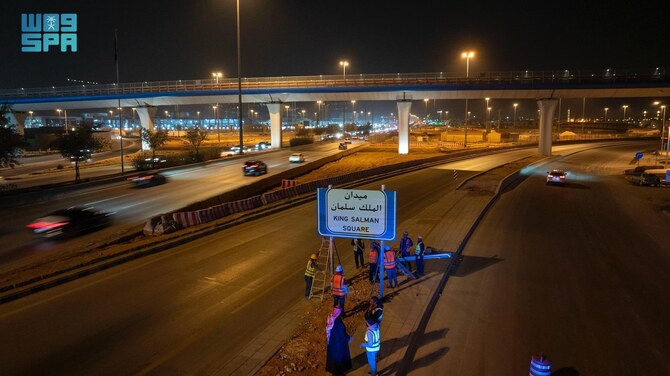
King Salman on Saturday issued a directive to name 15 squares in Riyadh after notable imams and kings of the Saudi State. (SPA)
2 / 2
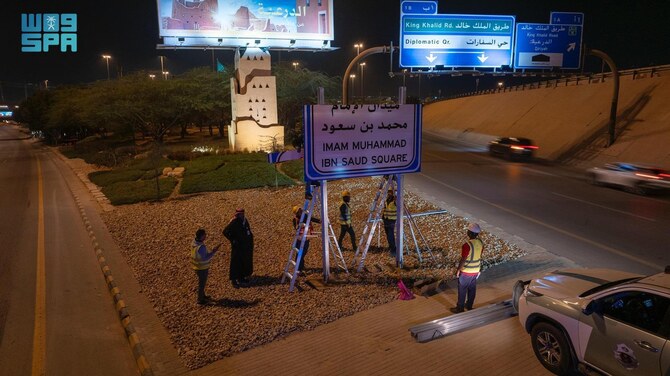
King Salman on Saturday issued a directive to name 15 squares in Riyadh after notable imams and kings of the Saudi State. (SPA)
Short Url
Updated 23 February 2025
Follow

King Salman orders the naming of 15 Riyadh squares after Saudi imams and kings

  • The initiative followed a proposal by Crown Prince Mohammed bin Salman and coincides with Saudi Arabia’s celebration of Founding Day

RIYADH: The Riyadh Municipality has begun installing road signs, bearing the names of imams and kings, at 15 main squares in the capital.

It reflects the leadership’s commitment to honoring national figures who have contributed to building and developing the Saudi state while preserving their legacy and reinforcing national identity, the Saudi Press Agency reported on Sunday.

Installation began immediately after a royal directive from King Salman, based on a proposal by Crown Prince Mohammed bin Salman, the SPA added.

The initiative includes installing signs and updating street names.

The effort aligns with the municipality’s strategy to enhance national identity in public spaces, and supports Vision 2030 by highlighting the historic and cultural values shaping the homeland’s identity.

The newly named squares along Riyadh’s main roads will commemorate historic Saudi figures including Imam Mohammed bin Saud, Imam Abdulaziz bin Muhammad, Imam Saud bin Abdulaziz, Imam Abdullah bin Saud, Imam Turki bin Abdullah, Imam Faisal bin Turki, Imam Abdullah bin Faisal, and Imam Abdulrahman bin Faisal.

The list also includes King Abdulaziz, King Saud, King Faisal, King Khalid, King Fahd, King Abdullah, and King Salman.


Saudi Arabia targets 50 wildlife breeding programs within 5 years

Updated 5 sec ago
Follow

Saudi Arabia targets 50 wildlife breeding programs within 5 years

  • Strategy follows surging interest in protecting prized native species

RIYADH: Saudi Arabia’s top wildlife protection body has launched a plan to operate 50 breeding programs by 2030 and improve environmental balance, its CEO has said.

Mohammed Ali Qurban, head of the National Center for Wildlife, said the number of programs has already surged from seven to 21 in recent years, amid renewed interest in the protection of valued native species.

The breeding programs are based on precise scientific principles, starting with the selection of suitable species at research centers, followed by veterinary care and specialized nutrition programs, he added.

At the final stage, protected species are rehabilitated for release and monitored using the latest tracking and data analysis technologies.

The relocation of more than 10,000 animals in Saudi Arabia is “an important step in restoring ecosystems and enhancing environmental balance in the Kingdom,” Qurban said.

Veterinary scientists at work at the National Center for Wildlife's laboratory. (Supplied)

“Releasing wildlife into the wild contributes to forming new populations capable of self-reproduction; these releases support the genetic diversity of wild populations and enhance their ability to resist disease and adapt to environmental changes,” he added.

Releases have so far included more than 80 priority species, most notably reem antelopes, Arabian oryx, idmi gazelles, mountain ibex, houbara bustards, ostriches and sandgrouses. The animals were released within their historical and ecological ranges.

Qurban said that the plans take into account the carrying capacity of natural habitats and the importance of safe ecological corridors that connect protected areas to facilitate species movement and population sustainability.

Release sites are spread across more than 60 diverse environmental locations, including natural reserves, royal reserves and national parks, as well as strategic sites within the Kingdom’s giga-projects, ensuring the dispersal of animals across their targeted geographical ranges.

The efforts are part of a national integrated framework to support the goals of the Saudi Green Initiative, Vision 2030 and the National Environment Strategy, aiming to achieve thriving and sustainable wildlife and ecosystems, Qurban said.