

Regional conflicts dent Middle East performance in 2025 Soft Power Index

The survey was conducted between September and November, meaning major developments — such as the ceasefire in Lebanon, the end of the Assad regime in Syria, and the Gaza truce — have yet to be fully absorbed into the index. (AFP/File)
Short Url
Updated 21 February 2025
Follow

Regional conflicts dent Middle East performance in 2025 Soft Power Index

  • Despite gains in perception-based categories, Saudi Arabia dropped two spots to 20th after years of steady growth
  • The Gaza war’s ripple effects and a regional ‘shift in sentiment’ caused a slowdown in performance for Middle Eastern nations, Brand Finance MENA director told Arab News

LONDON: Regional conflicts have negatively impacted the performance of Middle Eastern countries in this year’s Soft Power Index, according to findings by brand and marketing consultancy Brand Finance.

The 2025 results, unveiled at the annual conference in London on Thursday, revealed significant declines for nations embroiled in conflicts — including Israel, Lebanon, Sudan, Ukraine, and Russia — dragging down much of the broader region’s performance.

Despite the UAE maintaining its 10th-place ranking with a modest 0.7-point increase, other Middle Eastern countries, including Saudi Arabia, Qatar, and Israel, saw stagnation or setbacks after years of steady gains.

“After years of soft power gains, Gulf nations somewhat lose momentum in 2025, with the exception of the UAE,” said Andrew Campbell, managing director at Brand Finance Middle East. “While they remain admired for their influence and business-friendly policies, respondents from the wider Middle East, Africa, and Asia view the region less favorably than before.”

The index, which Brand Finance calls the “most comprehensive study on perceptions of nation brands,” surveyed 170,000 respondents across more than 100 markets.

Saudi Arabia, which had been one of the fastest climbers in recent years, slipped two places to 20th after rising eight spots since 2020. While the Kingdom stalled in key metrics such as familiarity, influence, and reputation, it continued to make strides in perception-based categories. Among these, Saudi Arabia showed a 0.7-point increase (out of 10) in education and science — an area highlighted by the King Faisal Specialist Hospital and Research Center’s recognition as one of the world’s top academic medical centers in a separate Brand Finance report earlier this year.

Soft power, a term coined by American political scientist Joseph Nye in the 1990s, refers to a nation’s ability to achieve influence through persuasion rather than coercion or financial incentives. It has been central to Saudi Arabia’s Vision 2030 strategy, with significant investments across various industries propelling its growth in the rankings in recent years. This aligns with the Kingdom’s broader aspirations to diversify its economy, attract foreign investment and talent, and solidify its position on the global stage.

While many Gulf nations experienced setbacks, the UAE remained largely resilient. Retaining 10th place overall, the country scored highly in perceptions of influence (eighth), international relations (ninth), and business and trade (10th). The UAE also climbed to second place globally for being “easy to do business in and with” and ranked in the top 10 for “future growth potential” and “strong and stable economy.” This was driven by fiscal strength, a positive investment climate, and continued economic diversification.

Campbell noted that while the region has made steady gains in recent years, the latest index reflects a “shift in sentiment in the wider Middle East and in Asia towards Saudi Arabia and the UAE,” leading to a leveling off in their performance.
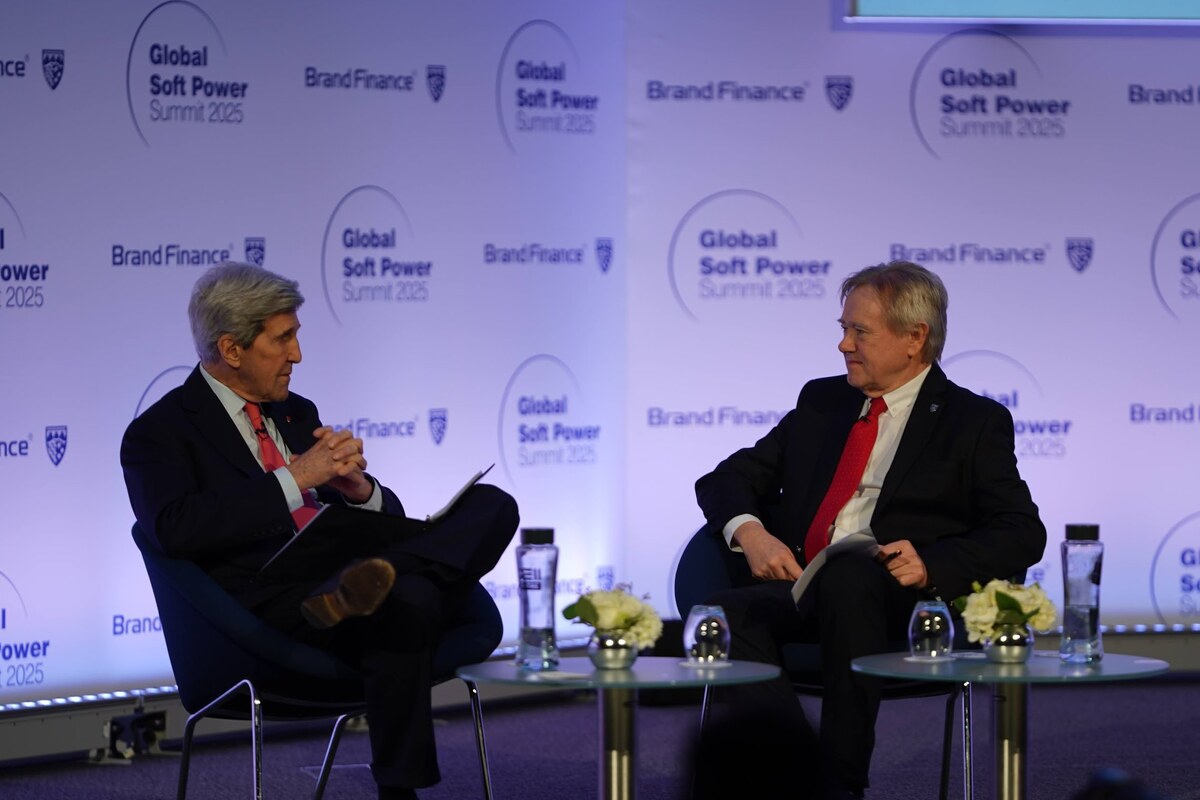


Former US Secretary of State John Kerry with the Chairman of Brand Finance David Haigh. (Brand Finance/File)

Speaking to Arab News, he said that although the survey measures perception rather than the direct causes behind it, “part of it is to do with the conflict in Gaza” and the “strong sentiments” the Palestinian cause evokes throughout the region.

“I think that sentiment is somewhat driven by that deep Arab feeling of, ‘We have to protect and be aligned with the Palestinians,’” he explained. “So, there’s probably some kind of internal conflict of feeling going on. And then we’ve also got the Iran situation relative to Syria and the Houthis. That whole dynamic in the Middle East has always been complicated, but it’s now complicated and explosive.”

Campbell linked this shift in perception to the Abraham Accords signed by the UAE during Donald Trump’s first presidency.

The survey was conducted between September and November, meaning major developments — such as the ceasefire in Lebanon, the end of the Assad regime in Syria, and the Gaza truce — have yet to be fully absorbed into the index.

The rapidly evolving situation in the region and other active conflict areas was a key focus at Thursday’s summit. Speakers, including former Polish President and Nobel Peace Prize Laureate Lech Walesa, former US Secretary of State John Kerry, and former Finnish Prime Minister Sanna Marin, underscored the resurgence of hard power — military and economic coercion — as a defining factor in how nations are perceived on the global stage.

Michael Clarke, distinguished fellow and former director-general of the defense and security think tank Royal United Services Institute, told Arab News that contrary to popular belief, “soft and hard power are not a seesaw where one goes up and the other goes down. They tend to go up or down together.” He stressed that while “we are seeing much greater emphasis on hard power politics,” nations should not overlook the role of soft power.

He argued that, as the world moves into an era of “new imperialism, soft power will go with that,” noting that hard power is most effective when complemented by soft power. Countries with strong military capabilities, he added, often “spend most of their time not fighting” because their influence stems from imitation and strategic deterrence — key elements of real soft power.

Highlighting Israel’s performance over the past two years, Clarke pointed to its military failures in Gaza as an example of how the misuse of hard power can erode soft power. He noted that Israel’s actions, perceived as lacking moral legitimacy, are seen as “intolerable to most other professional militaries” that integrate hard power into their broader strategic influence.

Looking ahead, Clarke said the long-term geopolitical impact of Israel’s recent actions remains uncertain, particularly as Trump’s second term begins. Amid the shifting power dynamics in the region, he suggested that Syria’s post-Assad transition could significantly influence its soft power standing in the coming year. This “remaking of the Middle East,” he added, may also present an opportunity for Gulf nations, particularly Saudi Arabia and the UAE, to enhance their soft power appeal as the region’s geopolitical landscape continues to evolve.

The US-Russia negotiations over Ukraine, held in Riyadh this week, were a key topic of discussion at the summit. As highlighted in this year’s Soft Power Index, both countries followed a similar trajectory to other nations involved in conflict, experiencing stagnation or, in Ukraine’s case, a decline after two years of gains.
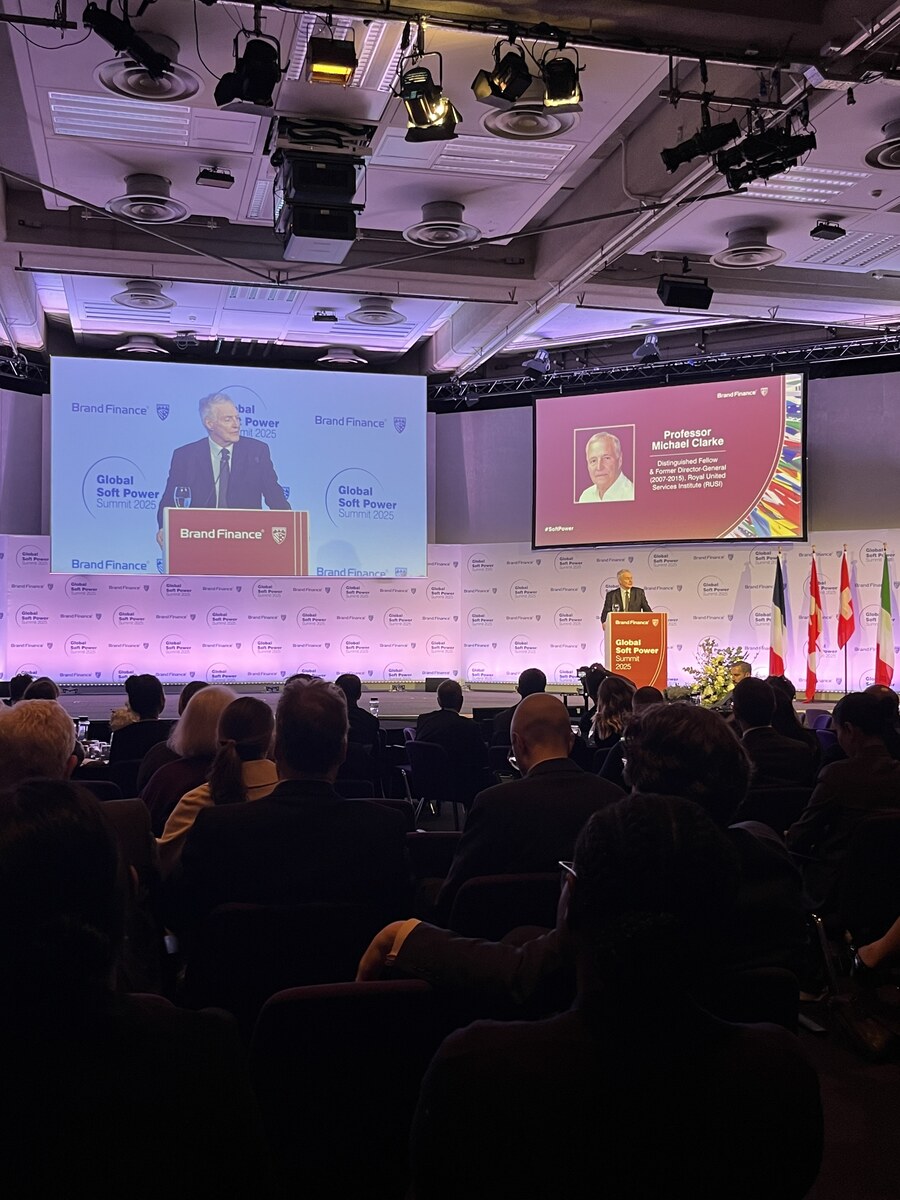


Professor Michael Clarke addressing the summit. (AN/File)

Speakers underscored that, in what Clarke described as a new “paradigm of international relations,” the UN’s role — already under strain due to its perceived failure to uphold its mandate — will be critical in fostering international cooperation on global challenges beyond the capacity of individual nations. The index reveals a growing divide, with stronger nations advancing rapidly while weaker ones fall further behind.

“With the exception of when the Security Council mandates the use of sanctions or force, most of what the UN does is powered by soft power. It is the power of convening,” Maher Nasser, commissioner-general of the UN at Expo 2025 and director of the Department of Global Communications, told Arab News. “It is the power of working towards consensus when not possible by majority votes. But the traces and the impact of the work that takes place in the UN (are) way beyond the issues of peace and security that people (tend to) focus on.”

Amid ongoing conflicts and shifting global dynamics, Nasser emphasized that the UN remains “the most representative platform on the planet,” stressing that lasting peace can only be achieved through “creating conditions for trust and using soft power to achieve objectives,” a principle at the heart of the UN’s mission.

This year’s index saw the US retain its top position, while China overtook the UK for second place. Among Arab nations, Egypt ranked 38th, Kuwait 40th, and Oman 49th. Morocco, Bahrain, and Jordan followed at 50th, 51st, and 58th, respectively, while Algeria placed 78th, Tunisia 79th, Lebanon 91st, and Yemen 122nd — climbing 27 places due to improvements in governance, international relations, and education and science. Syria (127th) and Libya (133rd) rounded out the rankings.


A matter of trust: Media leaders look to rebuild credibility in age of AI

Updated 08 December 2025
Follow

A matter of trust: Media leaders look to rebuild credibility in age of AI

  • ‘Don’t do what pleases platforms, do what is right,’ journalism professor says
  • ‘General journalism is going to be very difficult,’ media boss says

ABU DHABI: Media organizations are facing unprecedented disruption to their industry, as traditional business models come under strain from rapid technological shifts, the rise of independent creators and a growing public distrust in news.

This fragmented landscape has transformed the essence of journalism and content creation in the 21st century.

Amid the upset, journalists, creators and industry executives were in Abu Dhabi on Monday for the opening day of the inaugural Bridge Media summit, where they hoped to map a path forward in a rapidly evolving industry.

Jeff Zucker, CEO and operating partner at RedBird IMI and RedBird Capital Partners, said that while storytelling remained at the core of the media, artificial intelligence was fundamentally reshaping how stories were created, delivered and consumed.

“General journalism, by and large, is going to be very difficult in a world of AI,” he told the conference.

Having been at the helm of some of the biggest media businesses in the world, including CNN and NBC Universal, Zucker emphasized the value of deep, niche journalism, arguing that the viability of future news models will hinge on offering something readers cannot get elsewhere.

“Economic models may broaden, so I think that niche journalism that goes deep and gives the consumer an edge and a reason to subscribe to that journalistic outlet — that’s what will work and that’s what will succeed.”

It is an idea that featured across the first day of the summit, with media practitioners from all disciplines pushing colleagues to focus on elevating the quality and originality of their content, rather than being dismayed at the fall in advertising revenue and chokehold of algorithms.

Moataz Fattah, a journalism professor and presenter at Al-Mashhad TV, decried media organizations’ constant focus on algorithms, saying they would be better served by honing their craft.

“Don’t do what pleases platforms, do what is right and go to where the audience is,” he said.

“How to be authentic is to be true to what you believe in.”

Fattah argued that while it was true that younger generations gravitated toward short form content, it was still possible to engage them to take deeper dives on subjects.

What mattered most, he said, was ensuring that the right format was used for the subject matter, applying creativity and flair to keep audiences challenged and informed so that they might get the full context.

This idea of challenging audiences, rather than caving to what may seem trendy was echoed by Branko Brkic, leader at Project Kontinuum, an initiative that aims to reaffirm news media’s positive role in the global community.

“If we are giving readers and audiences (only) what they want, why do we exist? Why do they need us?” he said.

“We have to be half a step ahead, we need to satisfy the needs that they know they have but also fill the needs they didn’t know they wanted.”

Sulemana Braimah, executive director at the Media Foundation for West Africa, said transparency, credibility and, ultimately, the impact on society were what should drive storytelling, rather than just views and likes.

“In the newsroom, we always have to ask why we are doing this story, what is the story in the story, who is it for?” she said, urging media outlets to choose depth over superficial recognition of content.

“Stories that get views don’t necessarily mean they hold value. We need to keep asking why, what’s the value, what are we helping by making this story.”

Individuals over institutions 

Another theme that dominated discussions at the conference was the idea that trust was increasingly being driven by individuals rather than brands and institutions. The argument, put forward by Zucker, is that unlike in the past, when legacy outlets conferred trust upon journalists, audiences now place their trust in individual voices within a media institution, making personal reputation a critical currency in modern journalism.

“People are looking much more to individuals in this new creator economy, this new AI world,” he said.

Jim Bankoff, co-founder and CEO of Vox Media, echoed that sentiment and predicted that more news content would be led by trustworthy and notable personalities.

Speaking on the strategy of his own media company, he said the future would likely see lower headcounts within institutions, due to AI and automation, but more emphasis on talented individuals.

“Work on something that makes you essential to your core audience,” he said.

Consolidation, AI and finances in flux

One of the big talking points of the opening day was Netflix’s attempt to acquire Warner Bros., a move seen by some as evidence of a rapidly consolidating industry challenged by shrinking profit margins.

AI seemingly only seeks to further challenge these margins. With many more people using AI summaries and overviews to get news and information, chatbots are becoming the new face of the internet, reducing traffic flow to news websites and destroying the ad-based revenue model.

Pooja Bagga, chief information officer at Guardian Media Group, said audiences defined the rules of the internet and delivery of news content and that the onus lay with media companies to reinvent themselves.

“It’s all about what our audience want, what they want to see, how they want to see it, which formats they want to interact with and when they want to consume the news,” she said.

Many media outlets have signed licensing deals with AI companies to include the use of their content as reference points for user queries in tools like ChatGPT while ensuring attribution back to their websites.

These agreements also allow tech firms to access publishers’ content — including material held behind paywalls — to train large language models and power AI-driven services in exchange for media organizations’ use of the tech to build their own products or for revenue sharing.

In October last year, the Financial Times, Reuters, Axel Springer, Hearst and USA Today Network signed an agreement with Microsoft allowing it to republish their content in exchange for a share of the advertising revenue.

Bagga said that such agreements were essential to safeguarding news content and ensuring tech companies upheld their responsibility to handle journalistic material with integrity and accountability.

She also stressed the need for greater transparency from tech companies in how they use journalistic content to train large language models, emphasizing the importance of ensuring accuracy in AI-generated overviews.

An alternative route, she said, was collaborating with other publishing companies under rules and regulations that ensure intellectual property was protected.

In newsrooms, amid the fast-evolving world of tech and artificial intelligence, there must be a trusted supervisory body to safeguard editorial integrity, she said.

Elizabeth Linder, founder and chief diplomatic officer at Brooch Associates, stressed the need for transparency and broad understanding on how decisions are made by media and tech companies to ensure “a productive social contract.”

She called for conversations between governments, tech platforms and individuals, citing Australia's Communications Minister Anika Wells, who introduced a bill to ban social media use for children under the age of 16.

“Especially with the development of AI technology coming in, we need to take a really big step back and reframe this entire conversation.”