ISLAMABAD: Pakistani Prime Minister Shehbaz Sharif met the chief minister of Khyber Pakhtunkhwa on Monday in a rare high-level engagement between the federal government and a province governed by former prime minister Imran Khan’s opposition party, as Islamabad presses for closer cooperation on security and development.
The meeting is notable given Pakistan’s deeply polarized political landscape. Relations between the federal government, led by Sharif’s Pakistan Muslim League-Nawaz (PML-N), and the provincial KP government ruled by Khan’s Pakistan Tehreek-e-Insaf (PTI) party, have remained severely strained since Khan’s removal from office in 2022 and his subsequent imprisonment on multiple convictions, which PTI says are politically motivated.
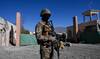
Khyber Pakhtunkhwa, which borders Afghanistan, has faced a sharp rise in militant violence in recent years, with attacks by Pakistani Taliban factions straining provincial law enforcement and security institutions. Islamabad has repeatedly called for stronger provincial cooperation as it battles a nationwide resurgence of militancy.
According to a statement issued by the Prime Minister’s Office, Sharif met KP CM Sohail Afridi in Islamabad, with discussions focusing on law and order, counterterrorism and coordination between federal and provincial authorities.
“The Prime Minister emphasized the need for cooperation between the federal and provincial governments for the development and prosperity of the people of Khyber Pakhtunkhwa,” the PMO statement said.
On security, Sharif described coordination between Islamabad and Peshawar as essential.
“The Prime Minister declared cooperation between the federal and provincial governments indispensable for maintaining law and order in the province,” the statement said, adding that “there is a need to further intensify the provincial government’s efforts to establish peace.”
Sharif also called on the provincial administration to strengthen its own institutions to counter militancy.
“The provincial government should reinforce provincial institutions to combat terrorism,” the statement quoted him as saying, while stressing that both governments would continue “joint efforts for the complete elimination of terrorism.”
The prime minister underlined that maintaining security and delivering welfare were constitutional responsibilities of the provincial government.
“The provincial government is empowered and should take measures for health and education for the people of Khyber Pakhtunkhwa,” the statement said.
Sharif said the federal government remained committed to supporting the province within its constitutional mandate.
“The federal government has always strived for the betterment of the people of Khyber Pakhtunkhwa,” he said, describing the province as “an important unit of the federation.”
He added that national development required sustained coordination between Islamabad and the provinces.
“For national development and public service, close relations and effective coordination between the federation and the provinces are indispensable,” the statement said.
The prime minister assured cooperation on development projects, infrastructure, education, health and employment generation “within the federal domain,” reiterating that the government was pursuing a vision of balanced development across all provinces.
The meeting comes as Pakistan’s federal authorities seek to stabilize security conditions and revive economic confidence amid persistent political divisions, with analysts warning that continued friction between Islamabad and opposition-led provinces could complicate counterterrorism efforts and governance in vulnerable regions.