


NEW YORK/WASHINGTON: The Trump administration may seek to strike a simplified minerals deal with Ukraine to get a pact in place quickly and later negotiate detailed terms, such as how much of Ukraine’s vast resources the US would own, two people with knowledge of the matter told Reuters on Wednesday.
This follows Ukrainian President Volodymyr Zelensky’s rejection of a detailed US proposal last week that would have seen Washington receiving 50 percent of Ukraine’s critical minerals, which include graphite, uranium, titanium and lithium, the latter a key component in electric car batteries.
That episode made clear that reaching a full deal will take time, the sources said.
But US President Donald Trump wants a pact with Ukraine in place before potentially authorizing more US military support for Kyiv or moving ahead with a bid to broker formal peace talks between Ukraine and Russia to end the three-year-old war, which was triggered by Moscow’s invasion of its neighbor.
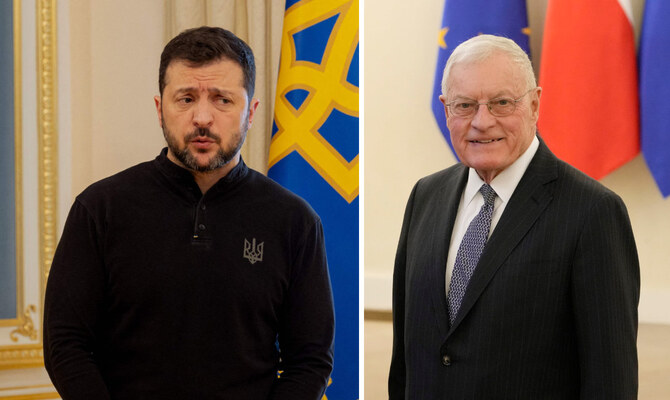
Trump’s Ukraine envoy Keith Kellogg is in Kyiv this week to discuss the parameters of a revised pact and what Ukraine needs in return for signing.
Zelensky said he would meet with Kellogg on Thursday “and it is crucial for us that this meeting — and overall cooperation with America — be constructive.”
When asked if US officials would continue to pursue a deal, a Trump adviser, speaking on condition of anonymity, said about Zelensky: “Absolutely, we need to get this guy back to reality.”
The White House did not immediately respond to a request for comment.
The push for a deal continues despite a widening rift between Trump and Zelensky. Trump denounced his Ukrainian counterpart as “a dictator without elections” on Wednesday after Zelensky said Trump was trapped in a Russian disinformation bubble, a response to the US president suggesting Ukraine started the war.
The United States has provided tens of billions of dollars in military aid to Ukraine in the past three years , and Trump has said US investment in Ukrainian minerals could ensure “that we’re going to in some form get this money back.” He is pushing for Kyiv to grant the US mineral concessions worth $500 billion in recognition of Washington’s aid.
The sources said it is important to Trump that he can signal publicly to the American people that the US is recouping the aid.
Less ‘rapacious’
It’s unclear the extent to which the original US proposal was framed as compensation for past weapons shipments or for future installments. But Zelensky said it focused too heavily on US interests and lacked security guarantees for Kyiv. “I can’t sell our country,” he told reporters Wednesday.
A third source familiar with the matter said Ukraine is willing to make a deal with the Trump administration. Another source also said Kyiv was ready to make a deal but that it must not look as “rapacious” as the arrangement the US first proposed.
Details of the US discussions about a potential mineral deal, including who inside the administration helped draft the original proposal, are unknown.
The revised approach is just one of several being discussed at the White House on how to clinch a deal with Kyiv in the coming weeks, an unusually quick timeline for a complex sector where deals usually involve private companies and state entities, not governments.
Trump on Wednesday repeated his frustration that most US aid was grants while Europe, he said, primarily made loans. “While the United States gets nothing back, so they get their money back,” he said.
He also criticized Zelensky’s rejection of the 50-50 split, characterizing it as breaching an accord without any evidence Kyiv had actually agreed to it. “And we had a deal based on rare earth and things, but they broke that deal… they broke it two days ago,” Trump said.
‘Tried, tested’ Chinese tool
A revised, simplified approach would help the United States sidestep numerous legal and logistical hurdles and give it time to negotiate the details of the development, including revenue sharing, at a later date.
“The US has not historically used natural resource-for-aid swaps, but it’s a tried and tested tool in China’s minerals playbook,” said Gracelin Baskaran, director of the critical minerals security program at the Center for Strategic and International Studies.
Ukraine was keenly interested in building a deeper economic and security relationship with the United States and finding a way to recognize the significant US investment already made in Ukraine’s future, said Tyson Barker, former US deputy special envoy for Ukraine’s economic recovery.
“The Ukrainians are more than willing to give extra advantages to the United States, in the form of privileged concessional access to critical mineral resources, in recognition of the billions of dollars that American taxpayers have put into Ukraine,” he said. “This is something that the Ukrainians have been strategizing about for some time.”
Barker said some similar terms would need to be offered to other countries that contributed heavily to Ukraine during the war, including Canada, Britain, Japan and the EU. But Russia also covets Ukraine’s natural resources and its forces, which have already seized a fifth of Ukraine including reserves of rare earths, are now little more than 4 miles from a giant lithium deposit. Ukraine and the United States need to discuss the fate of mineral deposits in areas captured by Russia, Zelensky has said, questioning if minerals in those areas would be given to Russian President Vladimir Putin and his partners Iran, North Korea and China.


