OPEC Fund in talks with Lebanon to launch key economic support initiative

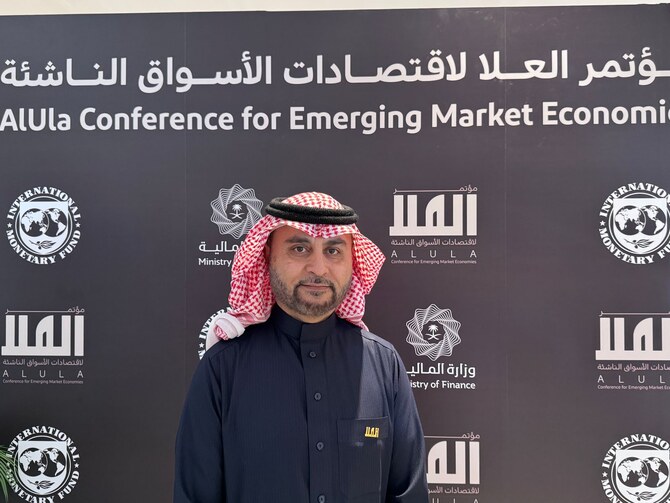
The president of the OPEC Fund for International Development, Abdulhamid Al-Khalifa. AN photo
Short Url
Updated 17 February 2025
Follow

OPEC Fund in talks with Lebanon to launch key economic support initiative

RIYADH: The OPEC Fund for International Development is currently in talks with Lebanese authorities for a significant intervention, the institution’s president announced.

In an interview with Arab News on the opening day of the AlUla Conference for Emerging Market Economies, Abdulhamid Al-Khalifa shared that the fund is working with Lebanon to determine the optimal timing and approach to ensure the greatest impact on the country’s development.

This initiative is in line with the OPEC Fund’s ongoing commitment to global development, having already invested around $27 billion in projects across more than 125 countries. It also aligns with the fund’s mission to foster development, strengthen communities, and empower individuals.

“As you know, OPEC Fund is, as I said, a development institution and those institutions are created to take additional risks when it comes to development and they are what they call it counter-cyclical, when a country faces major issues, these institutions, intervene with high risk, but their objective is maximizing development impact, not maximizing returns on their assets,” Al-Khalifa said.

The president further emphasized that such institutions are not political in nature; instead, their focus is solely on driving development.

Al-Khalifa explained that the OPEC Fund has both a public sector arm and a private sector arm.

He added that the fund was already involved in investment projects in Lebanon through both arms and windows.

However, he noted that the approach depended on the circumstances and the right timing for intervention.

He mentioned that the fund was working with the authorities in Lebanon and looked forward to carrying out the intervention in the near future.

During the interview, the president also highlighted that while the region as a whole has significant potential, it also faces major risks, including geopolitical ones.

Al-Khalifa mentioned that some countries in the region were emerging from such risks, and expressed hope that this would help the region move forward. He added that the future held great potential and significant economic prospects for the region, particularly for the countries emerging from conflicts.

He added: “But also, you have countries that are stable and they are also doing well when it comes to economic development like GCC countries and also some Middle Eastern and North African countries.”

Al-Khalifa expressed his optimism about the future of the region but said: “It depends on many circumstances and depends on many risks that has to be mitigated.”

The president also highlighted that the OPEC Fund was established 50 years ago, with Saudi Arabia being one of the most important establishing members.

Al-Khalifa stated that the fund was focusing its efforts on development in both middle-income and low-income countries. He noted that Saudi Arabia, as the fund’s major shareholder, was supporting these countries through the OPEC Fund platform, which was one of the platforms Saudi Arabia uses to promote global development.

“As you know, Saudi Arabia is one of the major donors around the world when we compare it to GDP and they are processing their assistance through their bilateral institutions, but also they are using multilateral platforms like the World Bank, OPEC Fund, Islamic Development Bank and other regional banks,” he added.


Saudi-built AI takes on financial crime

Updated 6 sec ago
Follow

Saudi-built AI takes on financial crime

  • Mozn’s FOCAL reflects the Kingdom’s growing fintech ambitions

RIYADH: As financial institutions face increasingly complex threats from fraud and money laundering, technology companies are racing to build systems that can keep pace with evolving risks. 

One such effort is FOCAL, an AI-powered compliance and fraud prevention platform developed by Riyadh-based enterprise artificial intelligence company Mozn.

Founded in 2017, Mozn was established with a focus on building AI technology tailored to regional market needs and regulatory environments. Over time, the company has expanded its reach beyond Saudi Arabia, developing advanced AI solutions used by financial institutions in multiple markets. It has also gained international recognition, including being listed among the World’s Top 250 Fintech Companies for the second consecutive year.

In January 2026, Mozn’s flagship product, FOCAL, was named a Category Leader in Chartis Research’s RiskTech Quadrant 2025 for both AML Transaction Monitoring and KYC (Know Your Customer) Data and Solutions, placing it among 10 companies globally to receive this designation.

Malik Alyousef, co-founder of Mozn and chief technology officer of FOCAL, told Arab News that the platform initially focused on core anti-money laundering functions when development began in 2018. These included customer screening, watchlists, and transaction monitoring to support counter-terrorism financing efforts and the detection of suspicious activity.

As financial crime tactics evolved, the platform expanded into fraud prevention. According to Alyousef, this shift introduced a more proactive model, beginning with device risk analysis and later incorporating tools such as device fingerprinting, behavioral biometrics, and transaction fraud detection.

More recently, FOCAL has moved toward platform convergence through its Financial Crime Intelligence layer, a vendor-neutral framework designed to bring together multiple systems into a single interface for investigation and reporting. The approach allows institutions to gain a consolidated view without replacing their existing technology infrastructure.

“Our architecture eliminates blind spots in financial crime detection. It gives institutions a complete view of the user journey, combining transactional and non-transactional behavioral data,” Alyousef said.

DID YOU KNOW?

• Some electronic money institutions using the platform have reported fraud reductions of up to 90 percent.

• The platform combines anti-money laundering and fraud prevention into a single financial crime intelligence system.

• FOCAL integrates with existing banking systems without requiring institutions to replace their technology stack.

Beyond its underlying architecture, Alyousef pointed to several areas where FOCAL aims to differentiate itself in a competitive market. One is its emphasis on proactive fraud prevention, which assesses risk throughout the customer lifecycle — from onboarding and login behavior to ongoing account activity — with the goal of stopping fraud before losses occur.

He described the platform as an “expert-led model,” highlighting the availability of on-the-ground support for system design, tuning, assessments, and continuous optimization throughout its use.

“FOCAL is designed to be extended,” Alyousef added, noting its adaptability and the ability for clients to customize schemas, rules, and data fields to match their business models and risk tolerance. This flexibility, he said, allows institutions to respond more quickly to emerging fraud patterns.

Alyousef also emphasized the importance of local context in the platform’s development.

“The platform incorporates regional regulatory requirements and language considerations. Global tools often struggle with local context, naming conventions and compliance nuances — we are designed specifically with these realities in mind,” he said.

FOCAL is currently used by a range of organizations, including traditional banks, digital banks, fintech firms, electronic money institutions, payment companies, and other financial service providers. Alyousef said results from live deployments have been significant, with some large EMI clients reporting fraud reductions of up to 90 percent.

“Clients benefit not only from reduced fraud losses but also from an improved customer experience, as the system minimizes unnecessary friction and false rejections,” he said. “Beyond financial services, we also work with organizations in e-commerce and telecommunications.”

Looking ahead, Alyousef said the company sees agentic AI as a key direction for the future of financial crime prevention, both in the region and globally. Mozn, he added, is investing heavily in this area to enhance investigative workflows and operational efficiency, building on the capabilities of its Financial Crime Intelligence layer.

“We are pioneers in introducing agentic AI for financial crime investigation and rule-building. Our roadmap increasingly emphasizes automation, advanced machine learning and AI-assisted workflows to improve investigator productivity and reduce false positives.”

As AI tools become more widely available, Alyousef warned that the risk of misuse by criminals is also increasing, raising the bar for defensive technologies.

“Our goal is to stay ahead of that curve and to contribute meaningfully to positioning Saudi Arabia and the region as globally competitive leaders in AI,” he said.