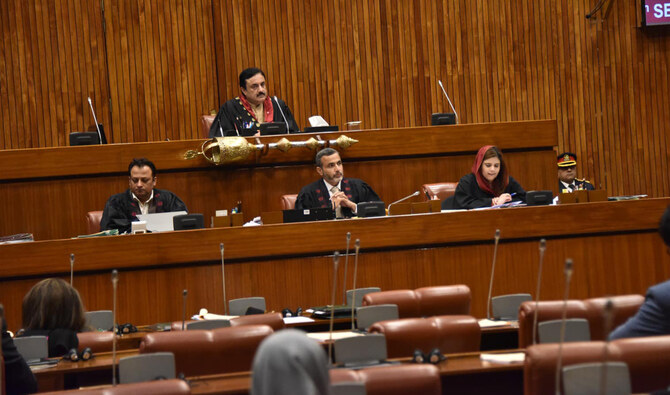
KARACHI: Pakistan’s Senate on Friday approved amendments to three key laws aimed at combating human trafficking and illegal migration, following a series of deadly migrant boat tragedies that have claimed hundreds of lives.
The legislation— covering human trafficking, migrant smuggling and emigration— seeks to strengthen penalties for offenders, including those involved in smuggling young girls and trafficking beggars to Gulf states.
Pakistan has intensified its crackdown on human smugglers after multiple boat tragedies. In January, the Federal Investigation Agency (FIA) issued Interpol red notices for 20 suspected foreign-based traffickers, though migrant deaths continue as people attempt to cross treacherous waters on rickety boats to reach European shores.
The three bills, unanimously passed after clearance by the relevant Senate standing committees, aim to further strengthen the legal framework to tackle the crisis. The Prevention of Trafficking in Persons (Amendment) Bill expands the definition of trafficking to include organized begging, following concerns raised by Pakistan’s diplomatic missions in the Gulf Cooperation Council (GCC) states, Iraq and Malaysia.
“The agents and gangs who are involved in this practice easily dodge prosecution as beggary is not a crime in any law entrusted to FIA,” reads the statement of objects and reasons of the bill, which has amended multiple sections of a 2018 law to prevent human trafficking. “The sensitivity of issue demands urgent need of making beggary a crime.”
In the past, several Pakistanis reportedly traveled abroad for Hajj, Umrah or personal visits but engaged in begging, tarnishing the country’s image.
The bill also increases penalties for traffickers, raising prison sentences from a minimum of three years to up to 14 years for offenses involving women and children. Fines for trafficking crimes now range from Rs1 million ($3,581) to Rs2 million ($7,162).
Similarly, the Prevention of Smuggling of Migrants (Amendment) Bill stiffens penalties for offenders, increasing the maximum prison term from five years to 10 years and raising fines from Rs1 million to Rs10 million ($35,810).
It also targets individuals who harbor undocumented foreigners in Pakistan, increasing their prison term from three years to five years and doubling fines to Rs2 million.
The third approved bill revises the 1979 Emigration Ordinance to eliminate leniency for human smugglers. Courts will no longer have the discretion to impose only fines on those found guilty, making jail sentences mandatory for offenders.
“To curb the menace of unlawful emigration and create deterrence among perpetrators and prevent repetition of offenses, it is inevitable to amend the Court’s discretion, which currently has the option to award either imprisonment or a fine,” the bill said.
The three bills come at a time when two migrant boat tragedies involving dozens of Pakistanis — one near Morocco and the other off the coast of Libya — have been reported since the beginning of the year. Prior to these incidents, an overcrowded vessel carrying over 250 Pakistanis capsized in June 2023 near Greece.
There has also been a rise in deportations of Pakistanis from Gulf nations. In November 2024, authorities added 4,300 individuals involved in organized begging to the Exit Control List (ECL).
According to official statements, hundreds of Pakistanis have been deported in recent months due to visa irregularities, insufficient travel funds, procedural lapses and involvement in crimes or begging.


![]()

Pakistan Senate passes tougher laws to curb human smuggling, illegal migration
Short Url
https://arab.news/9664r
Pakistan Senate passes tougher laws to curb human smuggling, illegal migration
- Hundreds of Pakistanis have lost lives in boat capsizing incidents since 2023, while trying to reach Europe
- Despite intense crackdown leading to arrests, such tragedies continue, necessitating more stringent laws
Latest updates


© 2026 SAUDI RESEARCH & PUBLISHING COMPANY, All Rights Reserved And subject to Terms of Use Agreement.