
In the 1940s, mathematicians set out to design computers that could act as ideal rational agents in the face of uncertainty.
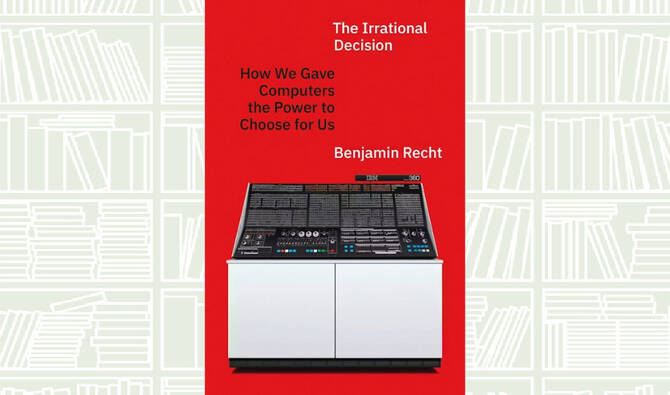
“The Irrational Decision” tells the story of how they settled on a peculiar mathematical definition of rationality in which every decision is a statistical question of risk.
Benjamin Recht traces how this quantitative standard came to define our understanding of rationality, looking at the history of optimization, game theory, statistical testing, and machine learning.