ISLAMABAD: The World Bank’s private investment arm is increasing equity investments and eyeing large-scale infrastructure financing in Pakistan, in an investment plan that could unlock $2 billion annually over a decade, the institution’s chief told Reuters on Friday.
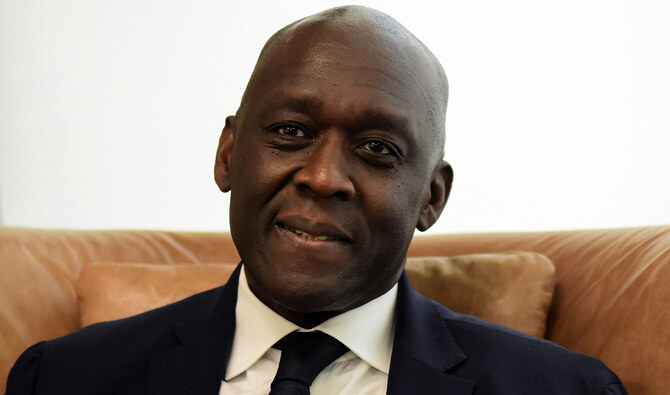
International Finance Corporation chief Makhtar Diop’s maiden visit to Pakistan follows the World Bank’s plans to allocate up to $20 billion for Pakistan under a Country Partnership Framework announced in January, with the IFC also slotted to invest the same amount.
“Between now and maybe October we will be able to progress enough on a couple of transactions that will signal that this is a country ready to receive large-scale financing for critical and important infrastructure,” said Makhtar Diop, the corporation’s managing director.
Diop said a $2 billion annual investment “is not a large number” for Pakistan, which needs infrastructure development in international airports, energy, water and ports.
Cash-strapped Pakistan is currently under a $7 billion International Monetary Fund bailout program and navigating a tricky path to recovery.
The South Asian nation narrowly averted a sovereign debt default, with reserves not sufficient enough to meet a month’s worth of controlled imports.
The IFC had an exposure of $2.1 billion in Pakistan during the fiscal year 2024, ending in June, marking its record investment in the South Asian country’s $350 billion economy.
Pakistan’s economy grew by a meagre 0.92 percent in the first quarter of the fiscal year.
Diop said the IFC is looking into agriculture, infrastructure, the “very important” financial sector, and the digital sector.
Pakistan is looking to generate revenue by speeding up a privatization push, but efforts to privatise the national flag carrier, Pakistan International Airlines, and outsource the capital’s airport have fallen flat.
In line with the IFC’s global push, Diop said equity-based transactions were to be expected in Pakistan too.
“Debt will still be a very important part in our business, but our equity will increase in the world, but also in Pakistan. It means we are believing really in Pakistan because we can take equity for a long, long time,” he said.

IFC chief says it is doubling down on Pakistan, eyeing large infrastructure financing
https://arab.news/52hca
IFC chief says it is doubling down on Pakistan, eyeing large infrastructure financing
- The IFC had exposure of $2.1 billion in Pakistan during fiscal year 2024, ending in June
- It marked the IFC’s record investment in the South Asian country’s $350 billion economy
Pakistan Air Force conducts successful test of air-launched cruise missile
- The indigenously developed ‘Taimoor’ missile has a range of 600 kilometers and carries a conventional warhead
- The missile is designed to fly at low altitudes, which enables it to evade hostile air, missile defense systems
ISLAMABAD: The Pakistan Air Force (PAF) has successfully conducted a test of an air-launched cruise missile, ‘Taimoor,’ the Pakistani military said on Saturday, marking another significant milestone in advancement of national aerospace and defense capabilities.
The indigenously developed Taimoor weapon system is capable of engaging enemy land and sea targets with high precision. The missile has a range of 600 kilometers and carries a conventional warhead.
The missile test comes months after a brief but intense military conflict between Pakistan and India in which the nuclear-armed neighbors exchanged missile and artillery fire and deployed drones and fighter jets.
Equipped with state-of-the-art navigation and guidance system, Taimoor is designed to fly at very low altitudes, enabling it to effectively evade hostile air and missile defense systems.
“Its precision-strike capability significantly enhances the conventional deterrence and operational flexibility of Pakistan Air Force, further strengthening the country’s overall defense posture,” said the Inter-Services Public Relations (ISPR), the military’s media wing.
“The successful flight test underscores the technical maturity, innovation and self-reliance achieved by Pakistan’s defense industry.”
The missile’s launch was witnessed by senior officers of the armed forces along with distinguished scientists and engineers, who played a pivotal role in the development of this advanced weapon system.
PAF’s Air Chief Marshal Zaheer Ahmed Baber Sidhu congratulated the scientists, engineers and the entire PAF team on this remarkable achievement, lauding their professional excellence, dedication and unwavering commitment to strengthening Pakistan’s defense capabilities.
“The air chief reaffirmed that such accomplishments are a testament to the nation’s resolve to achieve technological self-sufficiency and maintain a credible conventional deterrent in the evolving regional security environment,” the ISPR said.
“The successful test of the Taimoor weapon system reflects Pakistan Air Force’s continued pursuit of operational readiness, technological superiority and national security objectives.”
Pakistan has placed greater emphasis on battle readiness in recent months. On Dec. 15, Pakistan Navy test-fired surface-to-air missile in the northern Arabian Sea.
Prior to that, Chief of Defense Forces Field Marshal Asim Munir visited frontline garrisons of Gujranwala and Sialkot to observe a field training exercise involving tanks and drones, where he had highlighted the importance of technological adaptability, saying modern warfare required agility, precision, situational awareness and rapid decision-making.


