



RIYADH: At the heart of Saudi Arabia’s environmental strategy is regenerative tourism, which aims to protect natural habitats through science-led approaches and sustainable practices.
Unlike sustainable tourism, which aims to minimize harm, regenerative tourism strives to improve destinations through conservation, community engagement and science-led initiatives.
This includes implementing eco-friendly infrastructure, protecting biodiversity, and involving local communities in conservation efforts to ensure long-term environmental and economic benefits.

Raed Albasseet, group chief environment and sustainability officer at Red Sea Global, says the real estate company practices “regenerative tourism” with a commitment to operate on renewable energy alone.
“This commitment is not just a tagline; it’s woven into the very infrastructure of our destinations ... integrating sustainability into every phase of design and construction,” he told Arab News.
“Visitors can already experience this firsthand at The Red Sea, where eco-conscious designs are effortlessly integrated into every aspect of their stay.”
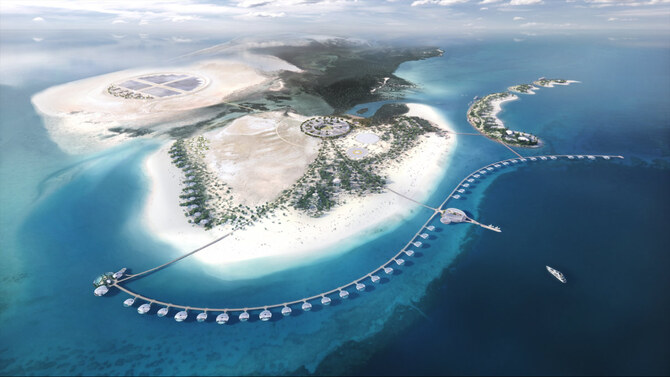
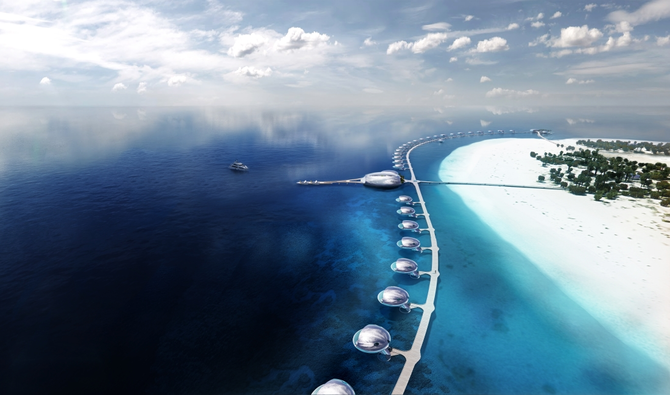
The Red Sea, a luxury regenerative tourism destination on Saudi Arabia’s west coast, features world-class resorts. By 2030, it will include 50 hotels, 8,000 rooms and more than 1,000 residences, while capping visitors at 1 million annually to help protect local ecosystems.
Opinion
This section contains relevant reference points, placed in (Opinion field)
As part of this plan, Red Sea Global has developed the Desert Rock Resort, a newly opened retreat that blends seamlessly with its natural surroundings. Designed to reduce energy use and maximize natural light, its elevated rooms feature large openings that mimic cave mouths, allowing ample daylight to filter in.
Before construction began at the Desert Rock Resort, Red Sea Global partnered with the King Abdullah University of Science and Technology to conduct a comprehensive marine spatial planning simulation.
“This was the largest study of its kind ever undertaken in Saudi Arabia, and it provided crucial data to inform our master plan and minimize our impact on the delicate marine ecosystem,” Albasseet said, adding: “As a result, we limited development to only 22 of the more than 90 islands at The Red Sea destination.”
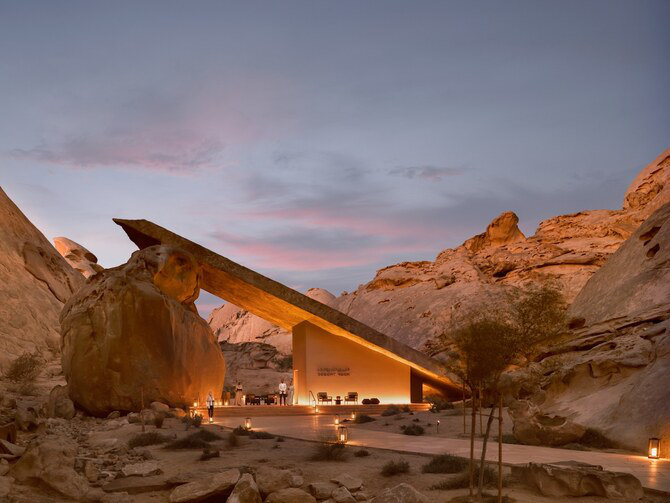
The Desert Rock Resort, developed by Red Sea Global, is a retreat that blends seamlessly with its natural surroundings.
The Desert Rock Resort even repurposed excavated materials, meaning no additional materials were brought in for the main infrastructure.
“We used the mountains’ natural stone for interior and exterior walls and concrete was mixed using local sources of sand and stone,” said Albasseet. “To further reduce on-site disruption and waste, we emphasize pre-fabrication and off-site manufacturing.”
Moreover, Red Sea Global’s hotels and resorts are powered by solar energy, allowing guests to enjoy an eco-friendly destination with a zero carbon footprint.

Albasseet said the backbone of the company’s renewable energy strategy was Red Sea’s vast solar farms, which include hundreds of thousands of photovoltaic panels — more than 750,000 are currently in place.
“These farms generate clean electricity, significantly reducing our reliance on fossil fuels and minimizing our carbon footprint,” he said.
“To ensure a consistent and reliable power supply, even when the sun isn’t shining, we’ve also built one of the world’s largest battery storage facilities at The Red Sea. This … allows us to store excess solar energy generated during the day and use it to power our resorts at night.”
DID YOU KNOW?
• Diriyah, a historic landmark in Riyadh, is being developed sustainably under Vision 2030, earning platinum-level LEED precertification.
• The Farasan Islands, a biodiverse Red Sea archipelago, are being developed for conservation and ecotourism.
• Soudah Development is transforming Saudi Arabia’s southern region into a luxury destination with a focus on ecosystem restoration.
This reliance on solar power extends beyond Red Sea Global’s resorts and hotels.
“It also powers Red Sea International Airport, putting it on track to become the region’s first airport powered entirely by renewable energy,” Albasseet said. “Even our 5G network, a crucial component of modern connectivity, runs on solar energy, making it the world’s first sunlight-powered network.”
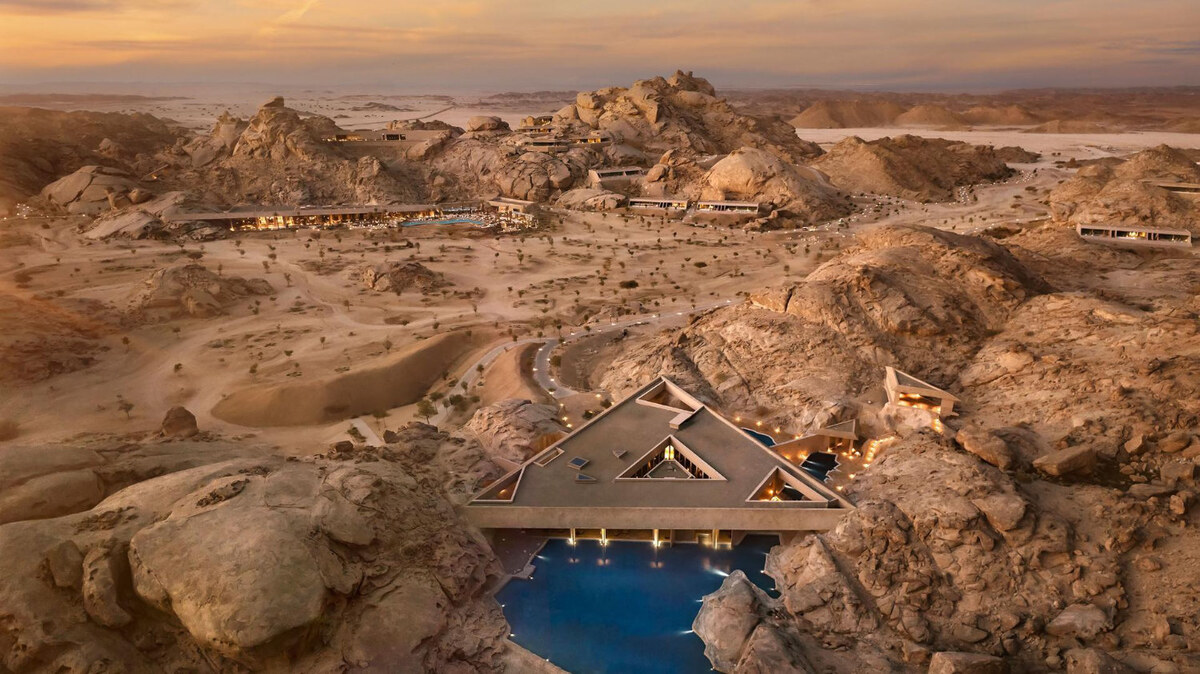
A wider view of the Desert Rock resort, a luxury destibation set in a hidden valley and nestled between the mountains near Umluj governorate in Tabuk region. (Red Sea Global photo)
Shebara and Desert Rock, which opened to guests last year, have integrated advanced water systems and water-saving strategies through smart irrigation systems that optimize water use.
“A key element of our water conservation efforts is the implementation of closed-loop systems. Notably, at Desert Rock we have advanced water retention and distribution systems that capture rainwater,” Albasseet said.
“This captured rainwater is being used to sustain the surrounding wadi, revitalizing the local ecosystem and minimizing reliance on external water sources.
“The resort’s design also incorporates water-efficient fixtures and landscaping, further reducing water usage in day-to-day operations. This integration of natural water systems into the resort’s design demonstrates our commitment to working with, rather than against, the natural environment.”

Soudah, a luxurious mountain destination 3,015 meters above sea level in the Asir region of Saudi Arabia, is more than just a mountain retreat. It offers a range of immersive natural experiences and the opportunity to celebrate the cultural abundance of the region. (Soudah Development photo)
The consequences of unsustainable tourism are far-reaching, ranging from the degradation of delicate ecosystems and biodiversity loss to the exploitation of local communities and cultural commodification. “The current trajectory is simply not viable,” Albasseet said.
“Encouraging sustainable tourism practices is no longer a choice but a necessity for the future of our planet and the travel industry itself … The industry’s contribution to greenhouse gas emissions, estimated at 8 percent globally, underscores the urgent need for transformative change.
“This is not simply about minimizing negative impacts; it’s about actively restoring and regenerating the destinations we cherish.”
Furthermore, he added: “These practices undermine the very foundation of the tourism industry, jeopardizing the natural and cultural assets that attract visitors in the first place.
“The increasing awareness of these issues among travelers, coupled with global commitments like the Paris Climate Agreement and the UN Sustainable Development Goals, further reinforces the need for the industry to embrace sustainability.”


