



RIYADH: The second edition of the Diriyah Biennale Foundation's Islamic Arts Biennale is themed “And All That Is In Between.” The title draws from the Qur’anic verse “And God created the Heavens and the Earth and all that is in between” and, of the biennale’s seven sections, the one that arguably best represents this connection between the earthly and spiritual realms is AlMuqtani (which means homage in Arabic).
Here, curator Amin Jaffer showcases the connection of the material world to the spiritual realm through rare pieces from two notable collections: those of Qatari royal Sheikh Hamad bin Abdullah Al-Thani and Saudi collector Rifaat Sheikh El-Ard, owner of the Furusiyya Collection.
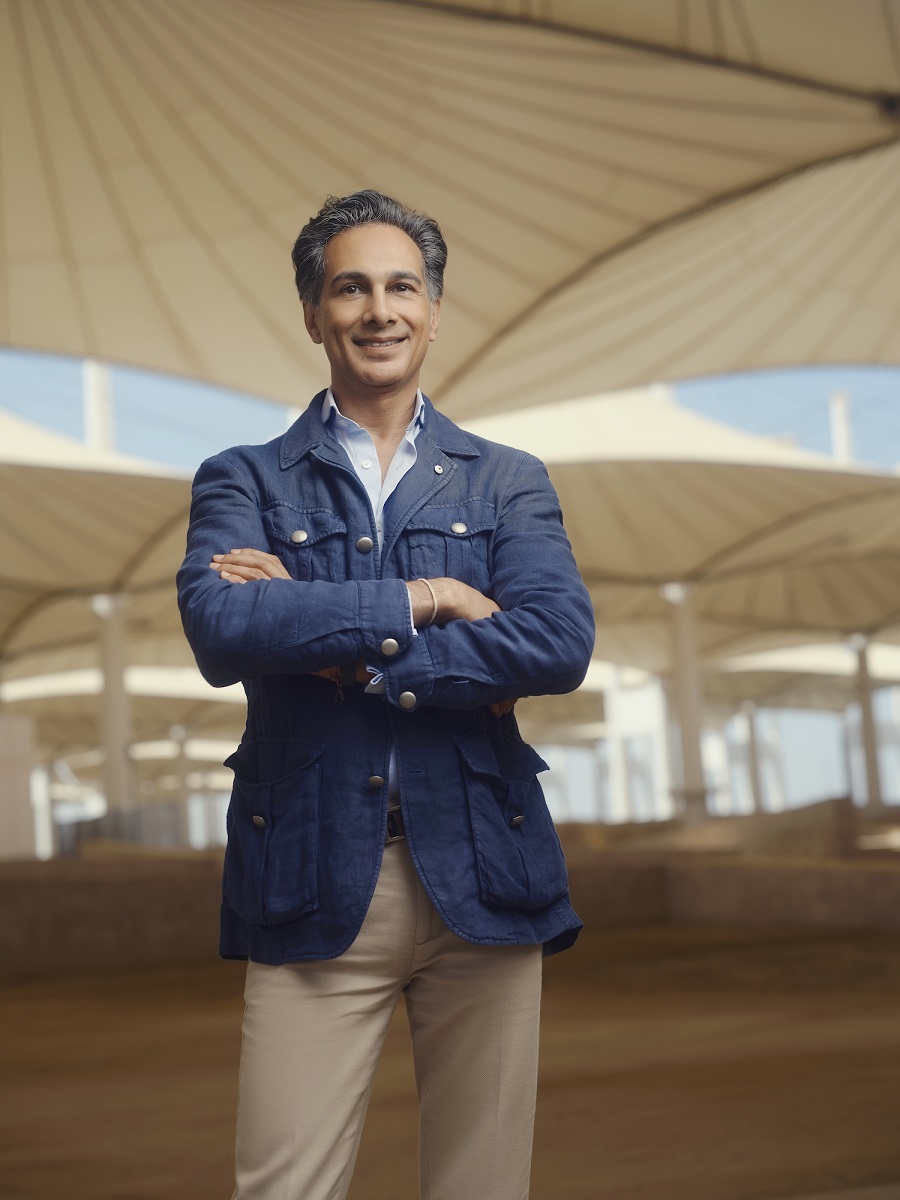
Curator Amin Jaffer. (Supplied)
The Al-Thani Collection, of which Jaffer is also the director, reflects the varied tastes of its founder, who began collecting works of art at the age of 18. Today, it includes more than 5,000 objects spanning multiple civilizations and geographies and is known for its superb collection of precious materials and objects. Its breadth and vision reflect Sheikh Hamad's early exposure to museums such as the Louvre in Paris, which he visited with his mother as a young boy.
Art from the Islamic world, however, holds particular importance for Sheikh Hamad, reflecting his own culture and upbringing as well as his ties and inspiration drawn from his friendships with Sheikh Nasser Sabah Al-Ahmad Al-Sabah, founder of Dar Al-Athar al-Islamiyyah in Kuwait, and Sheikh Saoud bin Mohamed Al-Thani, who developed the collection of the Museum of Islamic Art in Doha. Jaffer says that Sheikh’s Hamad’s acquisitions are guided by the aesthetic and cultural significance of each piece, regardless of its era.
“The Al-Thani collection has more than 5,000 works art, from neolithic to contemporary,” Jaffer tells Arab News. “The Islamic collection is relatively small, and what we are showing is the highlights from that part of the collection, focusing on the variety, whether manuscripts, miniature painting works in metal, or glass jewelry.”

The AlMuqtani section of the art fair. (Diriyah Biennale Foundation)
Selections from the collection have previously been exhibited at prestigious institutions worldwide, including the Metropolitan Museum of Art in New York, the Forbidden City in Beijing, and the State Hermitage Museum in Saint Petersburg, and highlights are now housed in a dedicated space at l'Hôtel de la Marine, a historic monument in Paris.
The second part of the gallery is dedicated to a selection of objects of chivalric culture, including arms and armor from the Islamic world from El-Ard’s collection, which he began in 1980. He decided to concentrate his acquisitions on the often overlooked area of weaponry from the Islamic world. The collection now contains more than 1,000 pieces, including rare examples of some of the most remarkable Islamic weapons ever crafted.

A jade jug from Central Asia, created sometime in the first half of the 16th century CE, part of the Al-Thani collection. (Supplied)
While the collection’s primary focus is on Islamic arms and armor, it has now expanded to include exceptional pieces of metalwork and other materials, many of which have never been publicly shown until now.
Both collections comprise objects ranging from the Umayyad to Ottoman periods exuding breathtaking beauty and meticulously rendered craftsmanship.
“AlMuqtani is very much about beauty,” says Jaffer. “The material or the tangible comes across. Unlike the other galleries, which have very strong stories, or have objects grouped to tell a very particular message, that is not the case here. It’s about the individual works of art and the taste and vision of the collectors. When people ask me what unites these objects, I would say the unifying factor is the collectors.
“Both men are deeply, deeply involved in every aspect of the collection,” he continues. “But the most important point is acquisition. These pieces reflect, above all, the taste and the sensibilities of these two men. Through the curation of this gallery, we wanted visitors to become lost in the experience of the aesthetics of each object.”


