


RIYADH: Saudi Arabia’s Red Sea Global is leveraging the proceeds from its residential sales to finance upcoming projects along its coastal properties, according to the company’s top executive.
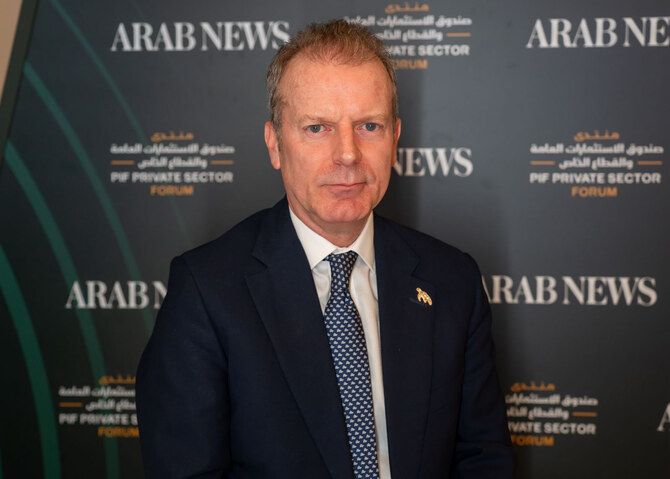
In an interview with Arab News during the Public Investment Fund’s Private Sector Forum, RSG’s Group Chief Financial Officer Martin Greenslade disclosed that the company intends to sell around 300 residences in its Red Sea development, along with a similar number at its wellness-focused destination, AMAALA.
“Those residences are available to anyone to purchase, both Saudis and international buyers. We’ve already sold some of them, some of those have been reserved, and the pricing for that is anywhere up from SR5 million ($1.3 million) upward. There’s something to suit every taste and every budget,” Greenslade said.
The CFO added that revenue from these sales serves as a critical source of funding for RSG’s long-term plans. “This external investment, as people buy those residences, is an important driver of funding for us,” he said.
Infrastructure development
RSG has already invested more than $20 billion into its flagship projects, with an equal or greater amount expected to be invested in future developments, according to the company’s top official.
Initial funding for infrastructure was provided by the Saudi government and the sovereign wealth fund, with additional support from bank loans and public-private partnerships for key utilities, such as solar energy and water treatment.
To finance the Red Sea project, RSG secured a SR14 billion green financing facility in 2021, which has been fully utilized to support the final stages of development. Greenslade emphasized that future funding will continue to come from a combination of residential sales, bank loans, and external investments.
“We are actively exploring co-investment opportunities, similar to our partnerships for the Four Seasons and Jumeirah hotels, where we have sold 50 percent stakes to external investors,” he noted.
Growing tourism and occupancy targets
Despite limited international flight options, with service currently only available from Dubai, RSG has seen strong demand from domestic and Gulf Cooperation Council tourists.
Five hotels have already opened, with 11 more scheduled to launch this year on Shura, the main hub island of The Red Sea development.
Although the company has not released specific occupancy figures, Greenslade expects the numbers to align with global luxury destinations over time, aiming to reach the 70 percent occupancy benchmark.
“The full launch of the destination is planned for the end of 2025, once all hotels are operational,” he explained. “We anticipate stronger occupancy rates as international connectivity improves, given that global travelers typically stay longer.”
Investment opportunities
“We’ve led to over SR20 billion of contracts, 70 percent of that has gone to Saudi based organizations,” he said.
The company is inviting businesses to establish operations in the Red Sea area, spanning retail, hospitality, and entertainment sectors.
Entrepreneurs with unique tourism-related offerings are encouraged to invest, though Greenslade underlined that quality control and operational expertise are key criteria for entry.
“Yes, we’re looking for entrepreneurs, we’re looking for people who want to bring, who believe they have, something to bring to the tourists that will be coming to our destination,” he said.
“We have created our own seaplane and diving companies due to initial service gaps, but we are actively training and hiring local talent, with over 500 graduates from our vocational programs already employed,” he added.
Environmental sustainability is a core focus of RSG’s strategy. The company plans to plant and restore 50 million mangroves over the next five years and has mapped 180 coral reefs using artificial intelligence to ensure ecological preservation.
The Red Sea destination is entirely solar-powered, with electric vehicles and water sports helping to maintain a carbon-neutral footprint.
Moving forward, RSG will continue to incorporate green financing into its funding strategy, further reinforcing its commitment to regenerative tourism.
“The savings from our solar farms alone will prevent over a million tonnes of carbon dioxide emissions annually,” Greenslade emphasized.


