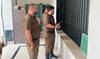
SEOUL: Western tour agencies entered North Korea for the first time on Thursday since the end of the pandemic, the companies said, voicing hopes the isolated country may soon reopen a border city to foreign visitors.
In January, travel agencies said the North would reopen the border city of Rason to foreign tourists, five years after Pyongyang sealed its frontiers in response to COVID-19.
Neither North Korea nor China have commented on the plans.
The Beijing-based Koryo Tours, which offers mainly Western tourists a glimpse into the secretive nation, wrote on its website on Thursday that “staff crossed the border in the early hours of this morning.”
“We’re happy to finally enter North Korea,” the travel agency wrote in a blog.
“The country is not yet fully open to tourism and this is a special trip for staff only.”
But they hope to confirm the opening of Rason to tourism in “the coming days.”
Another travel agency, Young Pioneer Tours, also uploaded a picture of a passport with a North Korean border stamp, declaring they were “first to be back in five years.”
Koryo Tours last week said that they had opened bookings for “the first trip back to North Korea since the borders closed in January 2020.”
The company said then that it hoped the tour would take place in February.
Itineraries included visiting “must-see” sites in Rason and a chance to “travel to North Korea to celebrate one of the biggest holidays, Kim Jong Il’s Birthday,” the agency wrote on its website.
The birthday of former ruler Kim Jong Il — father of current leader Kim Jong Un — is marked as Day of the Shining Star on February 16, and typically features large-scale public celebrations, including military parades.
The tours were slated to start in China, with guests to be driven to the border with the nuclear-armed North.
Young Pioneer Tours also began taking advanced bookings for Rason tour packages in January.
Rason became North Korea’s first special economic zone in 1991 and has been a testing ground for new economic policies.
It is home to North Korea’s first legal marketplace and has a separate visa regime from the rest of the country.
Tourism to the North was limited before the pandemic, with tour companies saying around 5,000 Western tourists visited each year.
Americans were banned from traveling to the North after the imprisonment and subsequent death of student Otto Warmbier in 2017.

Western tour operators enter North Korea for first time since pandemic
Short Url
https://arab.news/bb3w6
Western tour operators enter North Korea for first time since pandemic
- Beijing-based Koryo Tours wrote on its website on Thursday that ‘staff crossed the border in the early hours of this morning’
- Another travel agency, Young Pioneer Tours, also uploaded a picture of a passport with a North Korean border stamp
Boys recount ‘torment’ at hands of armed rebels in DR Congo
BUNIA: Forcibly recruited into a rebel militia affiliated with the Daesh group, two boys revealed the “torment” of living in its camps as members committed massacres in the Democratic Republic of Congo’s northeast.
The two minors freed from the Allied Democratic Forces (ADF) gave AFP an unprecedented account of the shadowy group, notorious for its extreme brutality.
Paluku, a frail 12-year-old, spent two months with the ADF after rebels killed his mother during an attack on his village in eastern North Kivu province. His brother and sister were also captured.
Edouard, 17, spent a gruelling four years with the ADF — formed by Ugandan rebels who took refuge in DRC — after he was kidnapped at age 12.
The two boys, using pseudonyms, spoke on condition of anonymity at a center specializing in the care of minors recruited by armed groups in the region, whose location AFP has chosen not to disclose to avoid potential reprisals.
Their accounts were confirmed by health and security sources.
Round-faced Edouard, a fast-talker, did not mince his words in describing his years of “torment” within the ADF.
“We suffered terribly,” he said.
After their capture, Edouard and Paluku were sent to ADF bases hidden in the dense forest of northeast DRC where the elusive rebels avoid patrols by the Congolese army and Ugandan forces deployed there since 2021.
The bases consist of simple tents and tarps, easy to move in the event of an attack.
Most occupants are women and children, according to security sources, contributing to the group’s operations — but also serving as human shields.
New recruits are swiftly forced to convert to Islam and learn Arabic, but also English and Swahili, Edouard said.
“I was also trained in medicine to treat the wounded, and we learned how to handle weapons and clean them,” he said.
Paluku said he underwent similar training, as well as learning how to “steal food, clothing and medicine to bring back to the ADF camp.”
- Floggings -
Children play a central role in supplying the group, security sources said. Those who fail to bring back loot face severe punishment.
The wives of the ADF commanders, some of whom are particularly influential, also exercise power over the young recruits.
When the fighters go out on “operations,” the youngest among them like Paluku, were “supposed to bring something back for the chief’s wife,” he said, like soap, cooking oil or fabric.
“To get it we have to loot people’s belongings, and if a chief’s wife accuses you to her husband of not bringing back what she asked for, she can demand that you be killed,” he said.
Edouard and Paluku said they were subjected to incessant corporal punishment.
Girls and boys were whipped or thrown into pits for several weeks over the slightest misbehavior.
“I was punished with lashes because I refused to go kill people,” Paluku said with a long stare.
Edouard took part in combat with the group at least three times against the Congolese army or local militias.
“They beat us mostly when we lost our weapons and ammunition, claiming we had wasted them for nothing or lost them on the front,” he explained.
Faced with such an accusation, Edouard said a chief ordered that he be whipped.
“I fell ill because of those lashes. I told the chief outright I was no longer able to go fight on the front, I begged him to send others who were capable, but that made him even more angry, and I was whipped once again,” he said.
- Trauma -
About 10 children freed from the ADF arrive on average each month at the reception center in the troubled northeast Ituri province.
“These children have suffered psychological trauma and torture, and when they arrive here, most are aggressive,” said Madeleine, a psychologist at the center.
After a few weeks spent around other children and staff, their aggression fades, she said.
But there are other scars to contend with.
Edouard became addicted to drugs administered by the rebels after he was wounded in combat.
Suffering from speech disorders, he talks constantly and sometimes incoherently, disturbing other residents, Madeleine said.
After a year at the center receiving ongoing treatment, Edouard recounted the horrors of his experience with a shy smile and a lively, excitable gaze.
Paluku meanwhile had a darker expression, recalling his sister who remains a hostage.
“She has become the wife of one of the ADF chiefs,” he said.
The two minors freed from the Allied Democratic Forces (ADF) gave AFP an unprecedented account of the shadowy group, notorious for its extreme brutality.
Paluku, a frail 12-year-old, spent two months with the ADF after rebels killed his mother during an attack on his village in eastern North Kivu province. His brother and sister were also captured.
Edouard, 17, spent a gruelling four years with the ADF — formed by Ugandan rebels who took refuge in DRC — after he was kidnapped at age 12.
The two boys, using pseudonyms, spoke on condition of anonymity at a center specializing in the care of minors recruited by armed groups in the region, whose location AFP has chosen not to disclose to avoid potential reprisals.
Their accounts were confirmed by health and security sources.
Round-faced Edouard, a fast-talker, did not mince his words in describing his years of “torment” within the ADF.
“We suffered terribly,” he said.
After their capture, Edouard and Paluku were sent to ADF bases hidden in the dense forest of northeast DRC where the elusive rebels avoid patrols by the Congolese army and Ugandan forces deployed there since 2021.
The bases consist of simple tents and tarps, easy to move in the event of an attack.
Most occupants are women and children, according to security sources, contributing to the group’s operations — but also serving as human shields.
New recruits are swiftly forced to convert to Islam and learn Arabic, but also English and Swahili, Edouard said.
“I was also trained in medicine to treat the wounded, and we learned how to handle weapons and clean them,” he said.
Paluku said he underwent similar training, as well as learning how to “steal food, clothing and medicine to bring back to the ADF camp.”
- Floggings -
Children play a central role in supplying the group, security sources said. Those who fail to bring back loot face severe punishment.
The wives of the ADF commanders, some of whom are particularly influential, also exercise power over the young recruits.
When the fighters go out on “operations,” the youngest among them like Paluku, were “supposed to bring something back for the chief’s wife,” he said, like soap, cooking oil or fabric.
“To get it we have to loot people’s belongings, and if a chief’s wife accuses you to her husband of not bringing back what she asked for, she can demand that you be killed,” he said.
Edouard and Paluku said they were subjected to incessant corporal punishment.
Girls and boys were whipped or thrown into pits for several weeks over the slightest misbehavior.
“I was punished with lashes because I refused to go kill people,” Paluku said with a long stare.
Edouard took part in combat with the group at least three times against the Congolese army or local militias.
“They beat us mostly when we lost our weapons and ammunition, claiming we had wasted them for nothing or lost them on the front,” he explained.
Faced with such an accusation, Edouard said a chief ordered that he be whipped.
“I fell ill because of those lashes. I told the chief outright I was no longer able to go fight on the front, I begged him to send others who were capable, but that made him even more angry, and I was whipped once again,” he said.
- Trauma -
About 10 children freed from the ADF arrive on average each month at the reception center in the troubled northeast Ituri province.
“These children have suffered psychological trauma and torture, and when they arrive here, most are aggressive,” said Madeleine, a psychologist at the center.
After a few weeks spent around other children and staff, their aggression fades, she said.
But there are other scars to contend with.
Edouard became addicted to drugs administered by the rebels after he was wounded in combat.
Suffering from speech disorders, he talks constantly and sometimes incoherently, disturbing other residents, Madeleine said.
After a year at the center receiving ongoing treatment, Edouard recounted the horrors of his experience with a shy smile and a lively, excitable gaze.
Paluku meanwhile had a darker expression, recalling his sister who remains a hostage.
“She has become the wife of one of the ADF chiefs,” he said.
© 2025 SAUDI RESEARCH & PUBLISHING COMPANY, All Rights Reserved And subject to Terms of Use Agreement.