

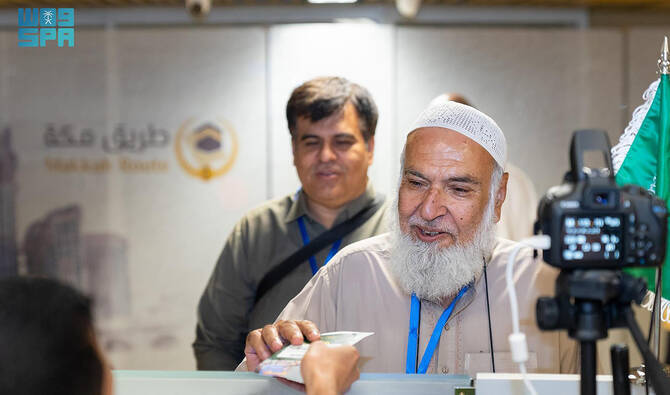

ISLAMABAD: Pakistan’s religious affairs ministry said on Saturday that $198.2 million have been collected from over 88,000 pilgrims as Hajj 2027 dues in the past three days, as Islamabad undertakes preparations for next year’s annual Islamic pilgrimage.
Pakistan announced earlier this month that it has started collecting first installment for Hajj 2027. Pakistan’s government approved the country’s first multi-year Hajj policy in July, covering the years 2027-2030.
Under the government Hajj scheme, pilgrims can avail either a long Hajj package of 38–42 days or a short package that consists of a duration of 20–25 days, with the estimated cost of the government’s Hajj package ranging from Rs1,150,000 to Rs1,250,000 [$4,049.93 to $4,236].
“More than Rs55 billion [$198.2 million] in Hajj dues has been collected over the past three days as the first installment, marking a record level of collections,” the religious affairs ministry said in a statement.
The ministry said that 88,700 pilgrims have paid their first Hajj 2027 installment, adding that only 18,500 slots for the government’s Hajj scheme were left.
The highest number of pilgrims who paid the first installment are from Punjab, with 46,400 despositing the first Hajj installment.
It is followed by 23,500 pilgrims from Sindh and 11,300 from Khyber Pakhtunkhwa. The ministry said 3,933 pilgrims from Islamabad, 2,555 from Balochistan, 677 from Gilgit-Baltistan and 362 from Azad Kashmir have also paid their first Hajj installment.
Pakistan has allocated 107,526 slots under the government scheme for Hajj 2027, with around 400,000 pre-registered applicants eligible to apply on a first-come, first-served basis. Another 71,684 slots have been allocated to the private scheme.
Pakistan has moved the Hajj 2027 process online, allowing pilgrims to submit applications and make payments through the Pak Hajj mobile application and an online portal.
Hundreds of thousands of Pakistani Muslims travel to the holy sites in Makkah and Madinah every year for Hajj pilgrimage. This requires hectic efforts on the government’s end to ensure their food, transport, lodging and travel are handled free of hassles.


