

Pakistan health workers kick off polio drive despite snow in Kashmir

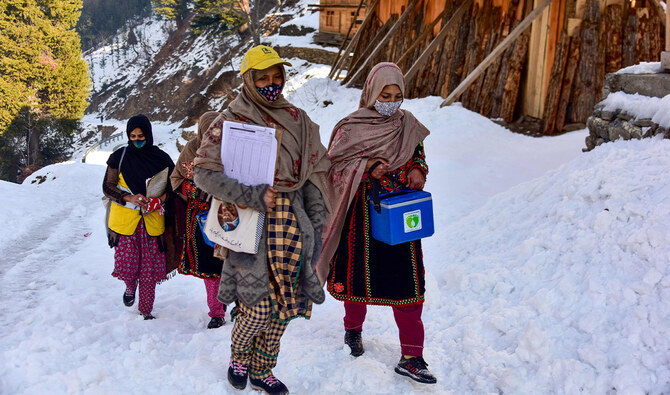
Health workers walk on snow during a polio vaccination drive in Pakistan-administered Kashmir’s Neelum Valley on February 4, 2025. (AFP)
Short Url
Updated 05 February 2025
Follow

Pakistan health workers kick off polio drive despite snow in Kashmir

  • There has been no polio case in the mountainous Himalayan region of Kashmir for 24 years
  • Pakistan recorded at least 73 polio cases in 2024, a sharp increase from six cases a year before

SURGAN, Pakistan: Health workers are braving freezing temperatures this week to administer polio vaccinations in Pakistan-administered Kashmir after cases surged nationwide last year.
Pakistan and neighboring Afghanistan are the only countries where polio is endemic, and militants have for decades targeted vaccination teams and their security escorts.
A police officer guarding polio vaccinators in the northwest was shot dead by militants on Monday, the first day of the annual campaign that is due to last a week.
In Kashmir, health worker Manzoor Ahmad trudged up snowy mountains as temperatures dipped to minus six degrees Celsius (21 degrees Fahrenheit) to administer polio vaccinations in the region.
“It is a mountainous, hard area... we arrive here for polio vaccination despite the three feet of snowfall,” Ahmad, who heads the polio campaign in Pakistan-administered Kashmir, told AFP.
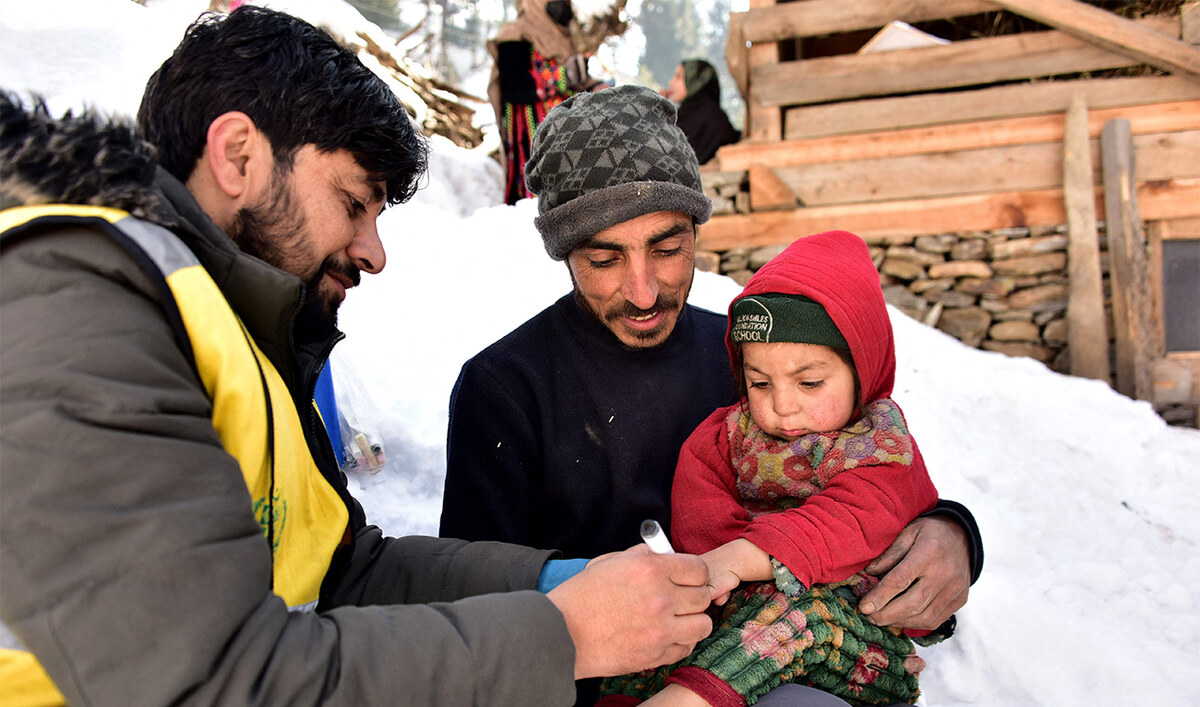


A health worker marks a child's finger after administering polio drops during a vaccination drive in Pakistan-administered Kashmir's Neelum Valley on February 4, 2025. (AFP

Social worker Mehnaz, who goes by one name and has been helping the vaccinators since 2018, said the difficult climate poses a huge risk to the vaccination teams.
“We have no monthly salary... we come here to give polio shots to the children despite the glaciers and avalanches,” she told AFP.
“We risk our lives and leave our children at home.”
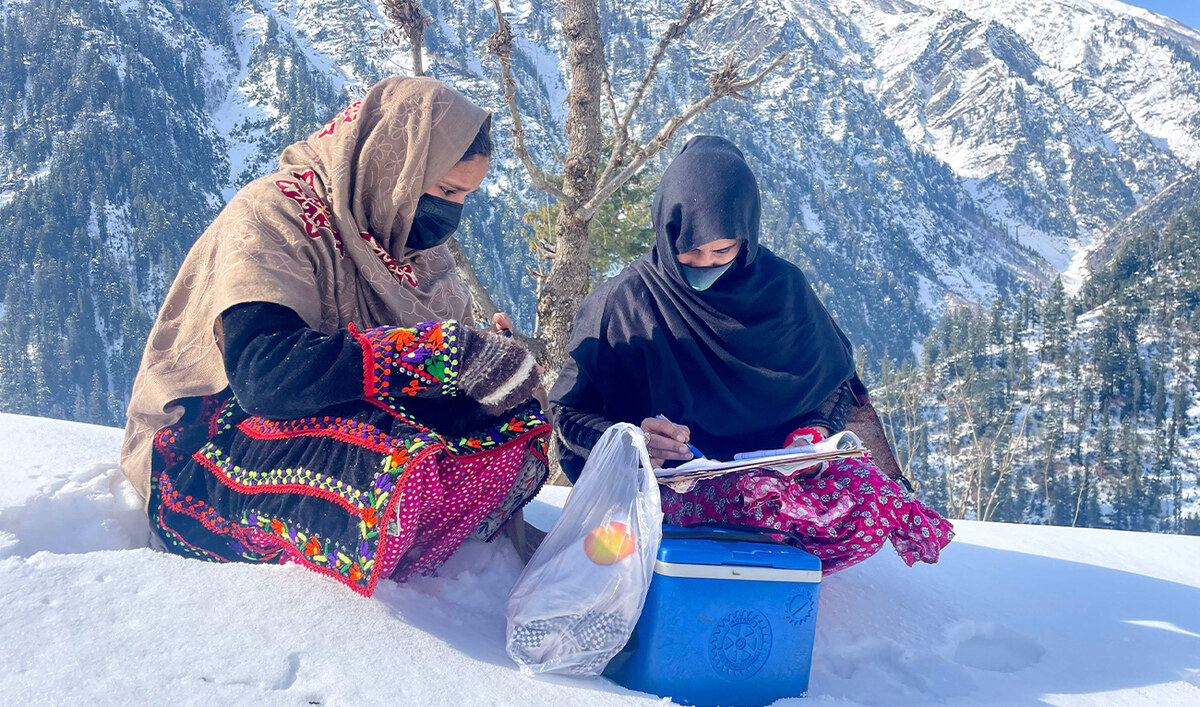


Health workers sit on snow during a polio vaccination drive in Pakistan-administered Kashmir's Neelum Valley on February 4, 2025. (AFP)

The challenge is larger this year for the country with a population of 240 million, after it recorded at least 73 polio cases in 2024 — a sharp increase from just six cases the year before.
Health workers aim to vaccinate approximately 1,700 children within a week in the town of Surgan, around 150 kilometers (90 miles) north of Muzaffarabad, the capital of Pakistan-administered Kashmir.
“Our target is to give polio shots to 750,000 children below the age of five. There are 4,000 polio teams that visit house-to-house,” Ahmad said.
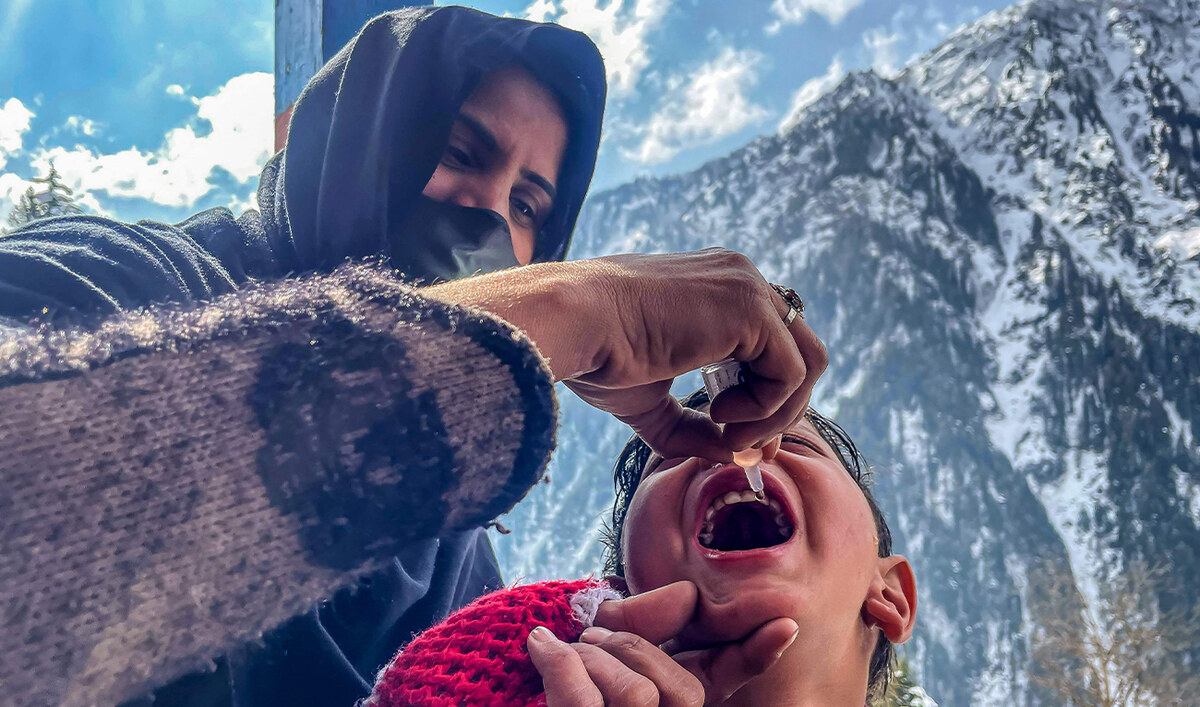


A health worker administers polio drops to a child during a door-to-door vaccination campaign amidst heavy snow in the Bakwali-Surgan area of Pakistan-administered Kashmir's Neelum Valley, on February 4, 2025. (AFP)

“There have been no polio cases in Kashmir for the last 24 years,” he added with pride.
Polio can easily be prevented by an oral vaccine, but in the past some conservative religious leaders have falsely claimed that the vaccine contains pork or alcohol, declaring it forbidden for Muslims to consume.


Pakistan telecom regulator urges restraint on social media amid regional tensions

Updated 28 February 2026
Follow

Pakistan telecom regulator urges restraint on social media amid regional tensions

  • PTA warns against sharing unverified content, says legal action may follow ‘fake news’
  • Advisory comes as Pakistan strikes targets in Afghanistan and Iran faces US, Israeli attacks

ISLAMABAD: Pakistan’s telecom regulator on Saturday urged citizens to avoid sharing “unverified or inflammatory” content online, warning that legal action could be taken against those spreading misinformation amid what it described as a “sensitive national situation.”

The advisory from the Pakistan Telecommunication Authority (PTA) comes as Islamabad says it is targeting militant positions inside Afghanistan following a recent flareup between the two neighbors, while Iran is under attack by the United States and Israel in an escalating regional conflict that has heightened security concerns across South and West Asia.

“In view of the prevailing sensitive national situation, Pakistan Telecommunication Authority (PTA) urges all citizens to be responsible while using social media and digital platforms,” the regulator said in a statement posted on X.

The PTA advised citizens “not to share, disseminate, forward, or upload any unverified, inflammatory, or misleading information/content that may directly or indirectly harm the national interest, public order, or state institutions.”

It said people should instead rely on authentic information based on official sources and refrain from spreading rumors and “fake news.”

“Sharing any fake news/information is liable to legal action in accordance with applicable laws,” the authority said, calling on citizens to act with “caution, maturity, and a strong sense of national responsibility” to help maintain stability and public confidence.

Pakistan in recent years has witnessed increasingly stringent implementation of the Prevention of Electronic Crimes Act (PECA), a cybercrime law that has drawn criticism from rights groups, with journalists and activists arrested and prosecuted under its provisions.