

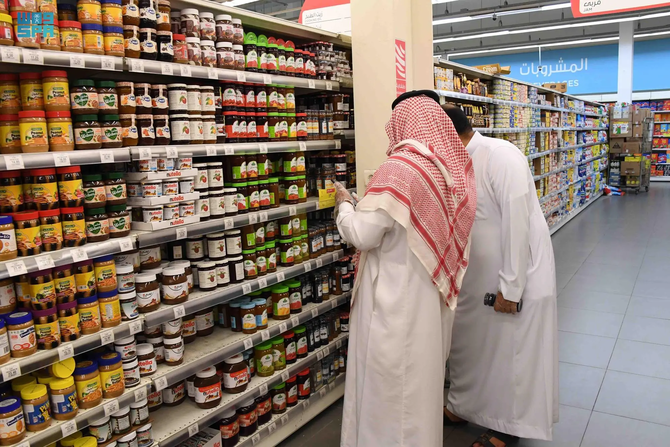

RIYADH: Gulf Cooperation Council retailers faced increasing pressure to stand out as competition in the region’s retail sector intensifies, according to a recent report.
US-based management consulting firm Oliver Wyman highlighted the rising significance of value-led grocery retailing in the region in a recent analysis titled “The Affordability Imperative: Capitalizing on Value-Led Grocery Retail in the GCC.”
“As the grocery retail landscape in the Gulf Cooperation Council becomes increasingly saturated, the need for differentiation has never been more critical,” the report said, adding that shifting consumer priorities and rising demand for affordability provide an opportunity for retailers to reshape the market by adopting cost-conscious strategies.
Saudi Arabia’s grocery sector undergoes transformation
The Kingdom, the largest market in the GCC, provided a critical case study in the transformation of grocery retail. According to a 2024 survey by Oliver Wyman on Saudi Arabia’s consumer trends, more than half of the nation’s households experienced a shift in income levels throughout the year.
“Around 31 percent of households reported a drop in income during 2024, with 11 percent seeing declines of more than 50 percent,” the study said, adding that 40 percent of consumers saw a decrease in their savings, while only 23 percent managed to increase theirs.
Consumers prioritize affordability in shopping choices
Consumers have responded by adopting new shopping behaviors. Nearly 48 percent of surveyed individuals compare prices before making purchases, while 46 percent actively seek out stores offering lower prices.
The Oliver Wyman Customer Perception Map Survey found that 51 percent of Saudi consumers prioritize value, including price and promotions, when selecting their primary retailer.
Private-label products have gained traction as a cost-saving measure, with 80 percent of consumers reporting regular purchases.
The study added 68 percent of shoppers expressed interest in discount grocery retailers and 97 percent of those familiar with international discount brands, such as German-based supermarkets Aldi and Lidl, said they would consider shopping at these stores if available locally.
Three key strategies driving success in value-led grocery retail
The study identified several fundamental strategies employed by successful international value-led grocery retailers.
One is maintaining an attractive proposition through competitive pricing, a strong private-label presence, and a streamlined product assortment. This approach allows retailers to maximize cost efficiency while appealing to budget-conscious shoppers.
Another factor is operational excellence, which can be achieved by optimizing supply chains, enhancing private-label and fresh product management, and fostering a cost-effective corporate culture.
Lastly, leading discount retailers prioritize rapid expansion by maintaining a low capital expenditure model, leveraging deep market knowledge, and reinvesting profits into further growth.
The two-step approach to long-term success
The report highlighted a two-step approach used by successful value-led retailers.
The first step focuses on establishing a strong value perception through low prices, limited assortments, and simple store formats. Once a solid foundation is built, the second step involves enhancing offerings by improving product quality, diversifying selections, and upgrading the shopping experience.
While affordability is a key factor in value-led grocery retail, successful retailers differentiate themselves through pricing models, product assortment, operational efficiency, and customer engagement.
International discount chains influence GCC market trends
Internationally recognized brands such as Aldi and Lidl rely on an “everyday low pricing” strategy, while retailers like Belgium-based Colruyt implement a lowest-price guarantee within their market areas.
Discount retailers commonly utilize private-label products, automation, and digital engagement tools to drive sales.
The GCC region presents distinct opportunities and challenges for value-led grocery retailers, the report said.
Challenges and opportunities in the GCC grocery sector
The market is shaped by a variety of demographics. In the UAE, expatriates comprise 89 percent of the population, significantly impacting consumer behavior. In Saudi Arabia, the growing middle class influences spending patterns and drives demand for new products.
Traditional grocery stores, or “baqalas,” continue to compete with modern trade, which accounts for 83 percent of fast-moving consumer goods sales in the UAE and 52 percent in the Kingdom.
Private-label market penetration remains underdeveloped, standing at 3 percent in the UAE and 1 percent in Saudi Arabia, leaving significant room for growth.
Price levels vary across the region, requiring a tailored approach, while centralized sourcing could help retailers manage costs.
Consumer behavior in the region is also influenced by a strong preference for service-oriented shopping, with 56 percent of UAE consumers and 33 percent of Saudis prioritizing speed and convenience in their grocery shopping experiences.
Emerging models for value-led grocery expansion
Oliver Wyman’s report identified four potential models for value-led grocery retail expansion in the GCC.
The neighborhood discount focuses on small, local stores offering essential products at low prices and is exemplified by retailers such as Turkiye’s BIM and Egyptian discount supermarket chain Kazyon.
The basic discount adopts a no-frills approach with a limited product range and competitive pricing, similar to UK-based Netto and Poland’s Biedronka supermarket chains.
The mature discount builds on strong value and operational efficiency foundations while enhancing private-label dominance, fresh product offerings, and store aesthetics, as seen with Aldi and Lidl.
The full-basket value-led model offers a comprehensive grocery solution catering to bulk shoppers and price-sensitive consumers, represented by brands such as Colruyt and Finland’s S-Market.
The research said that while the neighborhood discount example is the most scalable due to its accessibility and simplicity, the full-basket value-led model offers the highest long-term profitability.
Retailers in the GCC face operational challenges
A comparative analysis of profit and loss statements between Western and GCC grocery retailers revealed structural differences.
Value-led retailers in Europe achieve high sales productivity and net operating profit after taxes through optimized cost structures, whereas GCC retailers face inefficiencies in supply chain management and lack the scale to maximize gross margins.
“Despite the difficulties associated with value-led grocery retail in the GCC today, the precedents set in European markets demonstrate that the landscape can shift rapidly once value-driven concepts begin to gain traction,” the report said.
Key strategies for success in the GCC market
To successfully implement value-led grocery retail models in the GCC, Oliver Wyman outlined key dimensions for consideration.
Retailers should focus on competitive pricing, efficient product assortments, and compelling promotions to attract consumers.
Streamlining supply chain operations and leveraging digital technology will enhance cost management and operational efficiency. Growth strategies should be aligned with demographic insights and geographic expansion plans to ensure scalability.
The future of value-led grocery retail in the GCC
The study underscores the growing significance of value-led grocery retail in the region. As disposable incomes fluctuate and consumer preferences shift toward affordability, retailers have a unique opportunity to establish themselves in this evolving sector.
By leveraging global best practices, adapting to regional nuances, and prioritizing operational efficiency, value-led grocery retailers can reshape the industry and drive long-term growth.


