ANKARA: The Syrian Arab Republic’s interim president on Tuesday called for international pressure on Israel to force it to withdraw from the buffer zone in southern Syria.
During a visit to the Turkish capital, Ahmad Al-Sharaa also said Turkey and Syria were building a “joint strategy” to confront security threats to both countries.
“We discussed the threats that would prevent the unity of Syrian lands in northeastern Syria,” the former militant leader said following talks with Turkish President Recep Tayyip Erdogan. “We also discussed the need for international pressure on Israel to withdraw from the buffer zone in southern Syria and implement the 1974 agreement.”
Al-Sharaa, who was appointed interim president last week after leading the militants who toppled President Bashar Assad in December, was in Turkiye for talks that focused on Syria’s economic recovery as well as the presence of Kurdish-led forces in the north of the country that Turkey considers to be a security threat.
He was making his second international trip following his visit to Saudi Arabia. Turkiye, which backed groups opposed to Assad during the country’s 13-year civil war, is considered a key ally of Syria’s new administration.
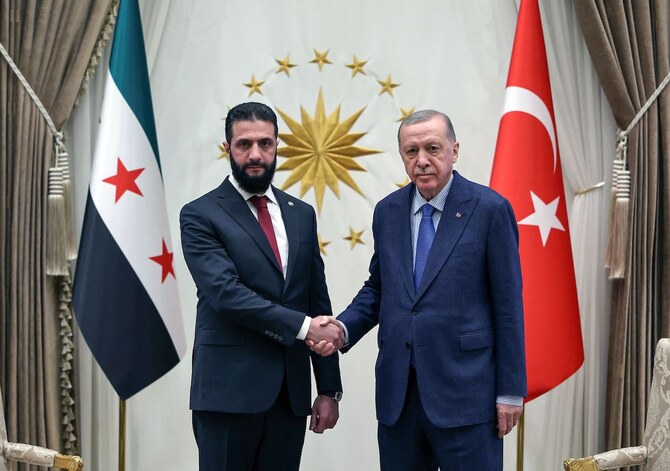
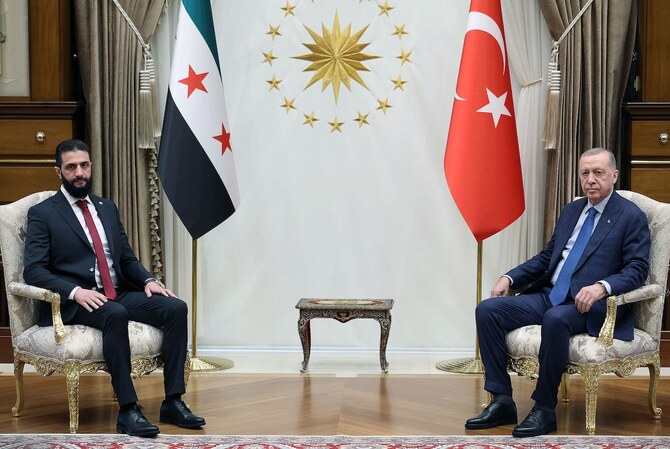
Erdogan greeted al-Sharaa with a small, low-key ceremony, that contrasted with the military bands and mounted escorts that typically greet other heads of state.
Al-Sharaa was dressed in a suit and a red tie — an apparent nod to the Turkish flag.
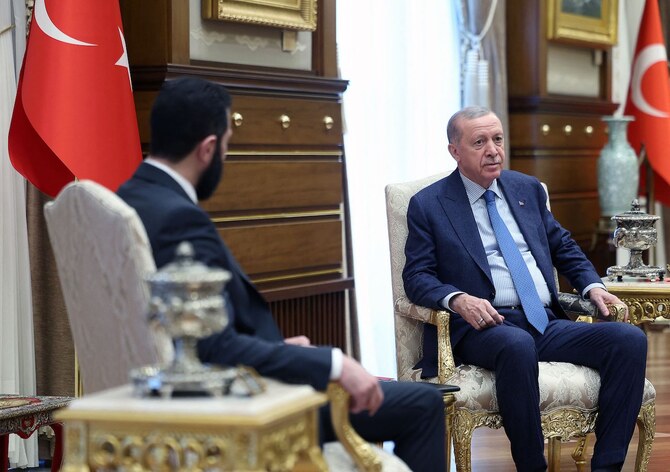
Erdogan told reporters that he and Al-Sharaa evaluated “the joint steps that could be taken to establish security and economic stability in the country” and that they were “pleased to see that we agreed on almost every issue.” Turkiye, he added, is “ready to provide the necessary support to Syria in the fight against all forms of terrorism, whether it is Daesh or the PKK.”
“Frankly, we have no other way than to join forces towards the same goal for the safety of our countries and our region,” Erdogan said.
Al-Sharaa, for his part, said economic cooperation was a key part of their discussions. “We will enhance trade and investment between the two countries (...) in order to achieve economic recovery and establish a better future,” he said.
Turkiye, which shares a 910-kilometer (565-mile) border with Syria, views the Syrian Kurdish militias that make up the key component of the US-allied, Kurdish-led Syrian Democratic Forces, or SDF, as an extension of the banned Kurdistan Workers’ Party. It is pressing for the group to disband, and Turkish-backed fighters are currently battling the SDF in a bid to push the Kurdish militias away from the Turkish border.
Mazloum Abdi, the commander of the SDF, said in an interview with The Associated Press on Sunday that he recently met with Al-Sharaa in Damascus. He said the two sides are negotiating with the help of mediators to find compromises regarding Syria’s future, including the future of the Kurds.
Turkiye hosted the greatest number of Syrian refugees following the outbreak of the Syrian civil war in 2011 — more than 3.8 million at its peak in 2022.


![]()
![]()
![]()

Syrian president holds talks with key ally Turkiye on second international trip
Short Url
https://arab.news/b85nm
Syrian president holds talks with key ally Turkiye on second international trip
- Al-Sharaa was dressed in a suit and a red tie — an apparent nod to the Turkish flag
- Leader was making his second international trip following his visit to Saudi Arabia


Latest updates


Recommended


© 2026 SAUDI RESEARCH & PUBLISHING COMPANY, All Rights Reserved And subject to Terms of Use Agreement.