


BEIRUT: Security authorities at Beirut’s Rafic Hariri International Airport effectively fulfill their responsibilities, caretaker Interior Minister Bassam Mawlawi said on Monday.
Mawlawi’s assurance followed his meeting with the Central Security Council.
In response to Israeli claims that Hezbollah was receiving cash through the airport, Mawlawi emphasized that the council had set up new checkpoints to inspect all items entering through the airport.
He stressed that the Lebanese army was fulfilling its duties to control the Lebanese border with the Syrian Arab Republic “despite the challenges” and urged increased cooperation from Syrian authorities.
Syria’s Ministry of Interior announced on Sunday that it had seized shipments of weapons intended for smuggling into Lebanon through land routes in the Talkalakh area of Homs.
On Jan. 26, Syrian security forces reportedly discovered a missile depot at a former regime site in Homs. They also seized a weapon shipment that was “intended for Hezbollah.”
There are six official border crossings between the Syrian Arab Republic and Lebanon and numerous illegal crossings along a 375-km border.
On Monday, the Israeli army said that it was continuing its “defensive operations” in southern Lebanon, under agreements with Lebanon, to maintain the operational gains in the region.
Recently, the Israeli army said it conducted extensive operations to eliminate threats in the region, “dismantle Hezbollah’s infrastructure, and prevent any potential dangers to Israel and its citizens.”
The announcement came a day after Defense Minister Israel Katz toured Israeli military positions in southern Lebanon, where Israeli forces continue to violate the ceasefire agreement.
The ceasefire between the Israeli army and Hezbollah was extended at Israel’s request through US mediation until Feb. 18.
Israel is exerting pressure on Lebanon to disarm Hezbollah and eliminate its military presence south of the Litani line. Israeli threats to disarm Hezbollah extend beyond this region to areas north of the Litani and even to the Lebanese border with Syria.
Since the ceasefire began, Israeli airstrikes have repeatedly targeted vehicles transporting weapons and ammunition, as well as storage facilities for stockpiling arms.
In its statement, the Israeli army clarified that during a survey operation in the border area, troops from the 769th Brigade discovered weapons storage facilities. These facilities contained mortar shells, rockets, explosives, firearms, and a significant amount of military equipment. All the weapons were confiscated, and the storage sites were dismantled.
The statement indicated that Israeli soldiers “eliminated several Hezbollah members in the area and apprehended suspects who posed a threat to Israeli forces.”
The Israeli army announced it was conducting a military exercise on Monday in the Upper Galilee region, which has remained in a state of tension following months of military operations against Hezbollah.
The Israeli army issued a warning against civilian entry into areas expected to see “increased military activity.”
Israeli media reports indicate that residents of northern settlements in Israel have begun repairing their homes after damage caused by “fire from Hezbollah.”
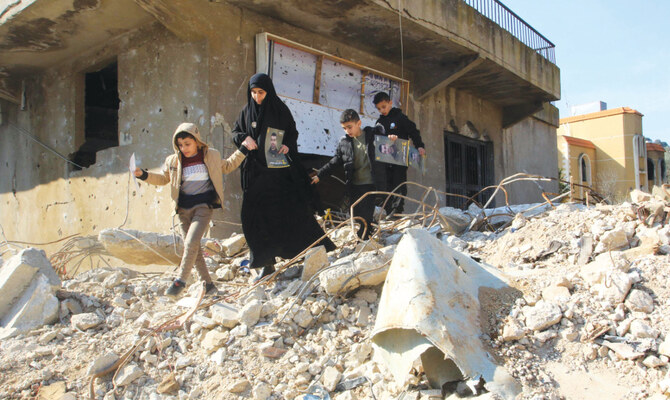
The Israeli military has withdrawn from the western region of southern Lebanon and from certain villages in the central area while still maintaining its presence in other towns.
At the same time, it is engaged in bulldozing and demolition activities in the eastern sector, where it has not retreated from any villages.
It seems likely that the military will continue to occupy strategic positions in southern Lebanon.
Former MP Mustafa Alloush stated that Israel’s release of information about the significance of maintaining control over strategic heights and five key points overlooking the southern territories, as well as a substantial portion of occupied Palestine, was quite plausible.
He stated that Hezbollah was giving Israel reasons to justify its actions, evident both in the deployment of drones and in the group’s insistence on maintaining resistance without disarming.
Additionally, remarks from Hezbollah’s leadership, including statements made by its secretary-general, ministers, and MPs, emphasized that the resistance was regaining its strength and readiness.
Alloush claimed that Israel was leveraging this situation to conduct its daily airstrikes, which have targeted areas from Nabatieh and the Bekaa to northern Lebanon.
The Israeli army still holds El-Hamames Hill, located at the southwestern entrance to the town of Khiam.
This strategic hill overlooks the entire town of Khiam and the Hasbaya region, all the way to Ebel Al-Saqi.
It also holds the strategic Awida Hill, between Adaisseh and Taybeh, in the Marjeyoun district.
It overlooks the entire western sector up to Tyre and the whole central sector up to the Litani River and the western Bekaa from the direction of Jezzine.
The Israeli army also holds the hill of Khallet Wardeh, a strategic point located southwest of the town of Aita Al-Shaab in the Bint Jbeil district and overlooking the southern coast from Tyre to Naqoura and the western sector up to Tayr Harfa and Al-Jbein.
Israeli forces are still penetrating the strategic Shebaa and Kfar Shuba hills, which overlook the entire Arqoub region and the western Bekaa to the north, Hasbaya and Marjeyoun to the west, and Mount Hermon and Syrian lands to the west.


