

KSrelief launches 2025 winter kits project for Pakistan

In this handout photo, released by Saudi Embassy, Pakistan’s National Food Security Minister Rana Tanveer Hussain (2L) and Saudi Ambassador Nawaf bin Said Al-Malki handover packages during the launching ceremony of KSrelief’s 2025 winter kits project in Islamabad on January 30, 2025. (Photo courtesy: X/@KSAembassyPK)
Short Url
Updated 31 January 2025
Follow

KSrelief launches 2025 winter kits project for Pakistan

  • 84,500 winter kits to be distributed across Pakistan as part of KSrelief annual initiative for vulnerable communities
  • In 2023 alone, KSrelief provided over 110 million meals globally, including a significant share for Pakistan

ISLAMABAD: The King Salman Humanitarian Aid and Relief Center (KSrelief) on Thursday launched its 2025 project to distribute winter relief kits in Pakistan, to be distributed to needy people in all four provinces of Pakistan as well as the Gilgit-Baltistan and Azad Kashmir northern regions. 
As part of the program, KSrelief will distributes 84,500 shelter, NFIs (non-food items), and winter kits across Pakistan as part of its annual initiative to support vulnerable communities.
“It’s my pleasure to participate in this ceremony on behalf of my country, the Kingdom of Saudi Arabia,” Nawaf bin Said Al-Malki, Saudi ambassador to Pakistan, said at the launch ceremony. 
“This kit will be distributed among the needy people in all four provinces of Pakistan, including Gilgit-[Baltistan] and Azad Kashmir.”
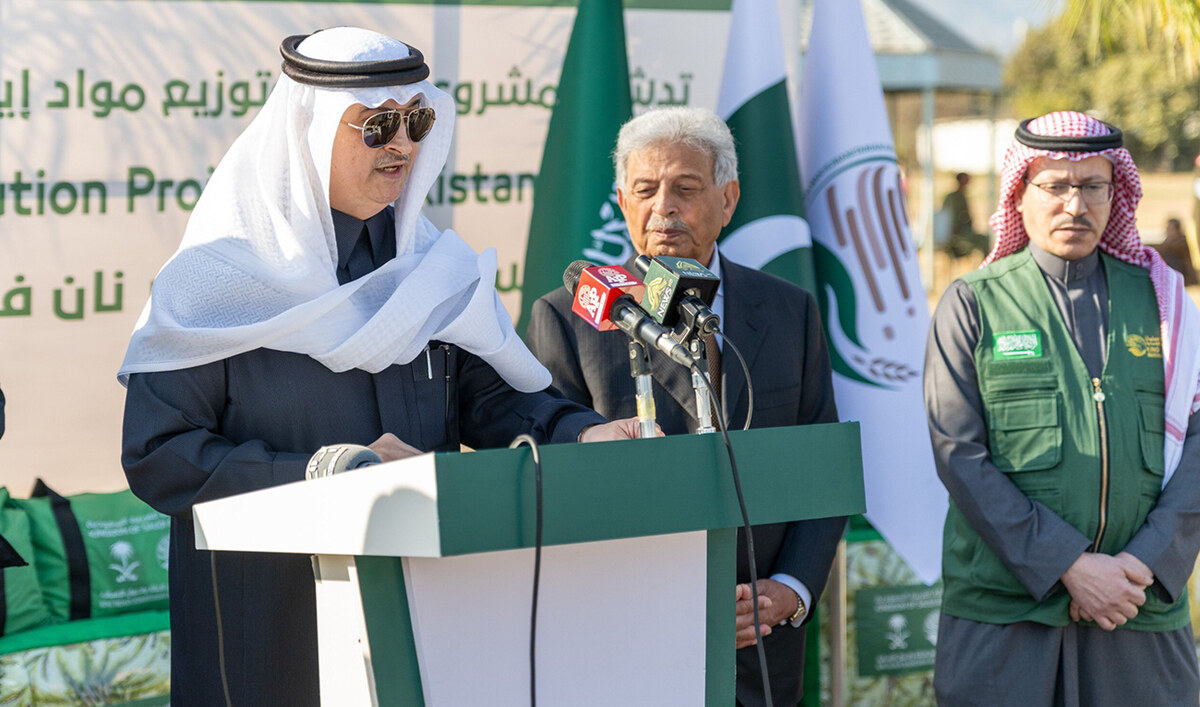


In this handout photo, released by Saudi Embassy, Nawaf bin Said Al-Malki (left), Saudi ambassador to Pakistan, speaks during the launching ceremony of KSrelief’s 2025 winter kits project in Islamabad on January 30, 2025. (Photo courtesy: X/@KSAembassyPK)

In the first phase, KSrelief will deliver 50,000 winter kits to residents of the 50 coldest and snow-bound districts in Pakistan. Distribution will be region-specific, targeting 16,000 kits in Khyber Pakhtunkhwa (KP), 12,000 in Balochistan, 10,000 in Gilgit-Baltistan (GB), 6,000 in Azad Jammu and Kashmir (AJK), 4,000 in Sindh, and 2,000 in Punjab. These winter packages include two polyester quilts and a kit of warm shawls for both men and women, as well as warm clothing for children and adults.
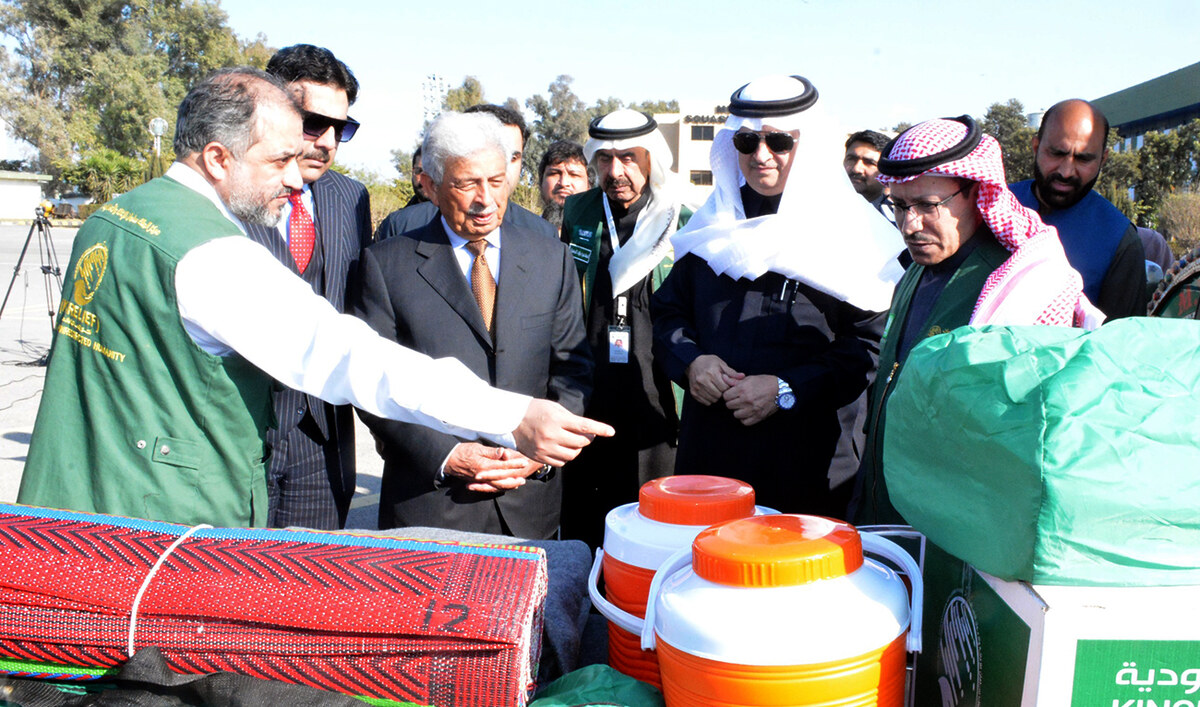


In this handout photo, released by Saudi Embassy, Pakistan’s National Food Security Minister Rana Tanveer Hussain (3L), Saudi Ambassador Nawaf bin Said Al-Malki (2R) and other officials inspect packages during the launching ceremony of KSrelief’s 2025 winter kits project in Islamabad on January 30, 2025. (Photo courtesy: X/@KSAembassyPK)

The remaining 34,500 Shelter NFIs will be strategically allocated for disaster response, with distribution planned over three additional phases, set to conclude by December 2025.
To ensure transparency and effective implementation, the project will be carried out in close collaboration with key stakeholders, including the National Disaster Management Authority (NDMA), Provincial Disaster Management Authorities (PDMAs), Gilgit-Baltistan Disaster Management Authority (GBDMA), State Disaster Management Authority (SDMA), and local authorities. 
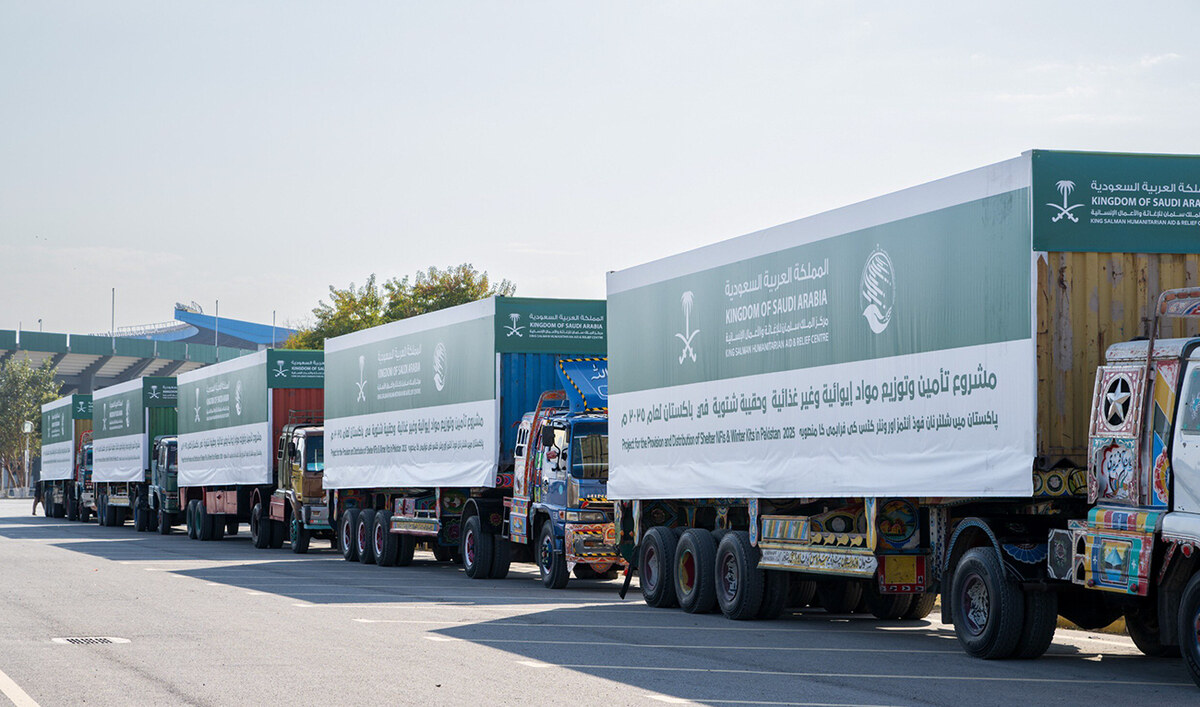


This handout photo, released by Saudi Embassy, shows trucks, loaded with winter relief kits to distribute in Pakistan, parked during the launching ceremony of KSrelief’s 2025 winter kits project in Islamabad on January 30, 2025. (Photo courtesy: X/@KSAembassyPK)

“The joint effort is expected to benefit over 591,500 individuals, underscoring KSrelief’s commitment to alleviating hardships and improving the well-being of those in need across Pakistan,” a statement from the humanitarian agency said. 
Attending the ceremony, Pakistani minister for food security, Rana Tanveer Hussain, said the event marked “yet another milestone in the strong and historic ties between Pakistan and Saudi Arabia, reflecting their shared commitment to humanitarian aid and development.”
In 2023 alone, KSrelief provided over 110 million meals globally, including a significant share for Pakistan.


Pakistan mulls space-based monitoring to support port expansion, maritime safety

Updated 10 sec ago
Follow

Pakistan mulls space-based monitoring to support port expansion, maritime safety

  • Minister says satellite technology could aid port planning and environmental protection
  • Islamabad seeks to modernize ports as it eyes transshipment role, Central Asian trade

KARACHI: Pakistan is considering the use of space-based monitoring systems to support port expansion, maritime safety and environmental protection, the country’s maritime affairs minister said on Wednesday, as he visited the headquarters of the national space agency.

The visit comes as Islamabad seeks to position itself as a transshipment hub by upgrading cargo handling, streamlining import and export processes and offering its southern ports on the Arabian Sea to landlocked Central Asian states as trade gateways.

“Advanced space-based monitoring systems can play a vital role in safeguarding seas, improving maritime management and strengthening responses to environmental threats,” Maritime Affairs Minister Muhammad Junaid Anwar Chaudhry said, according to a statement released after his visit.

Chaudhry was briefed on satellite-based assessments identifying potential sites for new ports, as well as tools for maritime traffic monitoring and disaster response.

Pakistan has been working to expand and modernize its port infrastructure to improve efficiency and attract regional cargo flows, particularly as it seeks to enhance connectivity through its coastline along the Arabian Sea.

During the visit, officials from the Pakistan Space and Upper Atmosphere Research Commission (SUPARCO) outlined the use of high-resolution satellite imagery, artificial intelligence and digital modelling to monitor ports, track cargo dwell time, detect oil spills and support search-and-rescue operations at sea.

“We can benefit from continuous monitoring of coastal ecosystems to assess water quality, sediment dispersion and overall environmental health,” Chaudhry said, adding that data-driven approaches were essential for informed policymaking in the maritime sector.

He also highlighted the growing risks posed by climate change, including rising sea levels, coastal erosion and extreme weather events, and said stronger cooperation between maritime authorities and scientific institutions was needed to protect coastal communities and infrastructure.

SUPARCO officials said the agency was ready to develop artificial intelligence-based solutions for ports and maritime operations, including systems to address customs-related inefficiencies and improve emergency response times.
The minister said the ministry and SUPARCO would move toward formalizing cooperation through a structured framework to support joint initiatives.