

Sports and entertainment driving Saudi real estate boom, say Deloitte experts

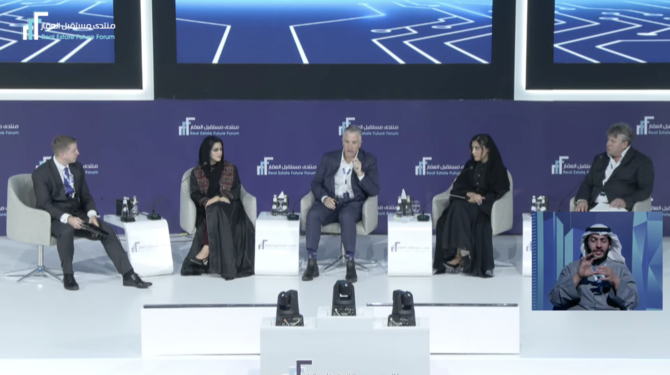
The comments were made during a panel discussion at the Real Estate Future Forum. Screenshot
Short Url
Updated 29 January 2025
Follow

Sports and entertainment driving Saudi real estate boom, say Deloitte experts

RIYADH: Saudi Arabia’s real estate sector is gaining momentum as investments in sports and entertainment create new opportunities for infrastructure development and economic stability, according to industry experts.

During a panel discussion on the final day of the Real Estate Future Forum, Chris Styring, director of the Sports Business Group at Deloitte, highlighted the potential for long-term benefits from sports infrastructure projects.

The Kingdom’s real estate sector is growing, with 192 project licenses issued in 2024, totaling SR147 billion ($39 billion), while the sports market is set to grow from $8 billion to $22.4 billion by 2030. 

This surge in sports investment is driving real estate expansion, fueling demand for stadiums, training facilities, and mixed-use developments.

With the nation preparing to host the FIFA World Cup in 2034, Styring emphasized the urgency of upskilling local professionals. 

“The World Cup seems a long way away, but it’s not. You’ve got to prepare. You’ve got to upskill the next generation of people who will be the event managers, the commercial managers, the people who deliver, the hospitality sector, and the real estate sector that’s actually building the infrastructure,” he said. 

The Deloitte official believes there is “a great opportunity” to build sports infrastructure that can “give back”, adding that Saudi Arabia is well-positioned to host major sporting events in the future. 

“I foresee that one day you’ll have a world-class marathon,” he predicted at the Riyadh event.

Simon Oaten, lead partner for Travel, Hospitality, and Leisure at Deloitte UK, underlined that preparations for such large-scale events are already accelerating. “Deadlines really focus the mind, and we’re starting to see that in a way that we weren’t seeing it nine to 12 months ago,” he observed. 

Beyond sports, regulatory clarity and tax planning are crucial factors for investors in Saudi Arabia’s real estate sector, according to Hadeel Biyari, partner for Indirect Tax at Deloitte Middle East. 

“All investors, whether they’re local or foreign, they look for certainty,” she said

Biyari also pointed out that Deloitte is actively developing local real estate expertise, adding: “That’s not only from a tax perspective but also from a legal perspective because I deal with tax disputes and litigation.”

As Saudi Arabia continues to drive innovation across all sectors in line with Vision 2030, the experts agreed that preparation, investment, and strategic planning will be key to ensuring the real estate sector thrives alongside the Kingdom’s growing sports and entertainment industries.


Islamic finance in Oman poised for 25% growth: Fitch 

Updated 15 sec ago
Follow

Islamic finance in Oman poised for 25% growth: Fitch 

RIYADH: Oman’s Islamic finance sector is on track to reach $45 billion this year, rising from $36 billion at the end of 2025, supported by a favorable macroeconomic environment, according to a report by Fitch Ratings. 

The rating agency said the anticipated 25 percent year-on-year growth will be underpinned by increasing demand for sukuk as both a funding mechanism and a public policy tool, alongside government-led initiatives and growing grassroots demand for Shariah-compliant financial products. 

Sukuk accounted for around 60 percent of US dollar-denominated debt issuance in 2025, a sharp decline from 94.3 percent previously, with the remaining share comprising conventional bonds. Despite this progress, Fitch highlighted ongoing structural challenges, including the absence of Islamic treasury bills and derivatives, an underdeveloped Omani rial sukuk and bond market, and the limited role of Islamic non-bank financial institutions. 

The performance of Oman’s banking sector continues to reflect steady advancement toward Vision 2040, the country’s long-term development strategy focused on economic diversification, private sector expansion, and enhanced financial resilience. 

Operating conditions remain supportive for both Islamic and conventional banks in Oman, buoyed by elevated, though gradually moderating, oil prices, the report noted. 

Expanding credit flows — particularly to non-financial corporates and households — are helping drive the growth of small and medium-sized enterprises and boost domestic investment. These trends are reinforcing Oman’s efforts to reduce dependence on hydrocarbons and build a more diversified economic base. 

Fitch projects loan growth of 6 to 7 percent in 2026, fueled by rising demand across both retail and corporate segments. In addition, the proposed 5 percent personal income tax, scheduled for implementation from 2028, is expected to have only a limited overall impact on banks, according to the agency. 

Islamic banking in Oman was introduced following the Central Bank of Oman’s preliminary licensing guidelines issued in May 2011, which allowed the establishment of full-fledged Islamic banks and Islamic banking windows operating alongside conventional institutions. 

This regulatory framework was formally entrenched in December 2012 through a royal decree amending the Banking Law, requiring the creation of Shariah supervisory boards and granting the central bank authority to establish a High Shariah Supervisory Authority.