

Saudi Arabia, UAE poised to become trade ‘super-connector hubs,’ WEF panel hears

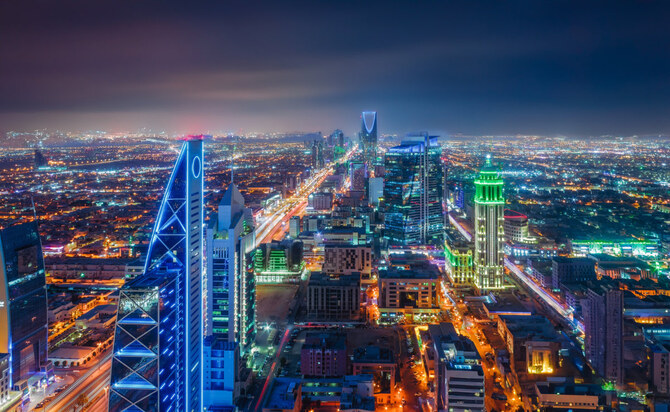
Saudi Arabia is ready to become a super-connector hub, experts told the WEF summit in Davos on Thursday. (Shutterstock image)
Short Url
Updated 24 January 2025
Follow

Saudi Arabia, UAE poised to become trade ‘super-connector hubs,’ WEF panel hears

  • Agility’s Henadi Al-Saleh highlights that innovation, investment help countries to capitalize on disruption in global trade

LONDON: Saudi Arabia is on track to emerge as a “super-connector hub,” leveraging ongoing global trade disruption to its advantage, according to experts speaking at the World Economic Forum in Davos on Thursday.

Henadi Al-Saleh, chair of the board of directors at Agility, a global leader in supply chain services, highlighted the Gulf Cooperation Council’s significant investments in infrastructure as a driving force behind this transformation.

She said: “(In) the past few years, the level of activity, especially around cargo, has increased several fold.

“If I look at the GCC, where we have invested in warehouses, and at the Emirates in Saudi Arabia, one of our key platforms, (they are) set to become super-connector hubs.

“These countries are investing in infrastructure, doubling down, and the level of activity is increasing.”

Al-Saleh identified digitalization as a key value in this development, saying that “in a time with so much uncertainty, having that clarity and understanding, even when changes take place, it gives me visibility. (With the digital tools) I know what the rules (are) and (how) I need to adjust.”

She added: “That’s one critical aspect in which you see these super hubs benefiting.”

While the level of trade has continued to grow since the end of the pandemic, socioeconomic and political factors have continued to disrupt industry.

Experts have said that US President Donald Trump’s second term is expected to exacerbate the disruption, with the president supporting potential trade tariffs on multiple exporting nations.

Chile’s Minister of Foreign Affairs Alberto van Klaveren acknowledged the challenges but also pointed to opportunities arising from these shifts.

He said: “There are possibilities. Some economies are opening up. We signed the CEPA Agreement (Comprehensive Economic Partnership Agreement) with the Emirates. We are interested in Saudi Arabia.”

He explained that the importance of diversification was not only in export markets but also in the types of goods and services traded.

However, experts cautioned that ongoing trade disruption could significantly impact the global energy transition, particularly in the green energy sector.

Al-Saleh said: “There are certain segments of people, businesses and technologies (in the green energy market) that are paying a price.

“But this is where, I think, from the private sector, it’s incumbent upon them to continue. This is irrespective of what happens today in terms of tariffs. There is a long view, and we need to all manage towards that long view.”

According to World Trade Organization data, every nation relies on imports and exports for at least 25 percent of its goods. Given this interdependence, Al-Saleh argued, trade will remain indispensable despite ongoing disruption.

She said: “You need to focus on being agile and resilient. Those are critical elements, and the way to become agile and resilient is really to diversify and invest in technology.”


Supplier hub to anchor Saudi car industry, says TASARU CEO

Updated 09 February 2026
Follow

Supplier hub to anchor Saudi car industry, says TASARU CEO

RIYADH: Saudi Arabia’s Public Investment Fund is stepping up efforts to localize automotive manufacturing, with its portfolio company TASARU announcing partnerships with five Tier-1 global suppliers to localize advanced component manufacturing in the Kingdom. 

The agreements were announced at the fourth PIF Private Sector Forum in Riyadh. TASARU also revealed plans to establish a new Supplier Hub in the King Salman Automotive Cluster in King Abdullah Economic City, designed to support next-generation vehicle development and strengthen the national automotive ecosystem in alignment with Vision 2030. 

TASARU also revealed plans to establish a new Supplier Hub in the King Salman Automotive Cluster in King Abdullah Economic City. Supplied

Speaking to Arab News on the sidelines of the forum, Michael Mueller, CEO of TASARU, said: “You cannot build cars without having the right partners from the supplier side, and with that, together with the OEMs, we selected the partners that we just announced today to localize them.” 

He added that the presence of large international suppliers is expected to attract smaller Tier-2 and Tier-3 manufacturers, helping the ecosystem scale. 

The five partners include Shin Young for metal stamping and body structures, JVIS for exterior plastics, and BENTELER for chassis and hot-formed steel components. Guangxi Fangxin will supply interior systems, while Lear Corp. completes the group, with all expected to establish manufacturing operations in the Kingdom. 

Founded more than three years ago, TASARU was established to introduce new technologies into Saudi Arabia’s mobility sector. The company has prioritized localizing smaller OEM and supplier businesses while bringing next-generation solutions into the Kingdom. 

Mueller said visible progress on factory construction by Ceer, Lucid and Hyundai is shifting perceptions about the sector’s viability. 

“A lot of people on the sideline watched whether automotive is really happening,” he said. “Now they recognize that the factories … are under construction, so that’s the first signal that it’s not just the bubble. It’s not just PowerPoint. It’s getting real now on the ground.” 

The CEO shares that KAEC is positioned as a hub for Saudi Arabia’s automotive industry, making it a strategic location for the TASARU Supplier Hub. The facility is designed to support OEMs and next-generation vehicles, including Ceer and Lucid Motors, through a shared, just-in-time manufacturing model with integrated logistics and regulatory support. 

TASARU will provide infrastructure and operational support, while partners bring technical expertise and gradually develop training centers to build a local workforce, Mueller said. 

He positioned Saudi Arabia as an attractive base for global suppliers because of its access to minerals and rare earth resources, energy availability and coordination across PIF portfolio companies and government entities.  

“They have access to minerals. They have access to rare earth. They can benefit from what is already existing. They have stable energy solutions. I think this footprint might benefit from the whole ecosystem as it is, not just automotive,” he said. 

Companies without a Saudi footprint risk missing a “huge opportunity,” Mueller added. 

He said advancing the industry will require clearer regulatory frameworks, including defined trigger points and licensing pathways that allow companies to execute their mandates. 

“Of course, you need to have more or less the regulatory framework to allow autonomous cars, sooner or later, on the streets. But it's happening, and this is a huge chance also for Saudi Arabia,” Muller said. 

He added: “If you are advanced in bringing such regulations onto a fast track, then you have a huge opportunity to be one of the first countries that establish this.”  

With rising traffic levels in Riyadh, Mueller said emerging mobility technologies could help solve first- and last-mile transportation challenges. 

“If the Metro is already full, that is good because people are using it. Now, you have to connect the dots. You have to finally make sure that people get from home to the metros and or to the bus station. So this first last-mile transportation is something where new technologies might help to bridge that,” he said. 

The CEO said the project is expected to take roughly one and a half to two years for suppliers to go live. More broadly, the initiative reflects Saudi Arabia’s transition from investment attraction to full-scale industrial localization, strengthening local content, private-sector participation, and long-term industrial resilience in line with Vision 2030.