

Saudi Arabia’s FM announces landmark visit to Lebanon

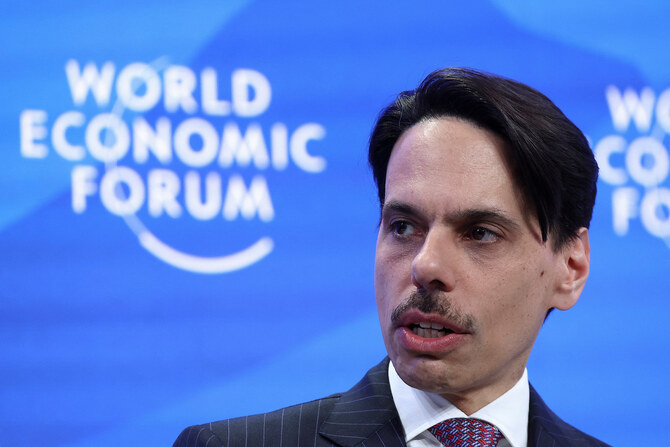
Saudi Foreign Minister Prince Faisal bin Farhan speaks at the WEF in Davos on January 21, 2025. (AFP)
Short Url
Updated 21 January 2025
Follow

Saudi Arabia’s FM announces landmark visit to Lebanon

  • The one-day trip on Thursday will mark the first visit by a high-ranking Saudi official to Lebanon since 2015
  • Prince Faisal bin Farhan welcomed the potential formation of a new government but emphasized the need for real reforms

DAVOS: Prince Faisal bin Farhan said on Tuesday in Davos he would visit Lebanon later this week, the first such trip by a Saudi foreign minister in more than a decade.

He made the announcement during a panel on diplomacy at the World Economic Forum’s annual meeting in the Swiss resort town. 

The one-day trip on Thursday will mark the first visit by a high-ranking Saudi official to Lebanon since 2015, after years of strained relations due to Lebanon’s perceived alignment with Iran, its role in drug smuggling to Gulf countries, and ongoing instability.

Prince Faisal described the recent election of a president in Lebanon, following a prolonged political vacuum, as a highly positive development.

He said the Kingdom welcomed the potential formation of a government but emphasized the need for real reforms and a forward-looking approach to ensure sustainable progress.

He reiterated that the future of Lebanon rested in the hands of its people, urging them to make decisions that steer the country in a new direction.


A UN peacekeeper’s (UNIFIL) vehicle rides along a street in Marjaayoun, Southern Lebanon January 20, 2025. (AFP)

“We will need to see real action, real reform and we will need to see a commitment to a Lebanon that is looking to the future, not to the past,” said Prince Faisal.

“And based on what I hear there and what we see, I think that will inform the Kingdom’s approach, but I have to say what I’ve seen so far and the conversations that we’ve been hearing in Lebanon, all allow me to be very much optimistic.

“We’ve always said, it’s really up to the Lebanese to decide and to make the choices to take Lebanon in a different direction.”

Prince Faisal also said he is “cautiously optimistic” about Syria’s future, citing encouraging signs from the new administration in Damascus and the resilience of the Syrian people.

He emphasized the need for patience and engagement from both the regional and international communities to help rebuild the country’s broken institutions and create a better future for Syrians.

“I would certainly say I’m cautiously optimistic. I may even lean further because you have, first of all, an administration that is saying the right things in private and in public, doing a lot of the right things, but also you have a Syrian people that are incredibly capable and incredibly resourceful,” he said.

He urged collaboration to build on recent positive developments, underlining the collective responsibility to aid Syria’s recovery, especially considering the willingness of the new administration in Damascus to engage constructively with regional and global partners.

“The reality is that they have inherited a broken country with no real institutions and they are having to build all of that from scratch, and that’s not an easy thing,” he said.

“So it’s up to us, I feel in the region first but certainly the international community, to engage, to come and build on this positive development and help Syria and the Syrian people see a much better future.”

Prince Faisal highlighted the importance of lifting the heavy burden of sanctions imposed due to actions of the previous regime, noting some progress with waivers from the US and Europe.


A boy carrying stacks of bread on his head walks past a damaged school in Aleppo, Syria January 21, 2025. (Reuters)

Prince Faisal was also positive about the region as a whole, including the Kingdom.

“We are certainly in a region that is abundant with risk factors, but we are also in a region that has huge potential,” he told the panel.

“I would say that even with the very difficult year behind us, we have shown that we can be resilient as a region and we can actually look to the future, whether it’s the Kingdom, or the GCC countries, and their ability to stay on track with their economic agendas,” he added.

He stressed the importance of avoiding conflict, particularly in light of tensions between Iran and Israel, and expressed optimism regarding the new US administration under President Donald Trump.

“I don’t see the incoming US administration as contributory to the risk of war. On the contrary, I think President Trump has been quite clear that he does not favor conflict,” he said.

“I hope that the approach will also be met on the Iranian side by the addressing of the nuclear program, by being willing to engage with the incoming administration in a way that can help us stay on track with this positive momentum.”

Also on the panel was Mohammed bin Abdulrahman bin Jassim Al-Thani, prime minister and foreign minister of Qatar, who expressed hope that the ceasefire in Gaza between Israel and Hamas would bring much needed relief to the Palestinian people.


Qatar’s PM Sheikh Mohammed bin Abdulrahman bin Jassim Al-Thani speaks with WEF President and CEO Borge Brende during the annual meeting in Davos on January 21, 2025. (AFP)

“Let’s be hopeful (about the ceasefire). It’s still a long way to go with what happened throughout the last 15 months negotiating this very difficult conflict,” he said.

“It showed us that everything can be resolved through talks and through engagement, through negotiations, and we started this week with good news.

“We have seen the humanitarian aid coming in, we have seen hostages going back and we hope that this will be a fair system toward stability now.”


Aloula partners with Saudi Music Hub to amplify young voices

Updated 4 sec ago
Follow

Aloula partners with Saudi Music Hub to amplify young voices

  • 2-month vocal program places children in spotlight
  • Program culminates in performance of Saudi national anthem

JEDDAH: A new choral initiative launched by Aloula, in partnership with the Saudi Music Hub, has brought youngsters aged 9-18 into a structured vocal training program that will culminate in a performance of the Saudi national anthem.

The two-month initiative, which was launched in November, is one of the first children’s choral programs led by a nonprofit organization in Saudi Arabia.

In the rehearsal room, 75 children are learning how to sing the Saudi national anthem “Aash Al-Maleek,” and “Watani Al Habib” in a full choral arrangement.

Among the singers is 14-year-old Nawaf Al-Qahtani,  who said the experience had helped him grow as a performer. (Supplied)

Participants attend vocal training sessions three times a week, from Monday to Wednesday, focusing on technique, listening skills, and ensemble performance.

Speaking to Arab News, Abir Abusulayman, the CEO of Aloula, said the project was designed to include children more directly in the Kingdom’s cultural transformation.

She said: “The Kingdom is living a beautiful cultural moment right now, and we didn’t want our children to watch it from the sidelines; we wanted them to be part of it.

HIGHLIGHTS

• The two-month initiative, launched by Aloula in partnership with the Saudi Music Hub, is one of the first children’s choral programs in Saudi Arabia.

• Abeer Ibrahim, a vocal and singing instructor at the Saudi Music Hub, is among the educators working closely with the group.

“It felt like the perfect way to bring them together, build their confidence, and let them experience something joyful and memorable.”

Founded in 1962, Aloula works with children and families through early-intervention programs to strengthen academic, creative, and social skills. The initiative reflects the organization’s broader focus on confidence-building and participation through creative experience. 

Aloula children rehearsing the Saudi national anthem with instructor Abeer at the Saudi Music Hub. (Supplied)

Abusulayman said music offered lessons that extended beyond performance, and added: “Music opens something special inside a child. It teaches them to listen, to express themselves, to work as a team, and to trust their own voice. These creative experiences help children feel seen and give them skills that stay with them far beyond the classroom.”

Abusulayman said the benefits of the venture extended well beyond the final performance.

She said: “Academically, music helps with focus and memory. Socially, it teaches them to work together and support one another. And on a personal level, it gives them a moment in their lives where they feel proud, capable, and celebrated. Many of these children have never been on a stage before; this can be the spark that pushes them to dream bigger.”

The Saudi Music Hub, an education and training institution affiliated with the Music Commission under the Ministry of Culture, was established in 2022. (Supplied)

Abeer Ibrahim, a vocal and singing instructor at the Saudi Music Hub, is among the educators working closely with the group. A graduate of the Egyptian Conservatory, Ibrahim specializes in vocal training and music theory for young singers. 

“This experience gave me very beautiful feelings and emotions while working with children,”  Ibrahim told Arab News.

“From the very beginning they showed clear enthusiasm and joy, and I discovered wonderful talents and voices despite their young age. That small voice gave me a very powerful feeling, and I am extremely happy with it. We will present even better work in the future.”

Ibrahim also noted the significance of working with the national anthem, and she said: “Performing the Saudi national anthem instills in children a deep sense of belonging and pride in their country and culture,” adding that it helped young participants understand their role within the larger community. 

Among the singers is 14-year-old Nawaf Al-Qahtani,  who said the experience had helped him grow as a performer.

He described the experience as transformative, and said: “What I liked most was the interaction with the instructor, and we learned many things that will benefit us in the future.”

He added: “I learned how to control my vocal range, how to sing properly, how to face an audience, and I learned about the vocal ranges of the national anthem.”

Ibrahim described Al-Qahtani as one of the program’s strongest voices, noting that the anthem’s arrangement was adapted to suit his vocal range. 

The initiative is part of Aloula’s wider portfolio of educational and creative programs. These include a robotics program, in which children design interactive projects, as well as community exploration activities that introduce participants to major cultural and sporting events in Jeddah.

The Saudi Music Hub, an education and training institution affiliated with the Music Commission under the Ministry of Culture, was established in 2022. 

With headquarters in Riyadh and branches in Jeddah and Alkhobar, the hub provides musical instrument instruction, choir training, and performance workshops, with a focus on developing local talent.

For Abusulayman, the partnership reflects the value of collaboration between cultural and social organizations. 

“When we combine our strengths, we create opportunities that our children may not otherwise have,” she said. “I truly believe this kind of collaboration can open new doors for the whole nonprofit sector.”