



LONDON: The basic facts are undisputed, but controversy continues to surround the identity of those responsible for the terrorist bombing of Pan Am Flight 103, Clipper Maid of the Seas, over the Scottish town of Lockerbie on the night of Dec. 21, 1988.
Now, more than 37 years on from the tragedy that claimed the lives of 270 people from 20 countries, a third Libyan man is about to stand trial for his alleged part in the plot, offering possible closure to grieving families, but also likely reopening old wounds.
On Dec. 21, 1988, Pan Am Flight 103, a Boeing 747 jumbo jet en route from London Heathrow to New York JFK Airport, was a little over one hour into its flight, cruising at an altitude of 9,400 meters.
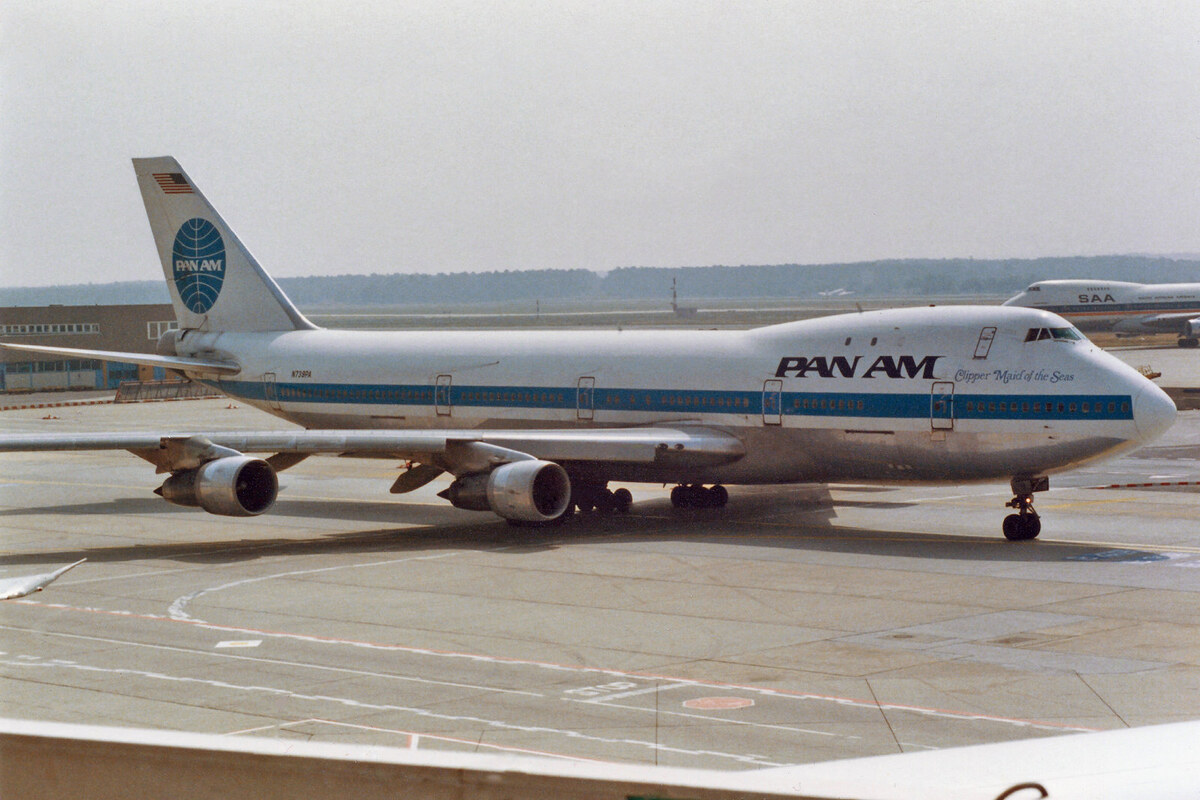
Pan Am's ill-fated Boeing 747-121 plane is pictured at Frankfurt International Airport in Germany in 1986. (Wikimedia Commons)
The cabin crew were moving down the aisles, serving drinks. Many of the 243 passengers would have been watching the in-flight movie, “Crocodile Dundee II,” which, in the days before seat-back screens, had begun to play on the drop-down overhead screens.
Moments later, a little after 7:02 pm, air traffic controllers in Scotland lost contact with the pilots and watched in horror as the aircraft’s radar image broke up into five distinct pieces fanning out across their screens.
A bomb hidden in a suitcase in the cargo hold had exploded with devastating effect. The jumbo disintegrated rapidly, and bodies and flaming aircraft parts began to rain down on and around the town of Lockerbie.
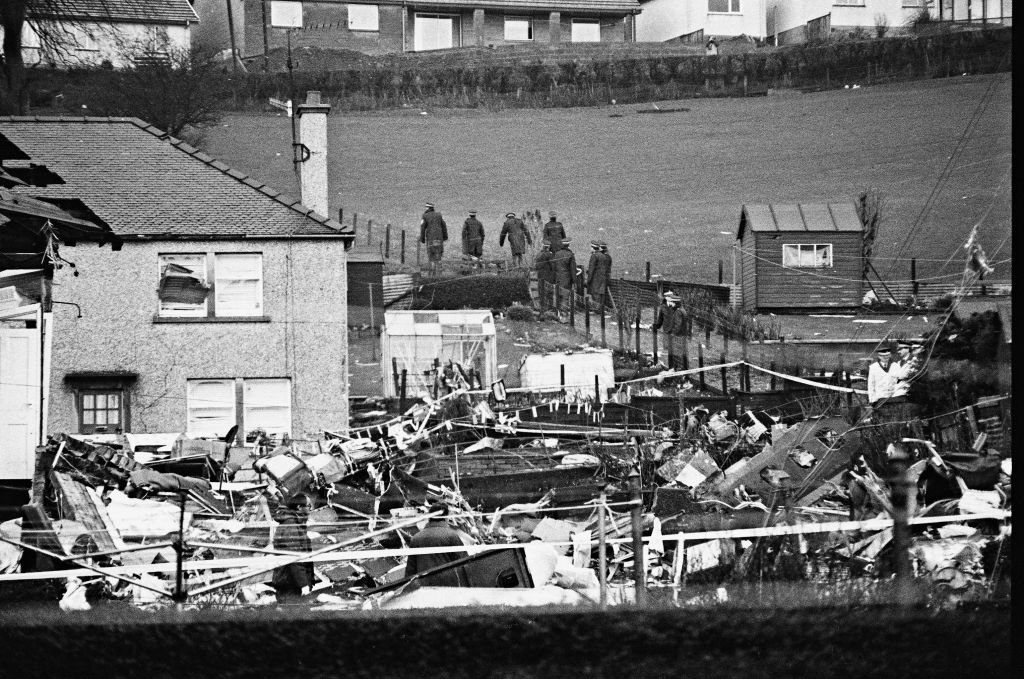
Plane crash of a Boeing 747 of PanAm in Lockerbie in 1988. (RDB/ullstein bild via Getty Images)
Even as the bodies of all 259 passengers and crew fell to earth, 11 residents of Lockerbie were killed in their homes by falling wreckage and a fireball caused when the aircraft’s fuel-laden wings gouged out a massive crater in a residential area.
Despite a search over a wide area of countryside that lasted six weeks, the bodies of 10 of Flight 103’s passengers were never found. Only the “fragmented remains” of 13 passengers could be identified in or near the crater.
As the media rushed to the scene, horror stories began to emerge. Corpses and body parts were strewn about the town and surrounding fields. Some of the dead were still strapped into their seats, sitting upright in rows of three and appearing asleep, rather than dead.
FASTFACTS
• Pan Am Flight 103 exploded over the town of Lockerbie, Scotland, on Dec. 21, 1988, killing 270 people.
• Investigators concluded Libyan agents had planted a bomb, hidden in a suitcase, on the Boeing 747.
• Libyan intelligence officer Abdelbaset Al-Megrahi was convicted in 2001 for his involvement in the attack.
A military helicopter pilot who joined the search later described finding one man clutching a book, and others still wearing their Walkman headphones.
Three children, siblings aged 6, 3 and 10 months, were found together, with the eldest two holding the baby’s hands.
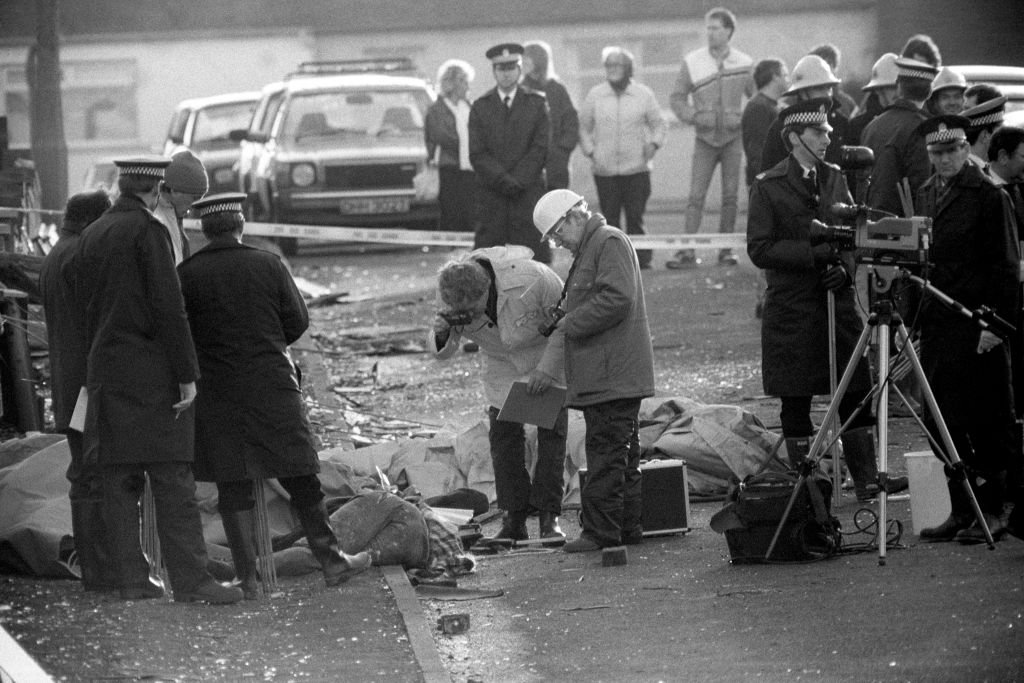
Police try to identify victims of the Pan Am jumbo jet bombing and crash in the streets of Lockerbie. Bodies and parts of the plane were strewn over an area of up to 10 miles. (PA Images via Getty Images)
Adding to the distress of the bereaved, a paper published by a pathologist in an obscure medical journal revealed that, miraculously and shockingly, at least two of the passengers had probably survived the fall to earth with relatively minor injuries, only to die of exposure because rescuers found them too late.
Within a day, before a bomb had even been confirmed as the cause of the disaster, several groups had claimed responsibility, and at first, suspicion fell on the Syrian-based Popular Front for the Liberation of Palestine — General Command.
But on Nov. 13, 1991, after a three-year joint investigation by Scottish police and the American FBI, indictments for murder were issued against two Libyans — intelligence officer Abdelbaset Al-Megrahi and Lamin Khalifah Fhimah, the station manager for Libyan Arab Airlines at Luqa Airport in Malta.
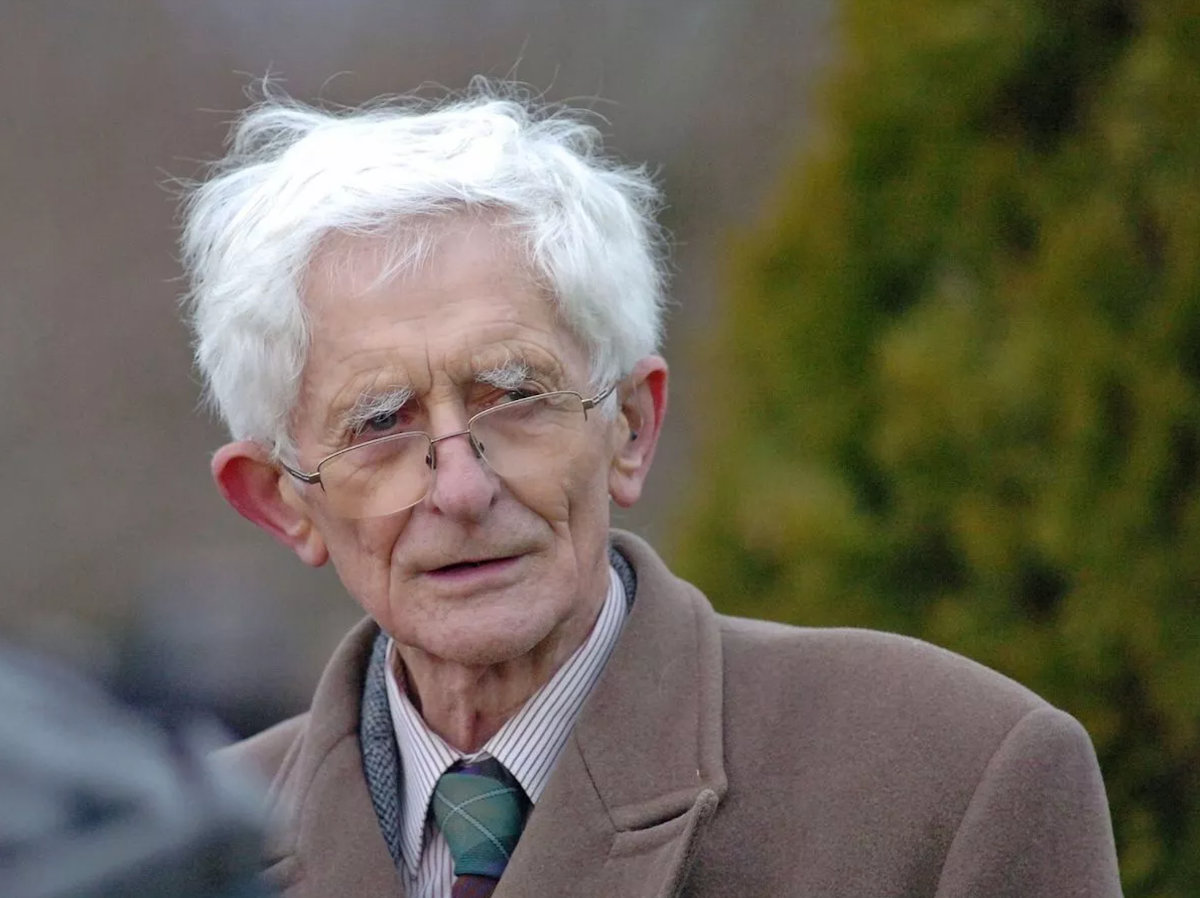
Libyan intelligence officer Abdelbaset Al-Megrahi was convicted in 2001 for his involvement in the attack. (Getty Images)
Investigators believed the bomb had originated from Malta, making its way to Flight 103 in London in an unaccompanied suitcase via a feeder flight from Frankfurt International Airport.
It would be more than 11 years after the bombing before the trial of the two men began. In exchange for relaxing international sanctions, Libyan leader Muammar Qaddafi agreed to hand them over for trial at a special Scottish court convened on neutral ground, in The Netherlands.
On Jan. 31, 2001, the judges announced their verdicts. Fhimah was acquitted of the 270 charges of murder against him, but Al-Megrahi was found guilty and sentenced to life imprisonment.
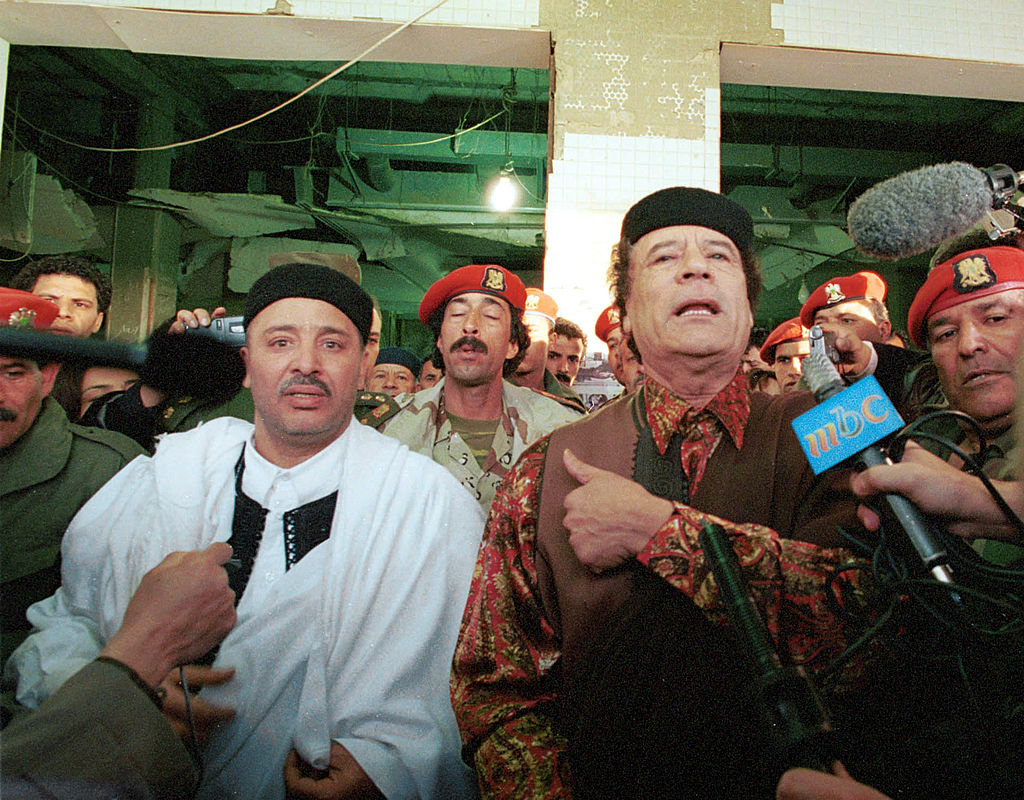
Lockerbie bombing defendant Al-Amin Khalifa Fhimah, left, speaks to the media with Libyan leader Muammar Al Qadhafi after arriving in Tripoli on February 1, 2001, a day his acquital in the Lockerbie bombing trial. (Newsmakers/Getty Images)
Jailed in Barlinnie prison, Scotland, Al-Megrahi would serve only a fraction of his sentence. Following a diagnosis of terminal prostate cancer, on Nov. 2, 2009, he was released by the Scottish government on compassionate grounds and returned to Libya, where he died two years and nine months later.
But the case was far from closed.
From the outset, conspiracy theories swirled around the tragedy. Some latched onto the fact that several senior US intelligence officials and operatives had been on board the aircraft and accused rogue CIA agents of carrying out the bombing to cover up an illicit drugs operation.
Others pointed the finger at Iran, which certainly had a motive. On July 3, 1988, just five months before Flight 103, the American warship USS Vincennes had accidentally shot down an Iran Air passenger flight en route from Tehran to Dubai, with the loss of all 290 people on board.
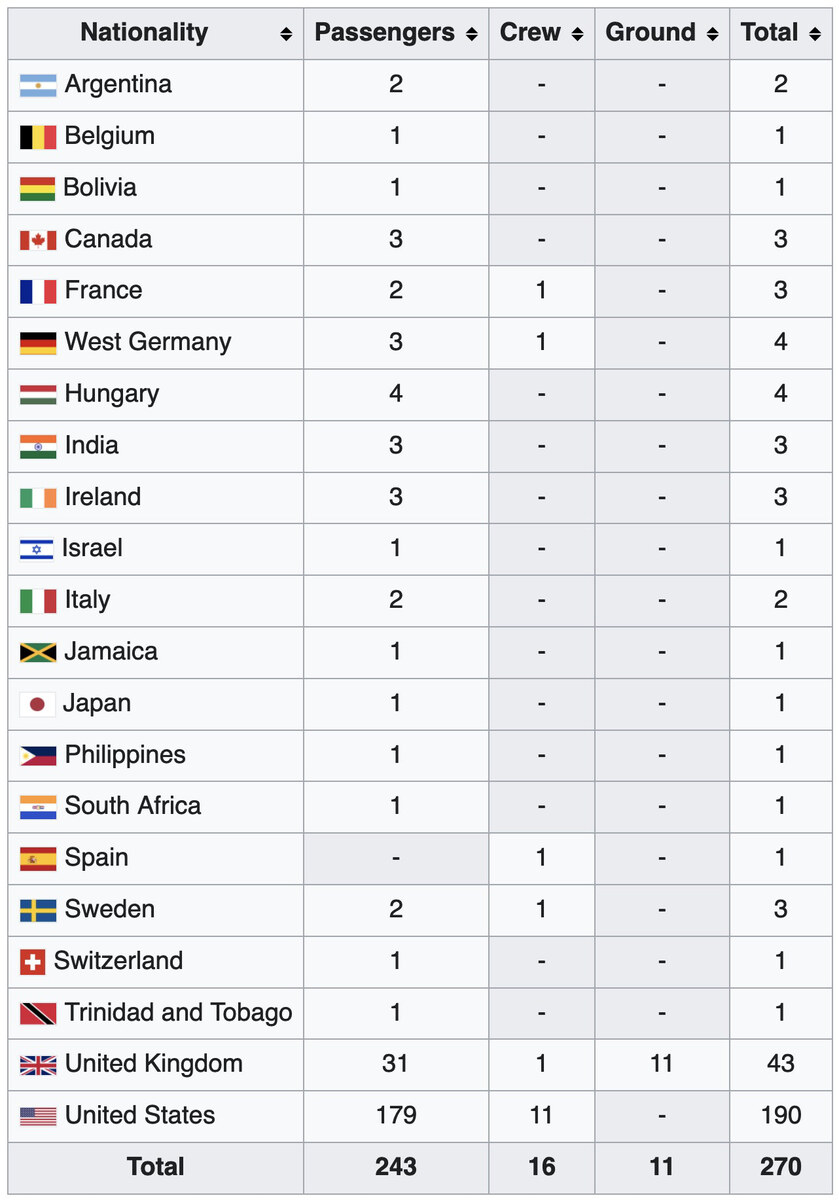
A list of the nationalities of the Pan Am Flight 103 terror bombing. (Wikimedia Commons)
But the greatest challenge to the official version of events, which ended with the jailing of Al-Megrahi, came from an unexpected quarter — the father of one of the passengers who was killed on the flight.
Jim Swire, an English doctor who lost his daughter, Flora, came to believe that Al-Megrahi was innocent and that the evidence against him and Fhimah had been falsified. To the dismay of some of the other Lockerbie families, Swire campaigned for years on Al-Megrahi’s behalf, even traveling to Tripoli to meet him after his release.
This year, which marks the 37th anniversary of the downing of Flight 103, Swire’s campaign is the subject of two transatlantic TV dramatizations — the five-part “Lockerbie: A Search for Truth,” starring Colin Firth, and a BBC-Netflix drama series, “Lockerbie.”
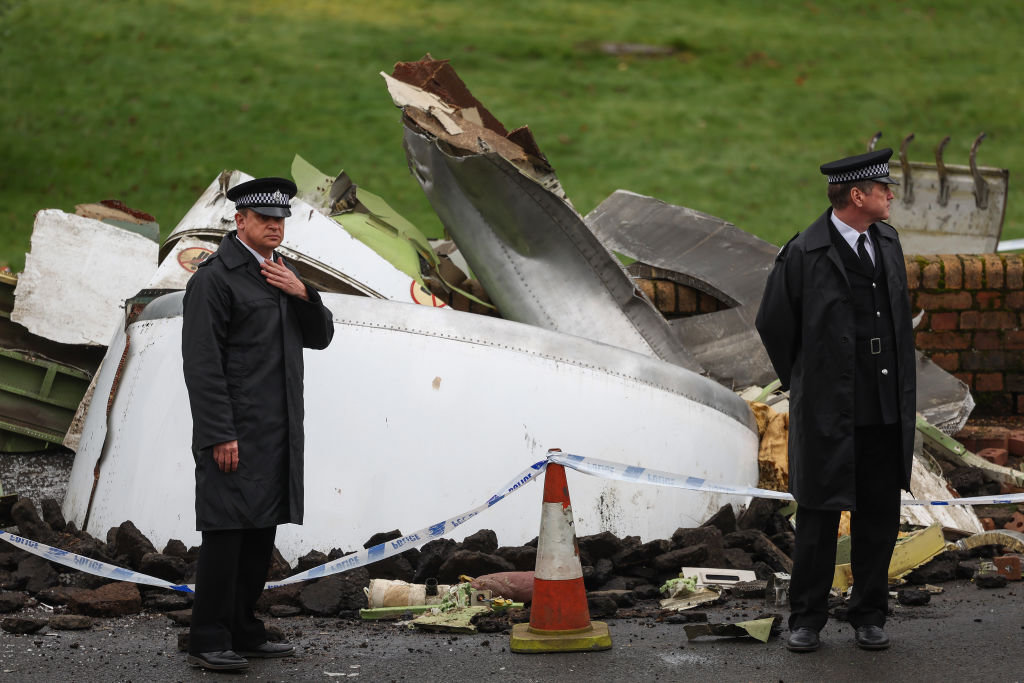
The filming set for a TV drama about the Lockerbie bombing underway in West Lothian on March 20, 2024 in Bathgate, Scotland. Colin Firth plays Dr Jim Swire, whose daughter Flora was killed in the blast. (Getty Images)
What both dramatizations will not cover, however, is the latest extraordinary chapter in the story.
Last month, Lockerbie relatives on both sides of the Atlantic received a sobering piece of news. A 20-meter-long section of the fuselage of the Clipper Maid of the Seas, which had been reconstructed as part of the original investigation, would be flying again, as cargo on board an aircraft transporting it to Washington D.C. as evidence in the trial of a third suspect accused of involvement in the downing of Flight 103.
On May 12 this year, a man identified in court papers as Abu Agila Mohammad Masud Kheir Al-Mariami, or simply Masud, will go on trial charged with having made the bomb that destroyed Pan Am Flight 103.
The original investigation identified a suspect called Abu Agela Masud, who at the time could not be traced. But according to an affidavit filed by an FBI special agent in December 2020, in 2017, the bureau received a transcript in Arabic of an interview conducted by Libyan security officers in September 2012 with a man identified as Masud.

Abu Agela Masud, a former colonel in Libya’s External Security Organization, who had allegedly admitted to building the bomb that brought down Pan Am Flight 103. (Alexandria Sheriff's Office photo)
According to the transcript, Masud, a former colonel in Libya’s External Security Organization, had worked as a “technical expert” for the ESO, “building explosive devices from in or around 1973 to in or around 2011,” when Qaddafi was overthrown.
In the interview, Masud had allegedly “admitted to building the bomb that brought down Pan Am Flight 103 and to working with Megrahi and Fhimah to execute the plot.”
Furthermore, Masud, who also “admitted his involvement in other plots against citizens of the US and other Western countries,” is alleged to have “confirmed that the bombing operation of Pan Am Flight 103 was ordered by Libyan intelligence leadership.”
According to the transcript, he also told his Libyan interrogators that “after the operation, Qaddafi thanked him and other members of the team for their successful attack on the US.”
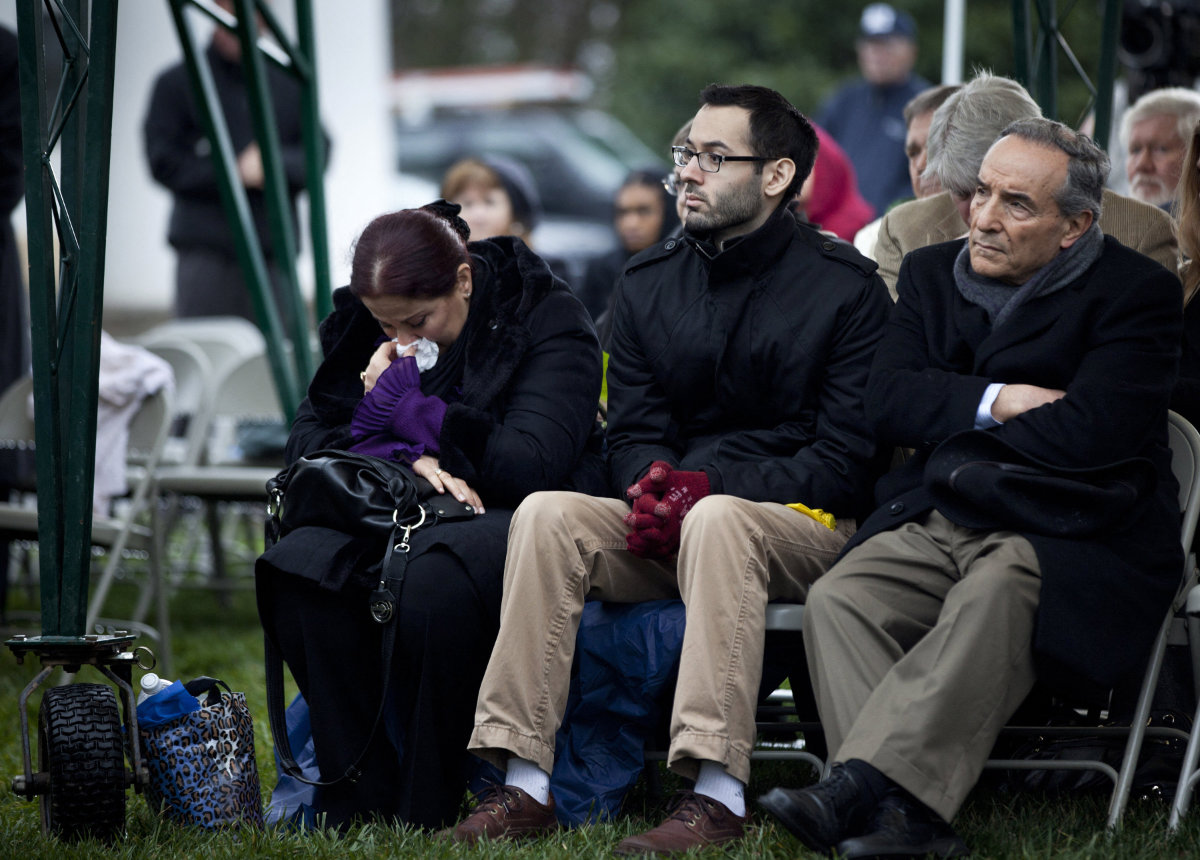
People attend a memorial service for those who lost their lives in the 1988 Pan Am Flight 103 Lockerbie terror bombing, at Arlington National Cemetery in Virginia on Dec. 21, 2011. (Getty Images via AFP)
It is not clear why the transcript of the interview was shared with US investigators when it was but, as the FBI affidavit noted, the Libyan law enforcement officer who obtained Masud’s statement had “expressed a willingness to testify at a trial if the Libyan government agrees to make the officer available.”
US authorities announced on Dec. 12, 2022, that Masud was in custody on American soil, and had been charged in a Washington D.C. court. How he got there is uncertain, as there is no extradition treaty between the US and Libya.
Human Rights Watch claims Masud was “violently seized” from his home in the Abu Salim district of Tripoli on Nov. 17, 2022, by members of an “armed group” who arrived in unmarked cars, wore no insignia, and refused to identify themselves.
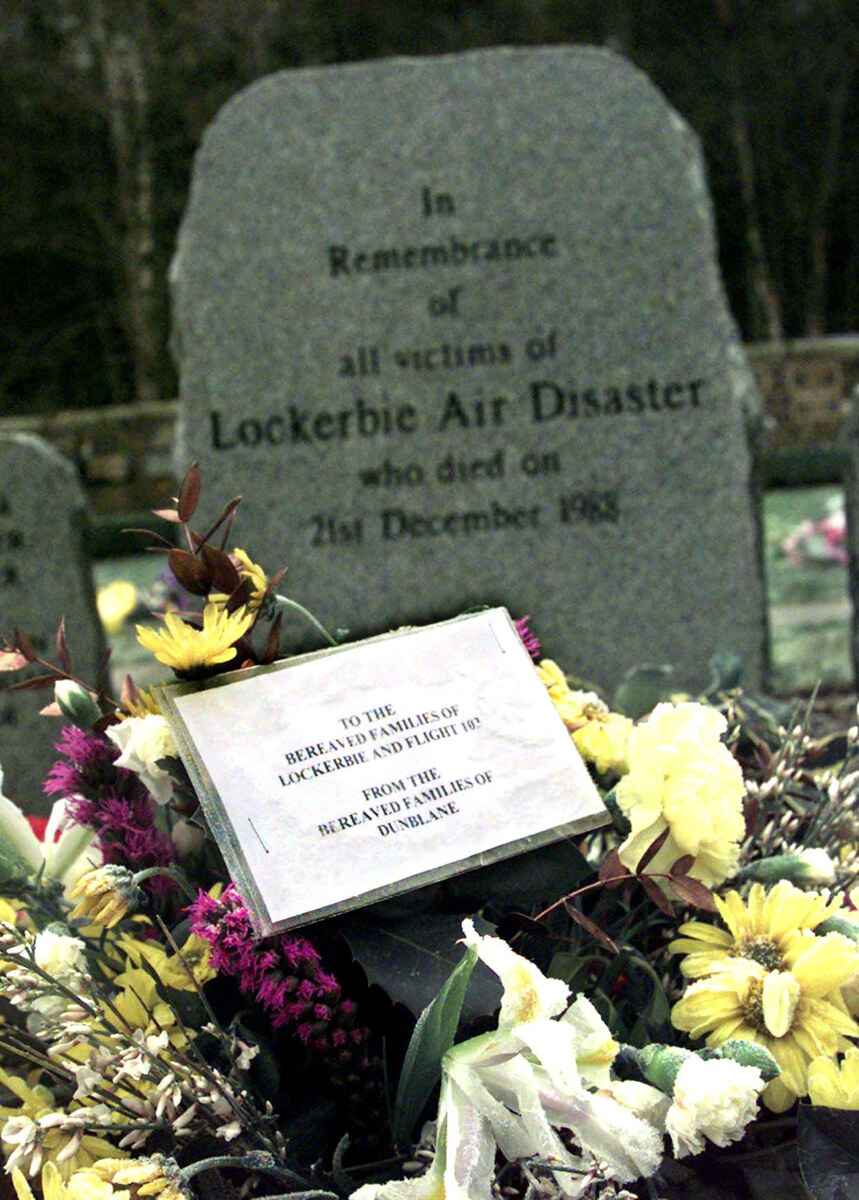
A wreath lies at the monument for the victims of Panam flight 103 in Lockerbie cemetery. (AFP)
But in a statement at the time, Michael H. Glasheen, acting assistant director in charge of the FBI Washington Field Office, said: “The lawful arrest and presentment in court of the alleged bombmaker … is the product of hard work and partnerships across the globe.”
Eight days later, the US embassy in Libya tweeted that Masud’s transfer to US custody “was lawful and conducted in cooperation with Libyan authorities.”
Depending on what emerges in court in May, Masud’s trial could prove fateful for Lamin Khalifah Fhimah. Although he was acquitted by the Scottish court in 1991, Fhimah remains a wanted man in America.
For those involved in the long search for justice for the victims of Flight 103 and their families, the trial is a last chance to “renew confidence in the justice process around the case,” in the words of Scotland’s public prosecution service.
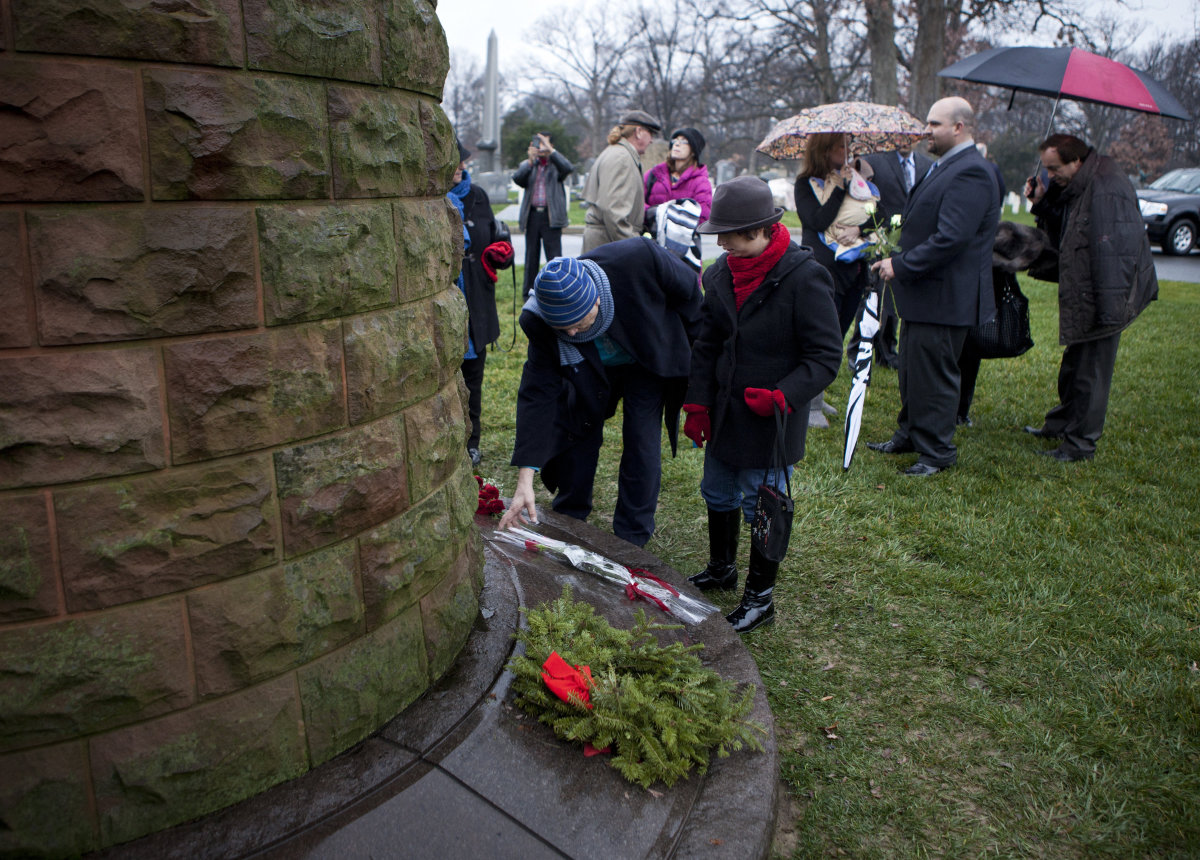
Relatives place flowers at the memorial to the Pan Am Flight 103 Lockerbie bombing victims at Arlington National Cemetery in Arlington, Virginia, on December 21, 2011. (Getty Images via AFP)
“Scotland’s prosecutors and police, working with counterparts in the US, have remained steadfast in our commitment to uncovering the truth and holding those responsible accountable,” said Dorothy Bain, Scotland’s lord advocate, in a statement last month.
Although the original trial considered evidence from 227 witnesses over 72 days, and Al-Megrahi’s conviction was upheld twice at appeal, “I am aware that not everyone shares the same view of the Crown case,” Bain added.
“I have always believed in the power of the legal process as a tool for fairness and public trust. The forthcoming trial in Washington will bring the facts of this case before the public again, and the circumstances of what happened can be fully understood.”


