In Syria, EU official announces $242 million aid package

Ahmed Al-Sharaa meets with a delegation from the European Commission headed by Haja Lahbib (X/@SanaAjel)
Short Url
Updated 18 January 2025
Follow

In Syria, EU official announces $242 million aid package

  • Syrian state news agency SANA published images of Lahbib with the country’s new leader Ahmed Al-Sharaa

DAMASCUS: EU crisis management chief Hadja Lahbib announced a 235 million euro aid package for Syria and neighboring countries on Friday during the first visit by a senior EU official since Bashar Assad’s ouster.
The trip comes two weeks after foreign ministers from France and Germany visited, calling for a peaceful, inclusive transition, amid a flurry of diplomatic activity by countries seeking to engage with war-torn Syria’s new authorities.
“I come here to announce a new package of humanitarian aid of 235 million euros ($242 million) in Syria and in neighboring countries,” Lahbib told a press conference in Damascus after meeting Syria’s new leader Ahmed Al-Sharaa.
“Our funding will contribute to basic needs like shelter, food, clean water, sanitation, health care, education and emergencies among others,” she said.
Neighbouring countries including Lebanon have taken in millions of Syrian refugees over the years.
“We count on the authorities to ensure unrestricted and safe access for humanitarian actors to all regions of Syria including those in hard-to-reach and conflict-affected areas” in the east, Lahbib added.
Sharaa’s Islamist group Hayat Tahrir Al-Sham (HTS) led the rebel offensive that ousted Assad on December 8.
An interim government has been appointed to steer the country until March 1.
HTS, which has roots in the Syrian branch of Al-Qaeda, has sought to reassure minorities that they will not be harmed and the rule of law will be respected.
“We are at a turning point and the decisions that will be taken in the coming days and months will be crucial,” Lahbib said.
“You are writing history, and we would like to encourage you to leave a positive trace. It starts with building an inclusive future for all Syrians,” she added.
“Syria is rich in its diversity,” she said of the multi-ethnic, multi-sectarian country.
“We want to see a bright future for Syria and for that, we need to see the rule of law being respected, human rights, women’s rights... What I’ve heard from the mouth of the current authorities (is) really encouraging... now we need action,” she added.
Lahbib’s meetings were also expected to include discussions on the issue of lifting international sanctions on Syria.
The 27-nation European Union, along with other countries, imposed wide-ranging sanctions on the former government and broad swathes of Syria’s economy during its civil war, which began in 2011 with Assad’s brutal repression of anti-government protests.
The transitional government has been lobbying to have the measures lifted, but the international community has been hesitant, with many countries waiting to see how the new authorities exercise their power before doing so.
EU foreign ministers are expected to discuss proposals to ease some measures at a meeting in Brussels on January 27.
Lahbib cautioned that “we will need unanimity (at the meeting) to lift the sanctions.”
On Wednesday, visiting United Nations rights chief Volker Turk called for an “urgent reconsideration” of sanctions, saying they had “a negative impact on the enjoyment of rights” of Syrians.
Senior officials from several other countries have also visited since Assad’s overthrow, including Spanish Foreign Minister Jose Manuel Albares and Qatar’s Prime Minister Sheikh Mohammed bin Abdulrahman bin Jassim Al-Thani on Thursday.
The EU’s chief diplomat in the region has also visited.

Also on Friday, the chief prosecutor at the International Criminal Court, Karim Khan, met Syria’s new leader Al-Sharaa, state media reported.

Sharaa and Syria’s Foreign Minister Asaad Al-Shaibani met “a delegation from the International Criminal Court, headed” by Khan, state news agency SANA reported, also publishing images of the meeting.
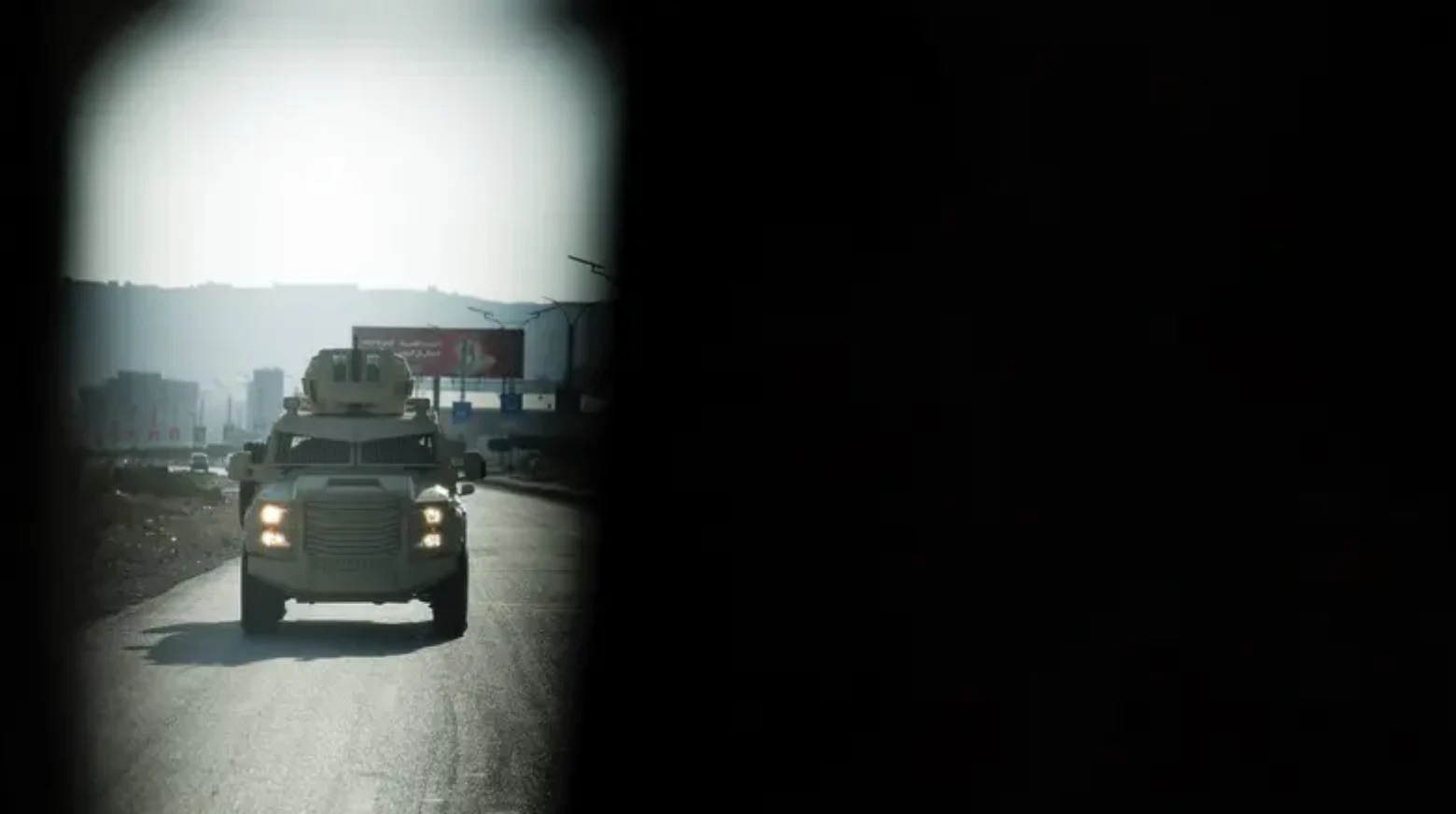
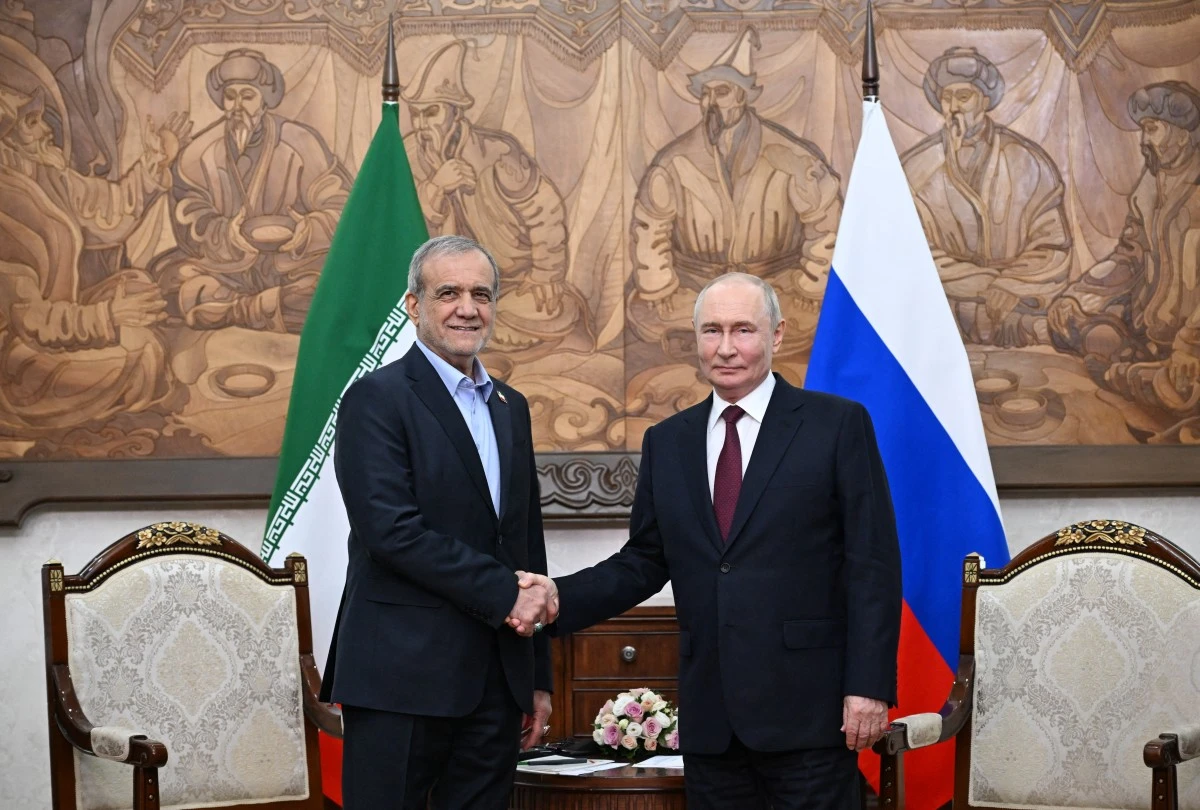
A year after Bashar Assad fled, Syria struggles to heal

Updated 3 sec ago
Follow

A year after Bashar Assad fled, Syria struggles to heal

HOMS, Syria: A year ago, Mohammad Marwan found himself stumbling, barefoot and dazed, out of Syria’s notorious Saydnaya prison on the outskirts of Damascus as rebel forces pushing toward the capital threw open its doors to release the prisoners.
Arrested in 2018 for fleeing compulsory military service, the father of three had cycled through four other lockups before landing in Saydnaya, a sprawling complex just north of Damascus that became synonymous with some of the worst atrocities committed under the rule of now ousted President Bashar Assad.
He recalled guards waiting to welcome new prisoners with a gauntlet of beatings and electric shocks. “They said, ‘You have no rights here, and we’re not calling an ambulance unless we have a dead body,’” Marwan said.
His Dec. 8, 2024 homecoming to a house full of relatives and friends in his village in Homs province was joyful.
But in the year since then, he has struggled to overcome the physical and psychological effects of his six-year imprisonment. He suffered from chest pain and difficulty breathing that turned out to be the result of tuberculosis. He was beset by crippling anxiety and difficulty sleeping.
He’s now undergoing treatment for tuberculosis and attending therapy sessions at a center in Homs focused on rehabilitating former prisoners, and Marwan said his physical and mental situations have gradually improved.
“We were in something like a state of death” in Saydnaya, he said. “Now we’ve come back to life.”
A country struggling to heal
Marwan’s country is also struggling to heal a year after the Assad dynasty’s repressive 50-year reign came to an end following 14 years of civil war that left an estimated half a million people dead, millions more displaced, and the country battered and divided.
Assad’s downfall came as a shock, even to the insurgents who unseated him. In late November 2024, groups in the country’s northwest — led by Hayat Tahrir Al-Sham, an Islamist rebel group whose then-leader, Ahmad Al-Sharaa, is now the country’s interim president — launched an offensive on the city of Aleppo, aiming to take it back from Assad’s forces.
They were startled when the Syrian army collapsed with little resistance, first in Aleppo, then the key cities of Hama and Homs, leaving the road to Damascus open. Meanwhile, insurgent groups in the country’s south mobilized to make their own push toward the capital.
The rebels took Damascus on Dec. 8 while Assad was whisked away by Russian forces and remains in exile in Moscow. But Russia, a longtime Assad ally, did not intervene militarily to defend him and has since established ties with the country’s new rulers and maintained its bases on the Syrian coast.
Hassan Abdul Ghani, spokesperson for Syrian Ministry of Defense, said HTS and its allies had launched a major organizational overhaul after suffering heavy losses in 2019 and 2020, when Assad’s forces regained control of a number of formerly rebel-controlled areas.
The rebel offensive in November 2024 was not initially aimed at seizing Damascus but was meant to preempt an expected offensive by Assad’s forces in opposition-held Idlib, Abdul Ghani said.
“The defunct regime was preparing a very large campaign against the liberated areas, and it wanted to finish the Idlib file,” he said. Launching an attack on Aleppo “was a military solution to expand the radius of the battle and thus safeguard the liberated interior areas.”
In timing the attack, the insurgents also aimed to take advantage of the fact that Russia was distracted by its war in Ukraine and that the Iran-backed Lebanese militant group Hezbollah, another Assad ally, was licking its wounds after a damaging war with Israel.
When the Syrian army’s defenses collapsed, the rebels pressed on, “taking advantage of every golden opportunity,” Abdul Ghani said.
Successes abroad, challenges at home
Since his sudden ascent to power, Al-Sharaa has launched a diplomatic charm offensive, building ties with Western and Arab countries that shunned Assad and that once considered Al-Sharaa a terrorist.
A crowning moment of his success in the international arena: in November, he became the first Syrian president since the country’s independence in 1946 to visit Washington.
But the diplomatic successes have been offset by outbreaks of sectarian violence in which hundreds of civilians from the Alawite and Druze minorities were killed by pro-government Sunni fighters. Local Druze groups have now set up their own de facto government and military in the southern Sweida province.
There are ongoing tensions between the new government in Damascus and Kurdish-led forces controlling the country’s northeast, despite an agreement inked in March that was supposed to lead to a merger of their forces.
Israel is wary of Syria’s new Islamist-led government even though Al-Sharaa has said he wants no conflict with the country. Israel has seized a formerly UN-patrolled buffer zone in southern Syria and launched regular airstrikes and incursions since Assad’s fall. Negotiations for a security agreement have stalled.
Meanwhile, the country’s economy has remained sluggish, despite the lifting of most Western sanctions. While Gulf countries have promised to invest in reconstruction projects, little has materialized on the ground. The World Bank estimates that rebuilding the country’s war-damaged areas will cost $216 billion.
Rebuilding largely an individual effort
The rebuilding that has taken place so far has largely been on a small scale, with individual owners paying to fix their own damaged houses and businesses.
On the outskirts of Damascus, the once-vibrant Yarmouk Palestinian camp today largely resembles a moonscape. Taken over by a series of militant groups then bombarded by government planes, the camp was all but abandoned after 2018.
Since Assad’s fall, a steady stream of former residents have been coming back.
The most heavily damaged areas remain largely deserted but on the main street leading into the camp, bit by bit, blasted-out walls have been replaced in the buildings that remain structurally sound. Shops have reopened and families have come back to their apartments. But any sort of larger reconstruction initiative appears to still be far off.
“It’s been a year since the regime fell. I would hope they could remove the old destroyed houses and build towers,” said Maher Al-Homsi, who is fixing his damaged home to move back to it even though the area doesn’t even have a water connection.
His neighbor, Etab Al-Hawari, was willing to cut the new authorities some slack.
“They inherited an empty country — the banks are empty, the infrastructure was robbed, the homes were robbed,” she said.
Bassam Dimashqi, a dentist from Damascus, said of the country after Assad’s fall, “Of course it’s better, there’s freedom of some sort.”
But he remains anxious about the still-precarious security situation and its impact on the still-flagging economy.
“The job of the state is to impose security, and once you impose security, everything else will come,” he said. “The security situation is what encourages investors to come and do projects.”
Marwan, the former prisoner, says the post-Assad situation in Syria is “far better” than before. But he has also been struggling economically.
From time to time, he picks up labor that pays only 50,000 or 60,000 Syrian pounds daily, the equivalent of about $5.
Once he finishes his tuberculosis treatment, he said, he plans to leave to Lebanon in search of better-paid work.