

Saudi Arabia de-risks investments to attract foreign SMEs: Al-Falih

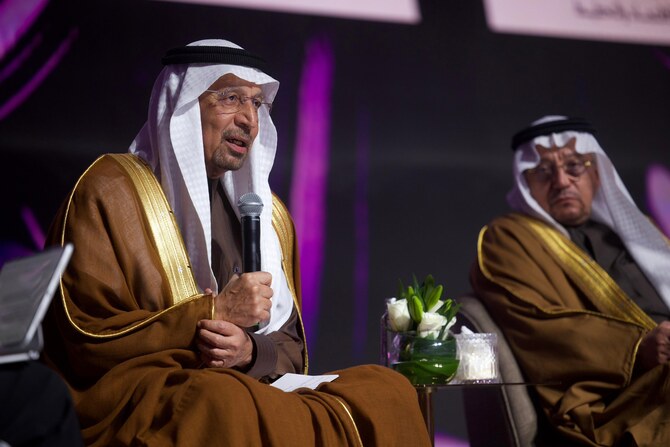
Saudi Minister of Investment Khalid Al-Falih said the initiative aims to attract international SMEs that have been integral to supply chains in their home countries for decades. Supplied
Short Url
Updated 12 January 2025
Follow

Saudi Arabia de-risks investments to attract foreign SMEs: Al-Falih

  • Initiative seeks to empower industrial investments and foster sustainable development
  • Program also aims to build value chains by encouraging international SMEs to collaborate with local Saudi firms

RIYADH: Saudi Arabia is de-risking investments for foreign small and medium-sized enterprises to encourage their entry into the Kingdom, according to a senior official. 

In an interview with Arab News on the sidelines of the Standard Incentives for the Industrial Sector program, Saudi Minister of Investment Khalid Al-Falih said the initiative aims to attract international SMEs that have for decades been integral to supply chains in their home countries. 

The announcement follows a joint effort by the ministries of industry and mineral resources and investment to allocate SR10 billion ($2.66 billion) to activate standardized incentives for the industrial sector. 

This initiative, approved by the Cabinet last month, seeks to empower industrial investments, foster sustainable development, and enhance Saudi Arabia’s global industrial competitiveness. 

“De-risking is a key component. Come to Saudi Arabia. We will de-risk the investment for you,” Al-Falih said, emphasizing the government’s commitment to creating a business-friendly environment. 

He added: “We will do matchmaking with the Saudi investors, and then they can, hopefully, recreate, and maybe we innovate with them to do something bigger for what they are doing in their home country.” 

The program also aims to build value chains by encouraging international SMEs to collaborate with local Saudi firms, fostering innovation and shared growth. 

“I think the Kingdom has been doing well in attracting large multinationals. However, when we go to Germany, we find out 70 to 80 percent of the German GDP is by SMEs, who may only operate in Germany and Europe. They don’t know the Middle East. They don’t know Saudi Arabia,” Al-Falih said. 

“As we build these value chains, we need to help our SMEs in Saudi Arabia by bringing with them some international SMEs that have been doing some of this production and manufacturing, feeding the large OEMs (original equipment manufacturers) for decades in their own home country.” 

While Saudi Arabia has successfully attracted large-scale investments in multibillion-dollar projects like the green hydrogen initiative, Lucid, and Ceer, Al-Falih noted that mid-sized companies face unique challenges. These include a lack of credit history, limited local ecosystems, and rising costs of funding and production. 

“By us having this tool available to us, if it’s a new product, differentiated product, that will plug a missing component or a link in a value chain, we can do it quickly, and these companies will be able to bridge that gap and move quickly, so that’s the intention,” he said. 

The initiative aligns with the Kingdom’s collaborative government approach, with policies shaped by the Localization and Balance of Payments Committee chaired by Crown Prince Mohammed bin Salman. 

The program also takes advantage of Saudi Arabia’s geographic location — connecting three continents — its open market, and low customs tariffs to attract international and local investors. 

Al-Falih described the incentives as a significant step toward achieving Vision 2030’s goals and the National Investment Strategy, which aim to attract and develop industrial investments while elevating the Kingdom’s industrial competitiveness. 


UNCTAD, Social Development Bank launch fellowship to power Saudi entrepreneurs

Updated 9 sec ago
Follow

UNCTAD, Social Development Bank launch fellowship to power Saudi entrepreneurs

RIYADH: The Social Development Bank has signed a memorandum of understanding with UN Trade and Development to launch the “Empretec Saudi Fellowship,” a new initiative aimed at equipping high-potential Saudi entrepreneurs with advanced training and tools to scale their ventures.

The agreement was signed on the sidelines of the second edition of the DeveGo 2025 forum, held on Dec. 21–22 at the King Abdulaziz International Conference Center in Riyadh. The event brought together entrepreneurs, policymakers, and representatives from regional and international organizations, alongside public and private sector leaders.

Featuring more than 150 exhibitors, 85 speakers, and 45 workshops, the forum focused on sharing local and global best practices and strengthening the Kingdom’s entrepreneurial ecosystem.

The Empretec Saudi Fellowship is part of UNCTAD’s flagship capacity-building program to promote entrepreneurship and support micro, small, and medium-sized enterprises and startups. Active in more than 40 countries, the program seeks to develop personal entrepreneurial behaviors through intensive training, access to international experts, and technical tools that help transform promising ideas into scalable, high-impact businesses.

Rebeca Grynspan, UNCTAD secretary-general, said Saudi Arabia offers fertile ground for entrepreneurial growth.

“Saudi Arabia has a wonderful platform to bring everybody up, and the entrepreneurs here are so eager. They have ideas, creativity, and energy,” she told Arab News. “If they come through our program with the Social Development Bank, which does a wonderful job, they will be more successful — because that’s what we want.”

In his opening remarks, Saudi Minister of Human Resources and Social Development Ahmed Al-Rajhi, who also chairs the SDB board, highlighted the rapid evolution of the Kingdom’s startup landscape.

“The Kingdom is witnessing a qualitative transformation in the entrepreneurship and freelance ecosystem, enabling young men and women to enter new promising sectors such as artificial intelligence, renewable energy, advanced technologies, and venture capital,” he said. “This provides broader opportunities to contribute to innovation, expansion, and global competitiveness.”

During a tour of the exhibition alongside Al-Rajhi, Grynspan met a wide range of small and medium-sized businesses and handicraft makers, praising the depth of local talent. She noted that participants spanned the full spectrum of enterprises — from early-stage ventures to more established and sophisticated companies — reflecting a rich diversity of experience.

Al-Rajhi said the Social Development Bank invests more than SR8 billion annually to support enterprises and entrepreneurs, helping raise employment in bank-financed businesses from about 12,000 in 2021 to more than 140,000 in 2025.

Beyond financing, the bank runs several non-financial programs, including the Jada 30 business communities, which have incubated more than 4,300 enterprises across 13 cities, and the Dulani Business Center, which has delivered over 67,000 consultations benefiting more than 150,000 male and female entrepreneurs.

Speaking on the broader economic outlook, Grynspan added: “This is a wonderful place to come. Now is an economy that is thriving, is a population that is hopeful. And you have these young, talented people that are only waiting for an opportunity to make it happen for everybody.”

During the forum, the bank also signed multiple cooperation agreements spanning key sectors such as finance, education, energy, healthcare, heritage, the nonprofit sector, and freelance work. The partnerships align with SDB’s strategy to build an integrated system of financial and non-financial empowerment tailored to the needs of entrepreneurs, startups, and micro-enterprises.