Franco-Algerian influencer to stand trial in March

1 / 2
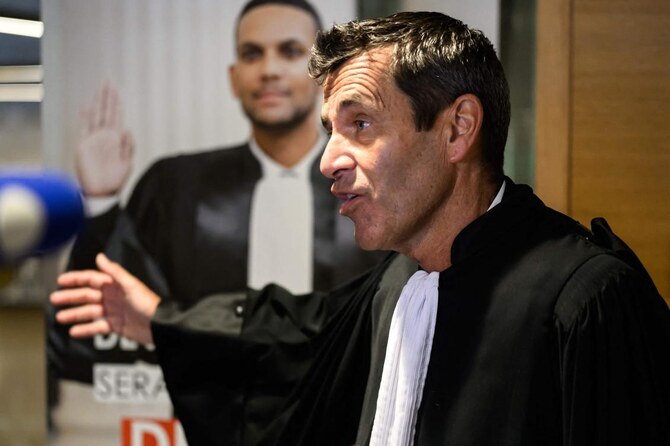
Frederic Lalliard, lawyer of the French-Algerian social media influencer Sofia Benlemmane, speaks to press as he arrives at the public prosecutor’s office in Lyon on Jan. 11, 2025 ,as part of an investigation into online hate videos. (AFP)
2 / 2
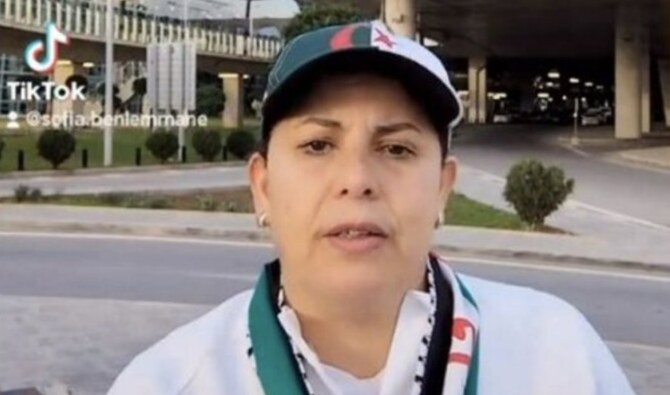
Sofia Benlemmane, a Franco-Algerian woman in her fifties, was arrested on Thursday. (X/@ADIL_NEWS_OFF)
Short Url
Updated 11 January 2025
Follow

Franco-Algerian influencer to stand trial in March

  • A diplomatic row between France and Algeria has flared up over the arrests of several Algerian social media influencers accused of inciting violence
  • Sofia Benlemmane, a Franco-Algerian woman in her fifties, was arrested on Thursday

LYON: A Franco-Algerian influencer, arrested as part of an investigation into online hate videos, appeared before French prosecutors on Saturday and will stand trial in March, authorities said.
A diplomatic row between France and Algeria has flared up over the arrests of several Algerian social media influencers accused of inciting violence.
Sofia Benlemmane, a Franco-Algerian woman in her fifties, was arrested on Thursday.
Followed on TikTok and Facebook by more than 300,000 people, she is accused of spreading hate messages and threats against Internet users and against opponents of the Algerian authorities, as well as insulting statements about France.
She was ordered to appear before a criminal court on March 18, the public prosecutor’s office said.
She is being prosecuted for a series of offenses including incitement to commit a crime, death threats and “public insult based on origin, ethnicity, nation, race or religion.”
The blogger had insulted a woman during a live broadcast in September, shouting “I hope you get killed, I hope they kill you.”
Her lawyer Frederic Lalliard argued that Benlemmane had committed no criminal offense, even though her comments “may irritate or shock.”
Benlemmane, a former football player, made headlines in 2001 when she was given a seven-month suspended prison sentence for entering the Stade de France pitch outside Paris with an Algerian flag during a France-Algeria friendly match.
Although she was firmly opposed to the government in Algiers in the past, her views have since changed and she now supports the current authorities in Algeria.
Several other Algerian influencers have been the target of legal proceedings in France for hate speech.
Former prime minister Gabriel Attal said that France should cancel a 1968 accord with Algeria that gives Algerians special rights to live and work in France because of the dispute over what he called “preachers of hate.”
Algeria won independence from France in 1962 after a seven-year war.


Clashes in Syria’s Aleppo deepen rift between government, Kurdish forces

Updated 10 sec ago
Follow

Clashes in Syria’s Aleppo deepen rift between government, Kurdish forces

ALEPPO: Fierce fighting in Syria’s northern city of Aleppo between government forces and Kurdish fighters drove thousands of civilians from ​their homes on Wednesday, with Washington reported to be mediating a de-escalation. The violence, and statements trading blame over who started it, signaled that a stalemate between Damascus and Kurdish authorities that have resisted integrating into the central government was deepening and growing deadlier. Deadly clashes broke out on Tuesday between Syrian government troops and the Kurdish-led Syrian Democratic Forces (SDF).
After relative calm overnight, shelling resumed on Wednesday and intensified in the afternoon, Reuters reporters in the city said.
A spokesperson for Aleppo’s health directorate told Reuters that four civilians had been killed on Tuesday and more than two dozen wounded on Tuesday and Wednesday. Security ‌sources separately told Reuters ‌that two fighters had also been killed.
The health directorate said ‌there ⁠were ​no ‌civilian fatalities on Wednesday, and that it was not authorized to comment on deaths among fighters.
By Wednesday evening, fighting had subsided, the Reuters reporters said. Ilham Ahmed, who heads the foreign affairs department of the Kurdish administration, told Reuters that international mediation efforts were underway to de-escalate. A source familiar with the matter told Reuters the US was mediating.

THOUSANDS OF CIVILIANS FLEE
The directorate for social affairs said on Wednesday night that more than 45,000 people had been displaced from Aleppo city, most of them heading northwest toward the enclave of Afrin.
The Syrian ⁠army announced that military positions in the Kurdish-held neighborhoods of Sheikh Maqsoud and Ashrafiyah were “legitimate military targets.” Two Syrian security officials told Reuters ‌that they expected a significant military operation in the city.
The government ‍opened humanitarian corridors for civilians to flee flashpoint ‍neighborhoods, ferrying them out on city buses.
“We move them safely to the places they want to ‍go to according to their desire or to displaced shelters,” said Faisal Mohammad Ali, operations chief of the civil defense force in Aleppo.
The latest fighting has disrupted civilian life in what is a leading Syrian city, closing the airport and a highway to Turkiye, halting operations at factories in an industrial zone and paralysing major roads into ​the city center.
The Damascus government said its forces were responding to rocket fire, drone attacks and shelling from Kurdish-held neighborhoods. Kurdish forces said they held Damascus “fully and directly responsible ⁠for ... the dangerous escalation that threatens the lives of thousands of civilians and undermines stability in the city.” During Syria’s 14-year civil war, Kurdish authorities began running a semi-autonomous zone in northeast Syria, as well as in parts of Aleppo city.
They have been reluctant to give up those zones and integrate fully into the Islamist-led government that took over after ex-President Bashar Assad’s ousting in late 2024.
Last year, the Damascus government reached a deal with the SDF that envisaged a full integration by the end of 2025, but the two sides have made little progress, each accusing the other of stalling or acting in bad faith.
The US has stepped in as a mediator, holding meetings as recently as Sunday to try to nudge the process forward. Sunday’s meetings ended with no tangible progress.
Failure to integrate the SDF into Syria’s army risks further violence ‌and could potentially draw in Turkiye, which has threatened an incursion against Kurdish fighters it views as terrorists.