
- Oxagon has become a global model for future industrial development
- It has continued to leverage cutting-edge technologies to revolutionize logistics and manufacturing operations
RIYADH: Oxagon, the industrial cornerstone of NEOM, has solidified its position as a critical hub for logistics and manufacturing, perfectly aligned with Saudi Arabia’s Vision 2030.
Through a blend of innovation, sustainability, and technological progress, Oxagon has become a global model for future industrial development. Spanning approximately 50 sq. km, it ranks among the largest floating industrial complexes worldwide and is on track to achieve 100 percent renewable energy use by 2030.
The accomplishments of 2024 underscore Oxagon’s commitment to economic diversification and environmental responsibility, offering valuable lessons for businesses. By prioritizing sustainability, embracing cutting-edge technologies, and showcasing adaptability, Oxagon sets new benchmarks for the logistics and manufacturing sectors.
Driving sustainability
Oxagon stands as a beacon of sustainable practices within logistics and manufacturing. Paolo Carlomagno, partner at Arthur D. Little Middle East, said that Oxagon’s initiatives align with the core objectives of Saudi Vision 2030, aiming to create a diversified economy while reducing environmental impact.
“For example, Oxagon’s logistics operations integrate renewable energy sources, such as solar and wind, which have collectively reduced carbon emissions by an estimated 25 percent compared to traditional models,” Carlomagno explained.

“Additionally, the manufacturing ecosystem embraces circular economy principles, focusing on resource efficiency and waste minimization. By 2026, Oxagon’s waste-to-resource initiatives are projected to recycle 90 percent of industrial waste generated within the facility,” he added.
Carlomagno further emphasized that advanced systems such as green building technologies and smart water management are integral to Oxagon’s strategy to minimize its environmental footprint.
“For instance, Oxagon employs advanced desalination techniques that use 40 percent less energy than conventional methods, providing a sustainable water supply for both industrial operations and local communities,” he noted. “These efforts create a resilient, eco-friendly industrial ecosystem capable of adapting to future challenges.”
Collaboration is central to Oxagon’s strategy, with partnerships with global corporations like Siemens and Schneider Electric driving the accelerated adoption of sustainable practices.
“These collaborations have led to the implementation of innovative solutions, such as energy-efficient manufacturing systems and low-carbon supply chain logistics, setting a standard for the region and beyond,” he added.
Technological innovations
In 2024, Oxagon has continued to leverage cutting-edge technologies to revolutionize logistics and manufacturing operations. Carlomagno noted that technologies such as artificial intelligence, robotics, and the Internet of Things have played a crucial role in streamlining processes, enhancing predictive maintenance, and optimizing inventory management, resulting in efficiency gains of approximately 30 percent compared to 2023.
“One notable advancement has been the integration of autonomous electric vehicles within its logistics network. These vehicles, combined with AI-driven route optimization algorithms, have reduced delivery times by 20 percent and operational costs by 15 percent,” he said.
“Additionally, smart manufacturing hubs equipped with IoT-enabled machinery have increased production accuracy by 25 percent, while reducing downtime through predictive maintenance protocols.”
Looking forward, Carlomagno highlighted that Oxagon’s commitment to emerging technologies promises further industry disruption.
“The adoption of blockchain for transparent supply chain management is expected to reduce fraud and improve traceability, while quantum computing — currently under exploration — offers the potential to solve complex logistical challenges at unprecedented speeds. Such innovations are expected to drive a projected 10 percent annual growth rate in Oxagon’s industrial output over the next five years,” he said.
Federico Pienovi, chief business officer and CEO for APAC & MENA at Globant, outlined Oxagon’s use of AI-driven analytics, blockchain-enabled supply chain management, and autonomous systems to create a highly connected and efficient operational ecosystem. These advancements have improved transparency, reduced inefficiencies, and streamlined processes, enabling smarter decision-making.
“For example, AI and machine learning have played pivotal roles in logistics, enabling predictive models that optimize shipping schedules. By analyzing port availability in real-time, these systems ensure vessels depart and arrive with precision, avoiding costly delays and idle time. Similarly, blockchain technology ensures supply chain transparency, building trust and resilience across global operations,” said the CEO.
In manufacturing, robotics, supported by AI, has revolutionized production lines, offering unmatched precision, scalability, and flexibility.
“IoT sensors have elevated predictive maintenance to a new level, reducing downtime and enhancing overall equipment efficiency. Combined, these innovations are driving higher product quality, creative business models, and smarter scalability,” he said.
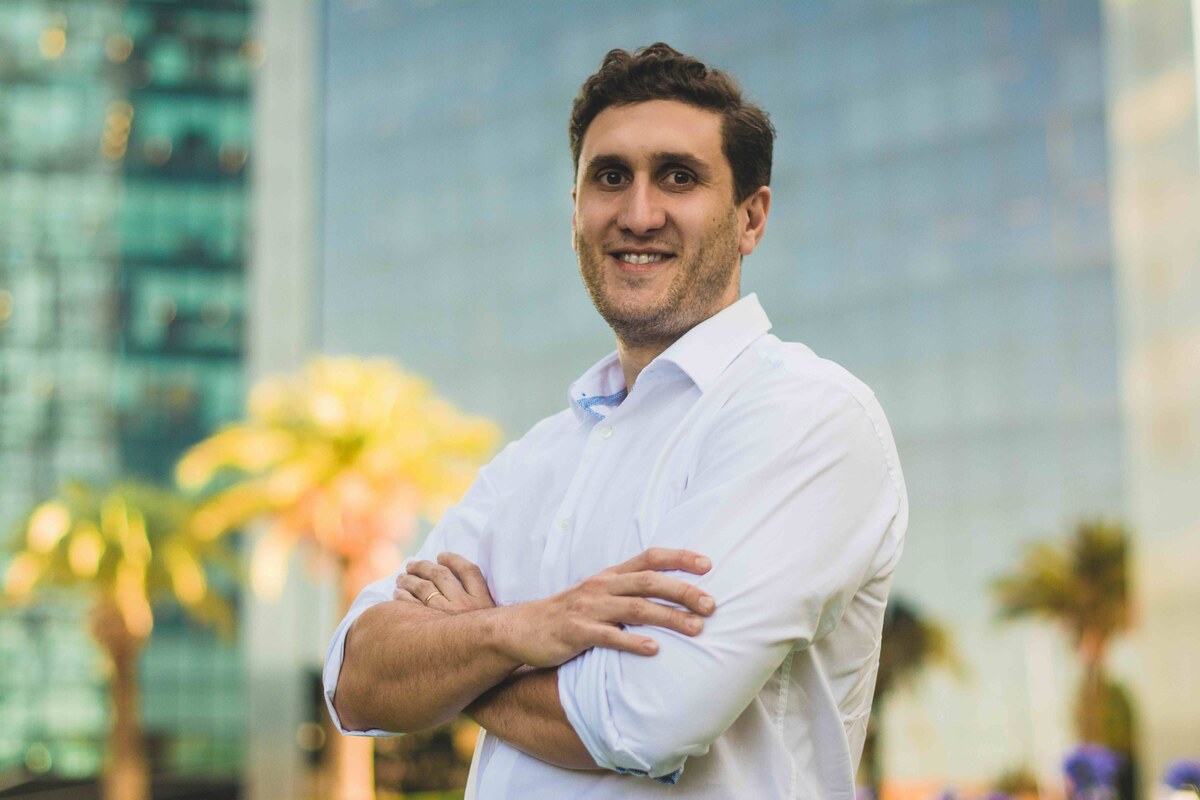
Looking to the future, Pienovi emphasized that Oxagon’s connected experiences will further enhance operations, not just in factories and logistics but also for employees. By integrating data from IoT, AI, and machine learning, Oxagon offers seamless workflows while maintaining a people-centric approach, improving employee satisfaction, operational agility, and productivity.
Evolving market dynamics
As global markets evolve, Oxagon provides a model for how businesses can adapt and thrive. Carlomagno noted that Oxagon’s strategy revolves around three core pillars: collaboration, sustainability, and digital transformation. By forming strategic partnerships with technology providers, academic institutions, and multinational corporations, Oxagon has positioned itself as an innovation hub.
“For example, a partnership with MIT enabled the establishment of a data-driven logistics optimization platform that has increased supply chain efficiency by 15 percent,” he said.
Oxagon’s consumer-centric approach also sets it apart. By leveraging data analytics and consumer feedback loops, the company ensures its products and services meet evolving market demands.
“For instance, real-time demand forecasting has allowed Oxagon’s partners to reduce inventory holding costs by 20 percent, reflecting its agility in a dynamic global market,” said Carlomagno.
Pienovi emphasized that embracing digital transformation is a critical strategy for future success.
“Oxagon has placed advanced technologies like AI, IoT, edge computing, and automation at the core of its operations. By integrating predictive AI models, Oxagon has optimized its supply chain management, enabling it to forecast demand and identify the most efficient logistics routes,” he said.
The CEO added: “At the same time, IoT sensors and robust platforms have elevated operational efficiency, improved product quality, and enhanced risk mitigation efforts. These technologies have not only transformed manufacturing and logistics but have also paved the way for connected experiences, where personalized insights enhance decision-making across operations.”
Sustainability remains a key pillar of Oxagon’s strategy. “By integrating circular economy principles, Oxagon has redefined what it means to operate in an environmentally conscious manner, aligning itself with the growing consumer demand for responsible and eco-friendly brands. Its efforts in sustainability are not merely a corporate responsibility but also a strategic driver for differentiation in the global market,” said Pienovi.
In an increasingly digital business environment, Pienovi highlighted the growing importance of data privacy and cybersecurity.
“Oxagon’s commitment to compliance with regulations, such as Saudi Arabia’s NCA and international standards, underscores its focus on maintaining trust and ensuring secure operations,” he concluded.
As global business becomes more interconnected, Oxagon’s initiatives in 2024 provide a powerful model for how businesses can successfully adapt by integrating innovation, sustainability, and collaboration.