

Pakistan launches landmark trade route linking China to UAE via Khunjerab Pass

This handout photograph, released by Pakistan’s National Logistics Corporation on December 28, 2024, shows a general view of the Kashi Free Trade Zone in Kashi, Xinjiang. (Photo courtesy: NLC)
Short Url
Updated 28 December 2024
Follow

Pakistan launches landmark trade route linking China to UAE via Khunjerab Pass

  • Consignment from China is expected to reach the UAE in 10 days as compared to 30 days via sea-route
  • Traders welcome the development, hoping the arrangement will turn Pakistan into a major hub of trade

KHAPLU, Gilgit-Baltistan: In a first, Pakistan’s National Logistics Corporation (NLC) has launched its maiden multimodal Transports Internationaux Routiers (TIR) transportation, linking China to the United Arab Emirates via the Khunjerab Pass, in a move hailed as a “good omen” for Pakistan’s trade and logistics sectors.
The TIR system, an international customs transit framework, streamlines cross-border trade by enabling goods to move through multiple countries with minimal customs interference.
At over 4,600 meters above sea level, the Khunjerab Pass connects Pakistan’s Gilgit-Baltistan region with China’s Xinjiang province, serving as a strategic gateway for trade between South Asia and Europe.
The pass, situated in the Karakoram Range, has only facilitated bilateral trade in the past, with China primarily importing textiles, agricultural products and daily commodities, while exporting plants and herbs.
“This achievement signifies a major leap forward in the operationalization of the China-Pakistan Economic Corridor (CPEC), utilizing the shortest and most efficient route from China to the Gulf region via Pakistan,” the NLC said in a statement.


This handout photograph, released by Pakistan’s National Logistics Corporation on December 28, 2024, shows officials launching country’s maiden multimodal Transports Internationaux Routiers transportation route at the Khunjerab Pass, Gilgit-Baltistan. (Photo courtesy: NLC)

“This milestone also reflects a significant step toward ensuring year-round functionality of the Khunjerab Pass, a vital gateway for regional trade,” it added.
The NLC said the journey commenced with one of its trucks, laden with electronic equipment, departing from Kashgar, China, en route to the Jebel Ali Port in Dubai. The first stop was at NLC Dry Port in Sost, where a ceremony marked the historic occasion, it added.
“The cargo container, after being transported via NLC trucks from Kashgar to Karachi, will embark on the sea leg of its journey to its final destination at Jebel Ali Port,” the statement informed.
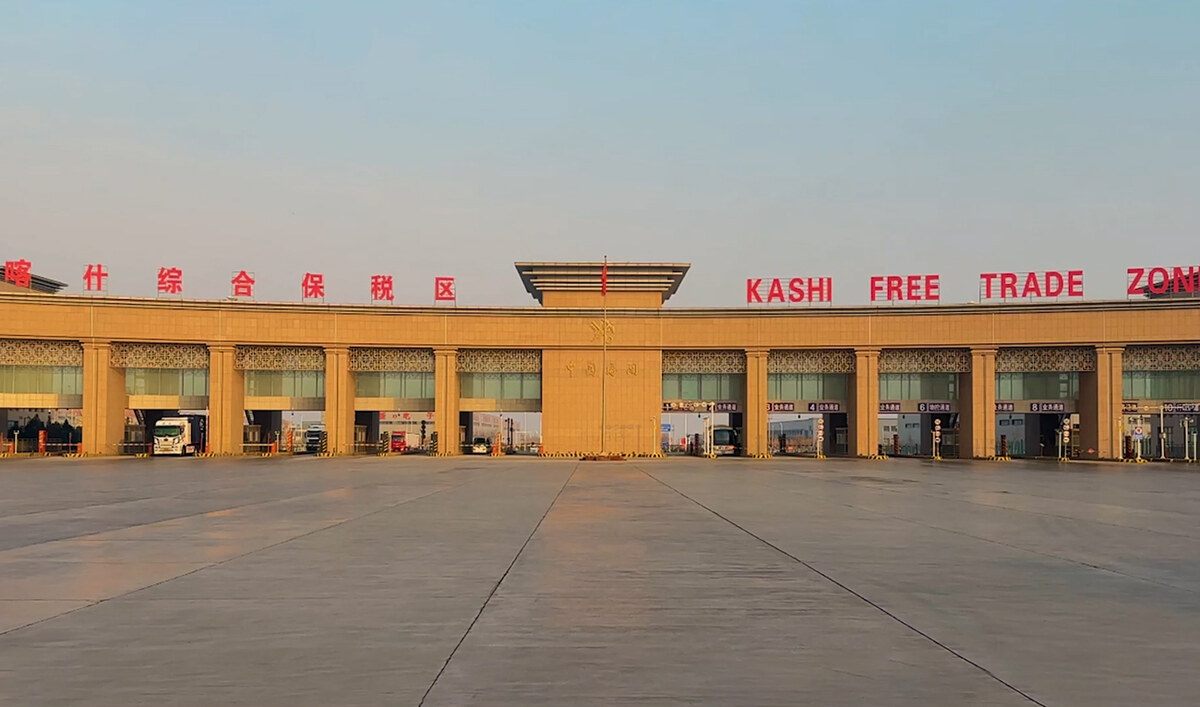


This handout photograph, released by Pakistan’s National Logistics Corporation on December 28, 2024, shows a general view of the Kashi Free Trade Zone in Kashi, Xinjiang. (Photo courtesy: NLC)

The consignment from China is expected to reach the UAE in 10 days as compared to 30 days via sea-route.
Traders and local business leaders associated with the Khunjerab Pass welcomed the launch.
“This is a good omen for Pakistan’s economy,” Imran Ali, a former president of the Gilgit-Baltistan Chambers of Commerce, told Arab News over the phone, adding it would particularly benefit the traders in the region and the local community.
“Pakistan will become a major trade hub as China gets access to the Middle East through this route,” he continued. “The economic activities in Gilgit-Baltistan and Gwadar will get a boost and unemployment will end in the region.”
Muhammad Iqbal, president of the Gilgit-Baltistan Importers and Exporters Association, agreed with him.


This handout photograph, released by Pakistan’s National Logistics Corporation on December 28, 2024, shows a Pakistani truck crossing the checkpoint at the Kashi Free Trade Zone in Kashi, Xinjiang. (Photo courtesy: NLC)

“The launching of TIR between China and the Middle East through Pakistan will change the fate of the country,” he told Arab News. “The country will make more revenue and the economic conditions of traders and locals will improve.”
According to the Gilgit-Baltistan Collectorate of Customs, a record revenue of Rs9.5 billion ($34.87 million) was collected from the Sost Dry Port during the first two quarters of the fiscal year 2024-25, compared to Rs6.5 billion ($23.4 million) during the same period last year.
Additionally, the anti-smuggling team confiscated goods worth Rs600 million ($2.16 million).


Pakistan president meets UAE counterpart, explores trade, investment opportunities

Updated 27 January 2026
Follow

Pakistan president meets UAE counterpart, explores trade, investment opportunities

  • Asif Ali Zardari is in UAE on four-day visit to strengthen bilateral ties, review bilateral cooperation
  • Both sides discuss regional, international developments, reaffirm commitment to promote peace

ISLAMABAD: President Asif Ali Zardari met his UAE counterpart Sheikh Mohammed bin Zayed Al-Nahyan in Abu Dhabi on Tuesday during which both sides explored new opportunities in trade, investment, energy and other sectors, Zardari's office said. 

Zardari arrived in Abu Dhabi on Monday evening with a high-level delegation on a four-day official visit to the UAE to review trade, economic and security cooperation. 

"The leaders discussed ways to further deepen the longstanding and brotherly relations between Pakistan and the UAE," a statement from Zardari's office said about his meeting with the UAE president. 

"They reviewed the full spectrum of bilateral cooperation and explored new opportunities in trade, investment, energy, infrastructure, technology, and people-to-people exchanges, highlighting the significant potential for expanding economic and strategic partnership.

Zardari highlighted the significance of Al-Nayhan's visit to Pakistan last month, the statement said, expressing appreciation for the UAE's continued support for strengthening bilateral ties.

It said both sides also exchanged views on a range of regional and international developments, reaffirming their commitment to promoting peace, stability and sustainable development.

The meeting was also attended by Pakistan's First Lady Aseefa Bhutto-Zardari, the Pakistani president's son Bilawal Bhutto-Zardari, who is also the chairman of the Pakistan Peoples Party, Interior Minister Mohsin Naqvi and Pakistan's ambassador to the UAE. 

ZARDARI MEETS AD PORTS CEO

Zardari earlier met AD Ports Group CEO Captain Mohamed Juma Al-Shamisi to discuss the group's investment initiatives in Karachi. 

"Both sides agreed that the expansion and modernization of port infrastructure would strengthen trade flows and support Pakistan’s broader economic development and country’s seaborne trade," the President's Secretariat said in a statement.

It added that Zardari described the AD Ports Group's long-term investment and expanding role in Pakistan's maritime and logistics sector as a key pillar of Pakistan–UAE economic cooperation.

Pakistan and the UAE maintain close political and economic relations, with Abu Dhabi playing a pivotal role in supporting Islamabad during periods of financial stress through deposits, oil facilities and investment commitments. 

The UAE is Pakistan's third-largest trading partner, after China and the United States, and a key destination for Pakistani exports, particularly food, textiles and construction services.

The Gulf state is also home to more than 1.5 million Pakistani expatriates, one of the largest overseas Pakistani communities in the world, who contribute billions of dollars annually in remittances, a crucial source of foreign exchange for Pakistan’s economy.

Beyond trade and labor ties, Pakistan and the UAE have steadily expanded defense and security cooperation over the years, including military training, joint exercises and collaboration in counter-terrorism and regional security matters.