- Recent initiatives underscore strong commitment to restoring ecosystems and protecting biodiversity
- Kingdom’s approach seen as proof that environmental stewardship and economic growth can coexist
RIYADH: Saudi Arabia is solidifying its position as a global leader in biodiversity preservation through a series of pioneering initiatives aimed at protecting endangered species and restoring fragile ecosystems.
From the release of endangered animals in the King Khalid Royal Reserve to the historic birth of Arabian leopard triplets, the Kingdom’s conservation efforts highlight a forward-looking commitment to safeguarding its natural heritage for generations to come.
On Dec. 23, 2024, the National Center for Wildlife (NCW) achieved a significant milestone with the release of 66 endangered animals into the King Khalid Royal Reserve, located northeast of Riyadh.
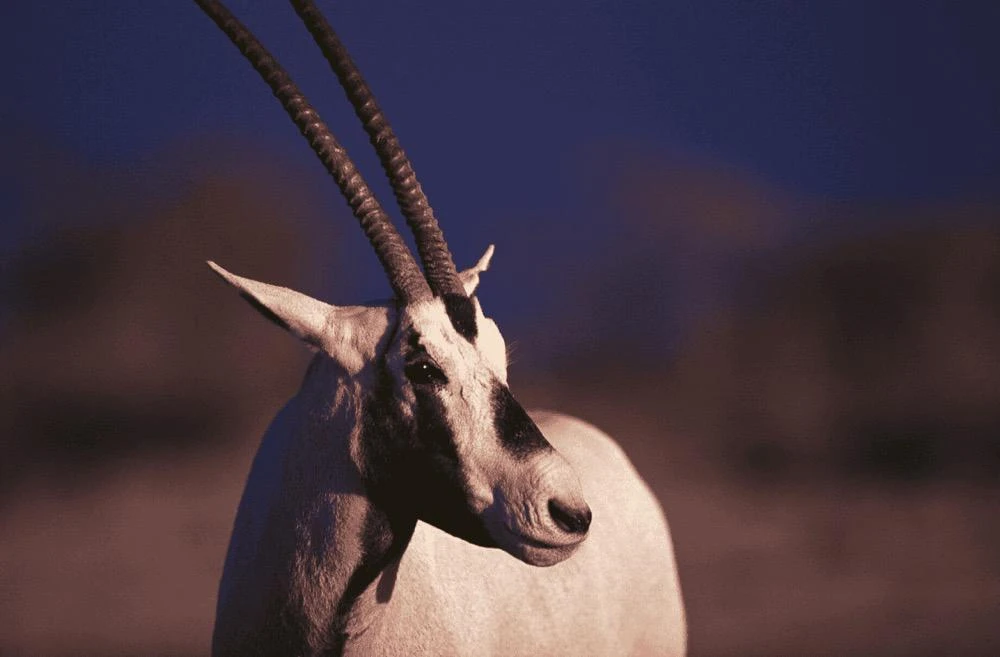
The release included 40 rhim gazelles, 10 Arabian oryx, 10 Houbara bustards and six Idmi gazelles.
This initiative, conducted in collaboration with the Imam Abdulaziz bin Mohammed Royal Reserve Development Authority, is part of a broader strategy to restore ecological balance, enhance biodiversity and promote eco-tourism.
To ensure the program’s success, some of the released animals were equipped with solar-powered tracking devices, enabling researchers to monitor their integration and behavior in the wild.
The Arabian Leopard Conservation Breeding Centre in Taif has reached a groundbreaking achievement — a rare litter of Arabian leopard triplets, two males and one female, was born in June, 2024.
This marks the first recorded triplet birth of the critically endangered Arabian leopard in Saudi Arabia and only the third such occurrence in captivity worldwide over the past 30 years.
The birth is a pivotal moment for Saudi Arabia’s conservation efforts led by the Royal Commission for AlUla (RCU).
Fewer than 120 Arabian leopards remain in the wild, placing them in the critically endangered category of the International Union for Conservation of Nature’s Red List.
Since partnering with Panthera in 2019 under the Arabian Leopard Initiative, RCU has made significant strides in protecting this iconic species.
“When we assumed management of the Arabian Leopard breeding program in December 2020, we inherited 14 leopards and immediately began drafting strategic plans for new enclosures, team building, and breeding targets,” Abdulaziz Al-Enzy, senior manager of the RCU Breeding Center Management, told Arab News.
The initiative focuses on boosting wild populations, expanding breeding programs, and advancing research to ensure the species’ survival.
The breeding center, now home to 32 leopards, has emerged as a global leader in conservation efforts.

“Through our KPIs, the center set an ambitious goal of producing two cubs annually,” Al-Enzy said.
“To date, it has consistently exceeded expectations: one cub in 2021, three in 2022, seven in 2023, and five in 2024.”
The center also follows strict protocols for pregnant leopards.
Al-Enzy said females are separated from males during their final trimester, and all activity around them is minimized to ensure a stress-free delivery.
Veterinary teams remain on standby to intervene in case of complications.
“We’ve achieved remarkable growth by constructing state-of-the-art open-top enclosures, the first of their kind in the Middle East for Arabian leopards, and implementing 24-hour monitoring using 200 CCTV cameras,” Al-Enzy said.
The team, according to him, ensures the leopards are healthy, safe and enriched in their environment.
Protecting the Arabian leopard is not just about saving a species—it’s about preserving ecological balance and cultural heritage.
“The Arabian leopard plays a critical role in regulating prey populations, maintaining the health of ecosystems, and is deeply rooted in Saudi Arabia’s culture," Al-Enzy said.
The ultimate goal is to reintroduce these magnificent creatures into the wild sometime in the future. However, this process is fraught with challenges.
“Leopards must be trained to hunt and acquire survival skills, and pre-release enclosures are currently being developed to prepare cubs for life in the wild.”
Genetic diversity remains a significant concern, with active collaboration between Saudi Arabia, Oman, Yemen, and the UAE to enhance breeding programs.
“To address these challenges, RCU launched a genetic exchange program in 2023, swapping male leopards with Oman’s Royal Court to strengthen genetic diversity,” Al-Enzy said.
These conservation efforts are not just about Saudi Arabia.
“We are working to save the Arabian leopard from extinction globally, which requires international collaboration and learning from others’ experiences,” Al-Enzy said.
Reintroducing captive-bred Arabian leopards to their natural habitat is a complex and long-term goal. Each cub undergoes rigorous evaluation before release, and success depends on partnerships with local and international organizations.
“We aim to save the Arabian leopard not for one country but for the world. The progress we’ve made so far is just the beginning of this long journey,” Al-Enzy said.
By combining cutting-edge breeding techniques, meticulous monitoring, and global collaboration, Saudi Arabia is setting an example for wildlife conservation efforts across the region.
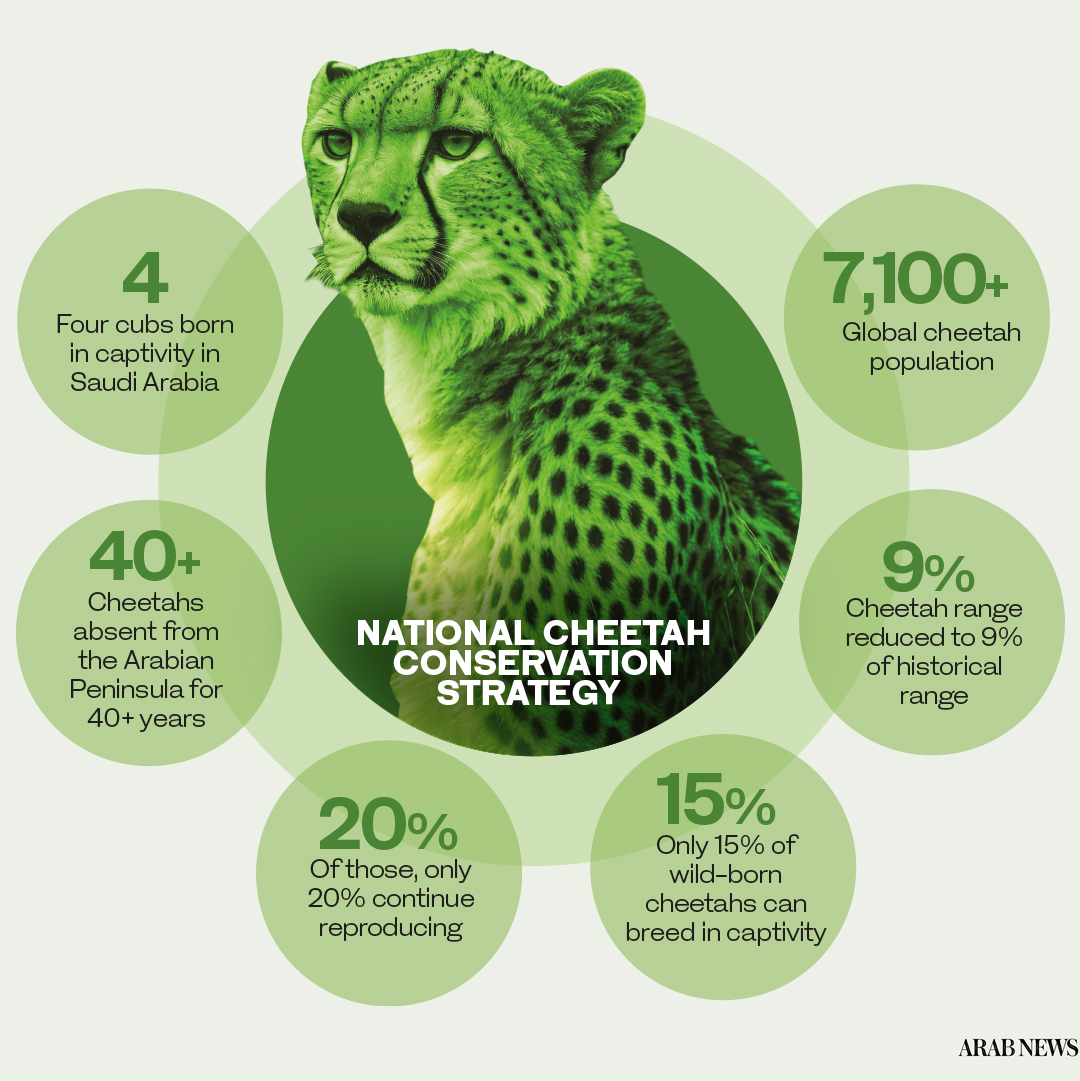
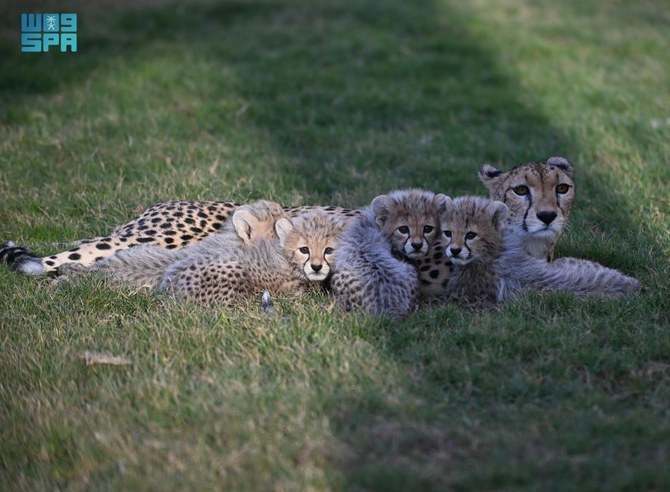
Saudi Arabia is also making strides in reintroducing cheetahs, which disappeared from the Arabian Peninsula over 40 years ago. Under the National Cheetah Reintroduction Program, four cubs were born in captivity in 2024—a landmark achievement given the complexity of breeding cheetahs.
Globally, only 15 percent of wild-born cheetahs manage to reproduce in captivity, with just 20 percent of those continuing to do so.
By overcoming these odds, the National Center for Wildlife is contributing to the survival of a species that now numbers only 7,100 worldwide.
Combining habitat restoration with advanced research and breeding programs, Saudi Arabia is playing a pivotal role in ensuring the cheetah’s future.
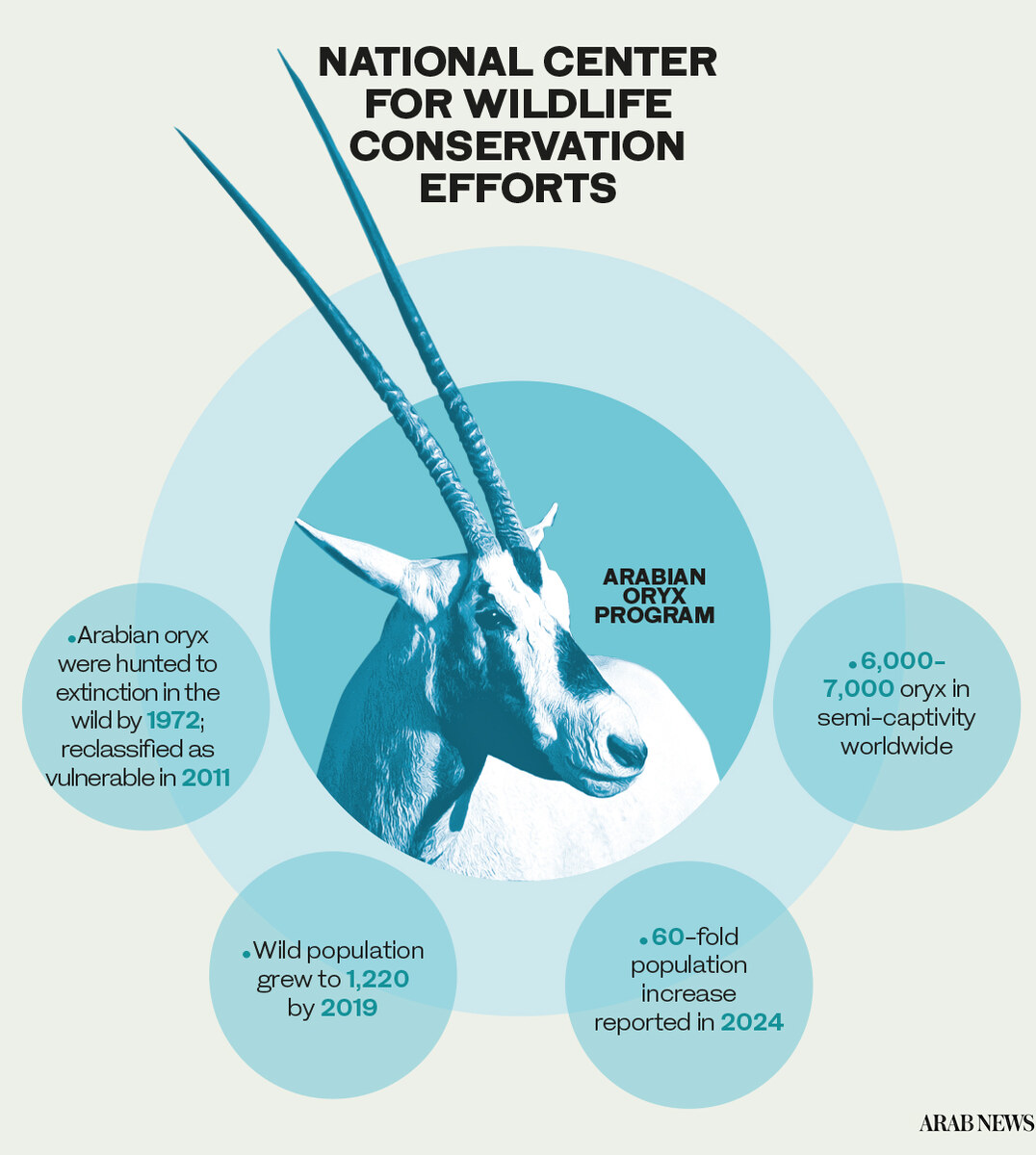
The Arabian oryx, once extinct in the wild by 1972, symbolizes the Kingdom’s conservation triumphs.
Reintroduced into its natural habitat, the species was reclassified as vulnerable in 2011.
By 2019, the wild population had risen to 1,220, with an additional 6,000–7,000 individuals thriving in semi-captive conditions worldwide.
Saudi Arabia has reported a remarkable 60-fold increase in the oryx population, making it one of the most successful wildlife restoration programs globally.
Saudi Arabia’s conservation efforts extend far beyond individual species. The Kingdom’s integrated approach leverages cutting-edge technology, international collaborations and community engagement to achieve its goals.
Programs such as the Saudi Green Initiative and the Middle East Green Initiative, the Arabian Leopard Fund and the National Cheetah Conservation Strategy reflect a deep commitment to restoring ecosystems and protecting biodiversity.
From reintroducing onagers to the Prince Mohammed bin Salman Royal Reserve after a century-long absence to breeding endangered species at state-of-the-art facilities, the Kingdom is setting a global benchmark for conservation.
As biodiversity faces unprecedented threats worldwide, experts say Saudi Arabia’s approach demonstrates that environmental stewardship and economic growth can coexist.
These efforts not only preserve the Kingdom’s natural legacy but also offer a blueprint for global action to protect the planet’s most vulnerable species. Through innovation, dedication, and collaboration, Saudi Arabia is proving that a sustainable future for wildlife is possible.