Saudi Arabia’s logistics centers surge 267% amid Vision 2030 push

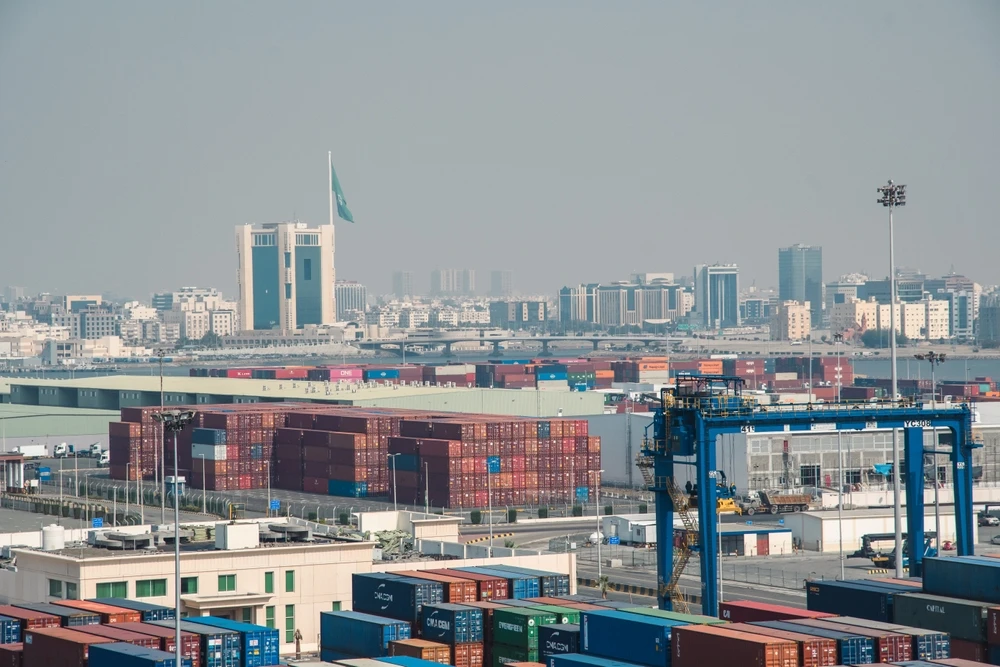
In 2023, the Kingdom had 22 hubs spanning over 34 million sq. meters, underscoring the nation’s push to become a regional logistics leader under its Vision 2030 plan. Shutterstock
Short Url
Updated 26 December 2024
Follow

Saudi Arabia’s logistics centers surge 267% amid Vision 2030 push

  • Eastern Province topped the list in terms of the number of logistics centers, with six hubs covering an area of 6.3 million sq. meters
  • Makkah region occupied the highest total area, with five centers spanning 20 million sq. meters

RIYADH: Saudi Arabia’s logistics sector has seen notable growth, with the number of facilities increasing by 267 percent since 2021, according to a report by the General Authority for Statistics. 

In 2023, the Kingdom had 22 hubs spanning over 34 million sq. meters, underscoring the nation’s push to become a regional logistics leader under its Vision 2030 plan.

The Eastern Province region topped the list in terms of the number of logistics centers, with six hubs covering an area of 6.3 million sq. meters.

However, the Makkah region occupied the highest total area, with five centers spanning 20 million sq. meters, followed by Riyadh with five centers covering 4.9 million sq. meters.

The report also highlighted that the Kingdom had 12,451 warehouses in 2023, covering a total area of 22.8 million sq. meters.

Riyadh accounted for 52.9 percent, occupying 10.6 million sq. meters, followed by Makkah with 17.9 percent, the Eastern Province with 14.3 percent, and other regions making up the remaining 14.9 percent.

According to the report, general warehouse licenses were the most prevalent, totaling 6,923 and making up 55.6 percent of all licenses. Humidity-controlled warehouses followed with 2,115 licenses, representing 17 percent of the total, while refrigerated warehouses accounted for 16 percent with 2,006 licenses.

The maritime sector dominated cargo transport by quantity with 308.7 million tonnes, followed by 24.9 million tonnes transported via land, 14.3 million tonnes by rail, and 918,000 tonnes via air.

The report also revealed that the goods transport segment registered 7,963 valid licenses, with Riyadh region leading the way with 1,996 active licenses.

Saudi Arabia’s warehousing and logistics sector is undergoing a transformative surge, driven by Vision 2030 and supported by significant government and private investments.

According to a November report by Maersk, a leader in integrated logistics, the Kingdom is poised to become a global trade and logistics powerhouse. The market is projected to reach $38.8 billion by 2026, growing at a compound annual growth rate of 5.85 percent.

This growth reflects Saudi Arabia’s strategic positioning as a regional logistics hub, supported by its $106.6 billion commitment to expanding land, air, and sea cargo capacities.

The Saudi Ports Authority’s $4.5 billion investment into maritime logistics in 2023 is a testament to this vision. Coupled with giga-projects like NEOM and the National Industrial Development and Logistics Program, the country aims to capture 55 percent of the Gulf Cooperation Council’s logistics market while exponentially increasing non-oil exports.

According to Knight Frank’s Industrial and Logistics Market Review for the first half of 2024, warehouse occupancy in Saudi Arabia reached a record 97 percent nationally in mid-2024, underscoring strong demand for storage and light industrial facilities.

Riyadh and Jeddah have emerged as focal points, with high lease rates and increasing global interest from firms like Maersk, DB Schenker, and DP World.

Additionally, the rise of e-commerce and digital logistics solutions has catalyzed innovation and competition, positioning Saudi Arabia at the forefront of logistics advancements in the region.

Digital transformation

According to the report, the postal and parcel sector in Saudi Arabia handled over 140 million items in 2023, supported by 1,300 sales outlets, with an average delivery time of just 2.45 days — highlighting the sector’s growing efficiency.

Meanwhile, customs and digital transport advancements continue to reshape the logistics landscape. Customs clearance activity licenses totaled 170 in 2023, with airports accounting for 47 licenses.

Additionally, 37 delivery app companies were licensed for freight transport, signaling a significant shift toward digital innovation in the sector.

‘The future is renewables,’ Indian energy minister tells World Economic Forum

Updated 22 January 2026
Follow

‘The future is renewables,’ Indian energy minister tells World Economic Forum

  • ‘In India, I can very confidently say, affordability (of renewables) is better than fossil fuel energy,’ says Pralhad Venkatesh Joshi during panel discussion
  • Renewables are an increasingly important part of the energy mix and the technology is evolving rapidly, another expert says at session titled ‘Unstoppable March of Renewables?’

BEIRUT: “The future is renewables,” India’s minister of new and renewable energy told the World Economic Forum in Davos on Wednesday.
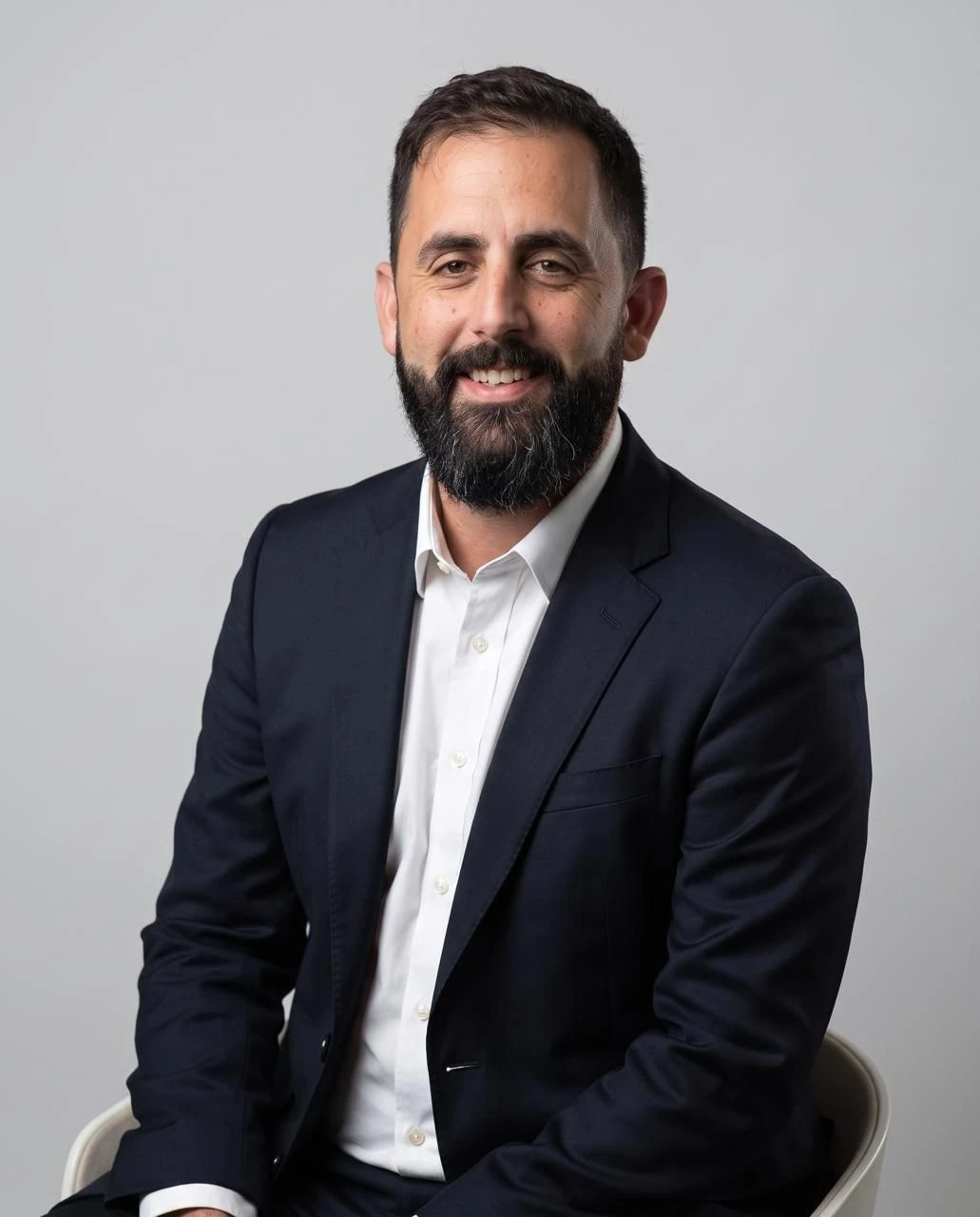
“In India, I can very confidently say, affordability (of renewables) is better than fossil fuel energy,” Pralhad Venkatesh Joshi said during a panel discussion titled “Unstoppable March of Renewables?”
The cost of solar power has has fallen steeply in recent years compared with fossil fuels, Joshi said, adding: “The unstoppable march of renewables is perfectly right, and the future is renewables.”
Indian authorities have launched a major initiative to install rooftop solar panels on 10 million homes, he said. As a result, people are not only saving money on their electricity bills, “they are also selling (electricity) and earning money.”
He said that this represents a “success story” in India in terms of affordability and “that is what we planned.”
He acknowledged that more work needs to be done to improve reliability and consistency of supplies, and plans were being made to address this, including improved storage.
The other panelists in the discussion, which was moderated by Godfrey Mutizwa, the chief editor of CNBC Africa, included Marco Arcelli, CEO of ACWA Power; Catherine MacGregor, CEO of electricity company ENGIE Group; and Pan Jian, co-chair of lithium-ion battery manufacturer Contemporary Amperex Technology.
Asked by the moderator whether she believes “renewables are unstoppable,” MacGregor said: “Yes. I think some of the numbers that we are now facing are just proof points in terms of their magnitude.
“In 2024, I think it was 600 gigawatts that were installed across the globe … in Europe, close to 50 percent of the energy was produced from renewables in 2024. That has tripled since 2004.”
Renewables are an increasingly important and prominent part of the energy mix, she added, and the technology is evolving rapidly.
“It’s not small projects; it’s the magnitude of projects that strikes me the most, the scale-up that we are able to deliver,” MacGregor said.
“We are just starting construction in the UAE, for example. In terms of solar size it’s 1.5 gigawatts, just pure solar technology. So when I see in the Middle East a round-the-clock project with just solar and battery, it’s coming within reach.
“The technology advance, the cost, the competitiveness, the size, the R&D, the technology behind it and the pace is very impressive, which makes me, indeed, really say (renewables) is real. It plays a key role in, obviously, the energy demand that we see growing in most of the countries.
“You know, we talk a lot about energy transition, but for a lot of regions now it is more about energy additions. And renewables are indeed the fastest to come to market, and also in terms of scale are really impressive.”
Mutizwa asked Pan: “Are we there yet, in terms of beginning to declare mission accomplished? Are renewables here to stay?”
“I think we are on the road but (its is) very promising,” Pan replied. There is “great potential for future growth,” he added, and “the technology is ready, despite the fact that there are still a lot of challenges to overcome … it is all engineering questions. And from our perspective, we have been putting in a lot of resources and we are confident all these engineering challenges will be tackled along the way.”
Responding to the same question, Arcelli said: “Yes, I think we are beyond there on power, but on other sectors we are way behind … I would argue today that the technology you install by default is renewables.
“Is it a universal truth nowadays that renewables are the cheapest?” asked Mutizwa.
“It’s the cheapest everywhere,” Arcelli said.